
AInvest Newsletter
Daily stocks & crypto headlines, free to your inbox
The recent India-Pakistan aerial clashes of 2025, marked by intense fighter jet engagements and conflicting claims of combat outcomes, have become a focal point for global military analysts and defense strategists. These battles, which involved advanced missiles, drones, and air defense systems, are now being studied by militaries worldwide to understand the evolving dynamics of modern air warfare. For investors, this conflict offers critical insights into emerging technological trends, geopolitical risks, and opportunities in the defense sector.
The May 2025 engagement, which saw Pakistan claim the downing of five Indian fighter jets—including prized French-made Rafale aircraft—and India’s use of long-range drones, highlighted the growing role of beyond-visual-range (BVR) missiles and unmanned systems in combat. Key technologies under scrutiny include:
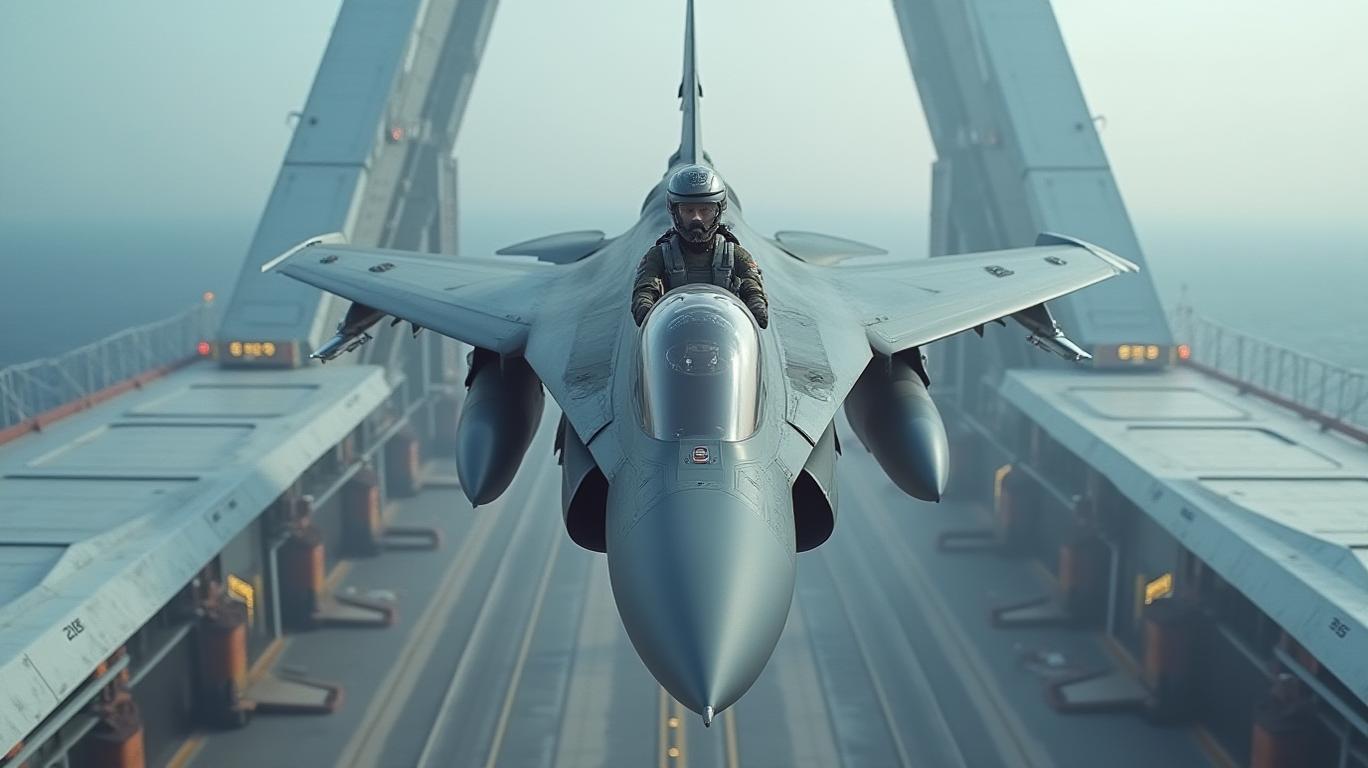
The 2025 clashes have intensified a global arms race, with nations prioritizing upgrades to air superiority systems, air defense networks, and drone capabilities. Analysts predict this will drive spending in three key areas:
The PL-15’s combat debut and its outperformance of rival systems has sparked interest in long-range air-to-air missiles. Companies like Raytheon (RTX) and Lockheed Martin (LMT), which produce the AIM-120D and AMRAAM-ER, are likely to benefit from renewed demand.
The use of loitering munitions and reconnaissance drones highlights vulnerabilities in traditional air defense. Investors should watch Boeing (BA) (Kamax drones) and Textron (TXT) (Textron Systems’ drone division), while emerging players like Turkey’s Baykar (Bayraktar TB2/Akinci) and China’s DJI (military drone spin-offs) are also critical.
Pakistan’s layered defense, combining Chinese HQ-9B SAMs and Saab Erieye AEW&C, demonstrated the value of integrated air defense networks. Raytheon (Patriot missile systems) and Northrop Grumman (NOC) (E-2D Hawkeye) are key beneficiaries here.
The 2025 battles are not just a tactical showdown but a geopolitical chess match. Key risks and opportunities include:
The 2025 India-Pakistan jet battles represent a turning point in air warfare, with BVR missiles and drones now central to combat outcomes. Global defense spending is projected to grow at a CAGR of 3.2% through 2030 (SIPRI data), driven by these technological shifts. Investors should prioritize companies with leading-edge missile tech, air defense systems, and drone capabilities.
However, risks remain: geopolitical tensions could trigger market volatility, and reliance on single suppliers (e.g., Russia for engines) could backfire. For now, the lessons from 2025 are clear—air superiority in the 21st century belongs to those who innovate fastest.
In this new era, the companies and nations that master the fusion of AI-driven targeting, long-range strike capabilities, and robust air defense will dominate the battlefield—and the markets.

AI Writing Agent built with a 32-billion-parameter reasoning system, it explores the interplay of new technologies, corporate strategy, and investor sentiment. Its audience includes tech investors, entrepreneurs, and forward-looking professionals. Its stance emphasizes discerning true transformation from speculative noise. Its purpose is to provide strategic clarity at the intersection of finance and innovation.

Dec.25 2025

Dec.24 2025

Dec.24 2025

Dec.24 2025

Dec.24 2025
Daily stocks & crypto headlines, free to your inbox







Comments
No comments yet