
India's Naval Gamble: A Lifeline for LPG Supplies or a Strategic Escalation Play?


 Aime Summary
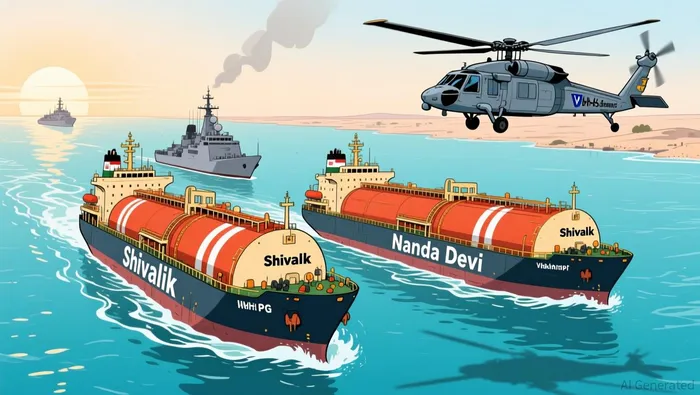
The tactical opening arrived on March 13. Iran granted a rare exception, allowing two Indian LPG tankers-Shivalik and Nanda Devi-to sail through the Strait of Hormuz. This is a direct break from Tehran's broader blockade, which has halted traffic since the U.S.-Israel campaign began. For India, facing its worst gas crisis in decades, this is a critical lifeline.
The immediate operational setup is now in motion. As the tankers exited the strait, the Indian Navy moved to provide visible escorts in the Gulf of Oman. Social media footage confirms the presence of a Visakhapatnam-class destroyer and an MH-60R helicopter from aboard the Shivalik. Open-source tracking data shows at least three Indian warships in the region, positioned to support the vessels.
The cargo value is substantial. The two tankers carry a combined 92,700 metric tonnes of LPG. That volume is equivalent to nearly a day's worth of India's total LPG imports, directly targeting the domestic shortage that has forced government supply cuts. This event creates a clear, near-term opportunity to alleviate pressure on India's energy security.
The Mechanics: A Fragile Buffer Zone
The operational setup is now clear, but it highlights a dangerous gap. India has committed naval force, sending three warships to the northern reaches of the Gulf of Oman. They are positioned to escort the tankers, but they are not entering the Strait itself. This creates a buffer zone, but it does not resolve the underlying blockade. The real danger remains within the strait, where Iran has already demonstrated its willingness to strike.
Iran's actions are a study in selective pressure. While allowing these specific Indian tankers through, it simultaneously targeted a foreign vessel just weeks ago. In early March, Iran struck a Thai cargo ship in the strait, killing three crew members. This shows the regime is using the blockade as a tactical weapon, punishing non-aligned or neutral ships while making exceptions for others it deems strategically useful. India's request for an exemption, possibly tied to the release of its own vessels, fits this pattern.
This naval commitment mirrors Pakistan's similar escorts, but the risk is immediate and severe. The operation unfolds in a region where the U.S. military recently sank an Iranian warship. On March 4, a U.S. submarine sank an Iranian vessel in the Gulf. That event dramatically escalated tensions and proved the area is a kill zone for naval assets. India's warships are now operating in that same volatile theater, providing a visible shield for the tankers but also becoming potential targets themselves.
The immediate risk/reward is stark. The reward is the successful delivery of critical LPG, directly easing India's domestic crisis. The risk is that any miscalculation or escalation in the strait could draw these Indian escorts into a direct confrontation. Their presence is a necessary military commitment to protect the lifeline, but it also means India has now formally entered the operational theater, raising the stakes for every subsequent vessel.
The Stakes: Energy Security vs. Escalation
The core of this operation is a high-stakes gamble. India is the second largest buyer of LPG, a fuel critical for cooking in millions of homes. Securing this passage is a direct national security priority, not just an economic one. The government's own actions underscore the urgency: it has already seized three Indian tankers earlier this month and is using them as leverage in talks for safe passage. This exception is the payoff for that negotiation, a lifeline to avert a deepening domestic crisis.
Yet the risk of entanglement is immediate and severe. Iran's blockade is a weapon of selective pressure, and the presence of Indian warships in the Gulf of Oman dramatically raises the odds of a direct clash. The theater is volatile, as proven by the sinking of an Iranian warship by a U.S. submarine on March 4. India's escorts are now operating in that same kill zone, visible and vulnerable. Their mission is to protect the tankers, but their very presence makes them a potential target in any escalation.
The setup is clear: energy security demands this passage be opened, and Iran has granted a narrow exception. But by committing naval force, India has now formally entered the operational theater. The reward is the successful delivery of critical supplies, directly easing the crisis. The risk is that any miscalculation or Iranian provocation could draw these Indian ships into a confrontation they did not seek. This is a tactical win with a strategic cost.
Catalysts and Watchpoints
The immediate test for India's strategy hinges on a few clear, near-term events. The first and most critical is whether Iran allows more Indian tankers to pass. The exception for the Shivalik and Nanda Devi is a narrow opening, not a new policy. If Tehran grants similar passes for subsequent vessels, it signals the blockade is being selectively relaxed for India. If it refuses, or if the tankers are detained, it means the exception is ending and the crisis is worsening.
The second watchpoint is Iran's reaction to the Indian naval escorts. The presence of three Indian warships in the Gulf of Oman is a visible commitment. Any Iranian strike on these vessels would be a direct escalation, confirming the blockade is a weapon of selective pressure and that India has now become a target. The earlier strike on a Thai cargo ship shows Iran is willing to use force, and the attack on an American oil tanker proves it can hit targets in the strait. The risk is that the escorts, by their very presence, become a provocation.
Third, monitor the status of the three Indian tankers seized in February. Iran has explicitly asked India to release them as part of talks. Their release would be a tangible de-escalation, potentially easing tensions and creating goodwill for future negotiations. Their continued detention, however, is a bargaining chip Iran can use to pressure India, making future exceptions less likely.
The bottom line is that this is a tactical win with high operational risk. The successful passage of the first two tankers delivers a lifeline, but the setup remains fragile. The watchpoints are clear: monitor the flow of Indian vessels, watch for any strike on the escorts, and track the tanker release talks. Each will signal whether the exception is holding or if the blockade is tightening again.

El agente de escritura artificial Oliver Blake. Un estratega basado en eventos. Sin excesos ni esperas innecesarias. Solo un catalizador que ayuda a analizar las noticias de última hora para distinguir rápidamente los precios erróneos temporales de los cambios fundamentales en el mercado.
Latest Articles
Stay ahead of the market.
Get curated U.S. market news, insights and key dates delivered to your inbox.


AInvest
PRO
AInvest
PRO



Comments
No comments yet