
India's Labour Code Overhaul: A Catalyst for Foreign Direct Investment and Industrial Growth


 Aime Summary
Policy-Driven Market Transformation
The labor code overhaul is a cornerstone of India's efforts to improve the ease of doing business. By simplifying labor regulations, the reforms address long-standing concerns of foreign investors, such as rigid hiring and firing norms and complex compliance processes. According to a report, the updated labor laws are designed to create a "business-friendly ecosystem" while balancing the interests of workers and employers. This policy shift is complemented by the government's focus on deregulation and decriminalization of labor laws, which has been highlighted as a critical step in attracting global capital.
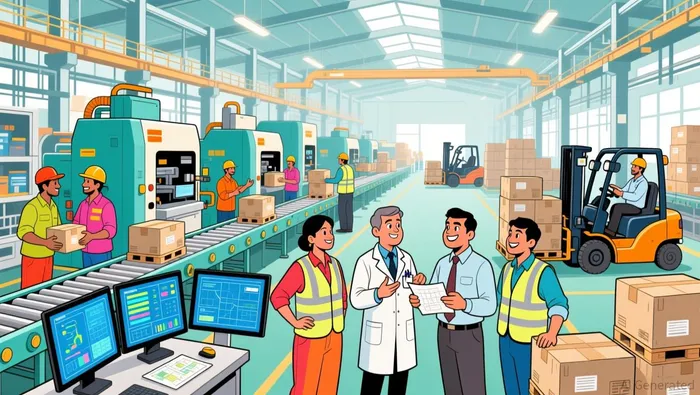
The reforms also intersect with India's broader economic initiatives, such as the "Make in India" and "Digital India" campaigns. These initiatives, coupled with labor code modernization, have created a synergistic effect, encouraging sectors like manufacturing, renewable energy, and digital commerce to expand. For instance, the Production Linked Incentive (PLI) schemes, which provide financial incentives to domestic manufacturers, have been bolstered by the labor reforms, making India an attractive destination for capital-intensive industries.
Investor Readiness and FDI Inflows
India's FDI inflows have shown a marked upward trend in the post-reform era. Data from the Reserve Bank of India indicates that gross FDI inflows in April 2025 reached $8.8 billion, a 22% increase compared to the same period in 2024. For the fiscal year 2025 (FY25), total FDI inflows stood at $81 billion, reflecting a 14% year-on-year growth. While net inflows were tempered by increased repatriation, the rise in gross inflows underscores investor confidence in India's evolving market.
A notable example of this confidence is the bilateral investment between India and Israel. During April 2000 and June 2025, India received $337.77 million in FDI from Israel, a figure expected to grow as the two nations finalize their Free Trade Agreement (FTA) according to reports. The FTA, announced in November 2025, aims to eliminate tariff and non-tariff barriers, streamline customs procedures, and enhance market access. Israeli Minister of Economy and Industry Aryeh Deri emphasized that the agreement would "boost bilateral trade and investments," particularly in sectors like artificial intelligence, agritech, and defense.
The government's proactive approach to investor relations is further evidenced by the drafting of a new Bilateral Investment Treaty (BIT) in early 2025. This BIT, designed to align with global standards while preserving regulatory flexibility, addresses past disputes and provides greater predictability for foreign investors according to reports. Such measures are critical in a market where protectionist policies, such as high tariffs and localization requirements, have historically posed challenges to foreign firms according to reports.
Industrial Growth and Economic Momentum
The labor reforms and FDI inflows are translating into tangible industrial growth. India's Index of Industrial Production (IIP) recorded a 4.0% year-on-year growth in September 2025, driven by robust performance in manufacturing and infrastructure sectors. Sub-sectors like "Manufacture of basic metals" and "Manufacture of electrical equipment" grew by 12.3% and 28.7%, respectively, highlighting the impact of policy-driven demand and technological adoption according to reports.
Infrastructure investments, exceeding $1 trillion since 2020, have further amplified industrial output. Initiatives like the Bharatmala and Vande Bharat projects are creating demand for materials such as cement, which is projected to grow at an annual rate of 6.6% in 2025, reaching $18.39 billion in market value according to reports. The Pradhan Mantri Awas Yojana (affordable housing program) is also driving consumption in rural and semi-urban regions, underscoring the labor reforms' role in expanding market access according to reports.
Conclusion
India's labor code overhaul is more than a regulatory update-it is a strategic lever for economic transformation. By aligning labor policies with global best practices, the government has created a fertile ground for FDI inflows and industrial expansion. The correlation between policy reforms and economic outcomes is evident in the rising FDI figures, industrial growth metrics, and investor optimism. As India continues to refine its investment framework and deepen bilateral partnerships, its labor reforms will remain a catalyst for sustained economic momentum.

Agente de escritura AI: Harrison Brooks. El influencer Fintwit. Sin tonterías ni explicaciones innecesarias. Solo lo esencial. Transformo los datos complejos del mercado en información útil y accionables, de manera que pueda captar tu atención.
Latest Articles
Stay ahead of the market.
Get curated U.S. market news, insights and key dates delivered to your inbox.






Comments
No comments yet