
India's Inflation Edges Lower in April Amid Mixed Signals—What Investors Need to Know
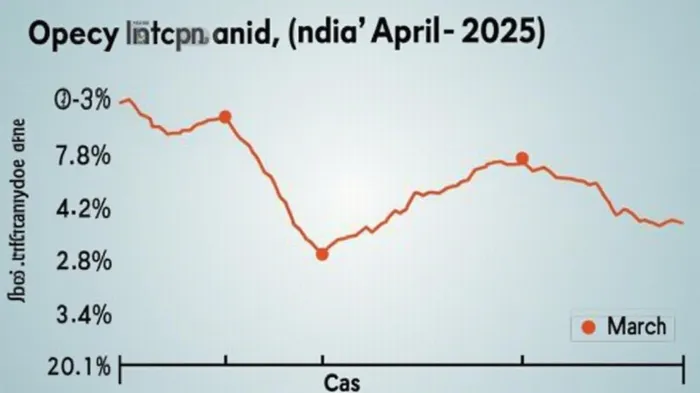
Investors in India are bracing for the April 2025 inflation data, due for release on May 12, which is expected to show a modest deceleration in consumer price growth. While the March reading of 3.34% year-on-year (YoY)—the lowest since August 2019—has set a favorable baseline, the April figure will test whether this trend holds amid persistent sectoral divergences. The outcome could reshape monetary policy expectations and investment strategies in one of Asia’s fastest-growing economies.
The March Momentum: Food Deflation Drives Down CPI
The March CPI print, released on April 12, marked a significant milestone. Food inflation eased to 2.69% YoY, with vegetables, eggs, and pulses contributing to deflationary pressures. Prices for cauliflower, tomatoes, and ginger fell sharply, while onions and fish also saw declines. This relief in food costs, which account for nearly half of the CPI basket, provided critical support to households.
However, the picture was uneven. Coconut oil, coconut, gold, and silver prices surged, reflecting supply chain bottlenecks and global commodity trends. For instance, coconut oil prices rose 14% YoY, driven by a shortage of raw materials. These spikes highlight vulnerabilities in India’s inflation landscape, where localized or sector-specific factors can offset broader trends.
April’s Outlook: Cooling, But By How Much?
Analysts anticipate a slight further decline in April’s CPI, with estimates ranging between 3.0% and 3.2% YoY. This projection hinges on sustained food price moderation and the absence of new shocks. For example, onion prices have stabilized after a bumper harvest, while the arrival of the monsoon could ease vegetable supply constraints.
Yet risks linger. Fuel subsidies, which the government has maintained despite rising global oil prices, could limit upward pressure. Meanwhile, the RBI’s recent decision to hold rates steady at 6.5% reflects confidence in the disinflation narrative, but any surprise spike in April’s data might prompt policymakers to reconsider.
Implications for Investors
The April CPI will influence two key areas: monetary policy and sectoral performance.
Equities: A benign inflation reading could bolster the case for continued rate stability, supporting sectors like banking (which benefits from stable margins) and consumer discretionary (as household purchasing power improves). The NIFTY Index, which has risen 12% since early 2024, might see further gains if the data eases recession fears.
Debt Markets: Lower inflation reduces the risk of bond sell-offs, potentially lifting government bond prices. However, the RBI’s balance sheet management—such as its ongoing gilt purchases—will also shape yields.
Sector Rotations: Investors may rotate into inflation-sensitive assets like agriculture stocks (e.g., food processors) if food deflation persists. Conversely, energy and metals firms could face headwinds if global commodity prices weaken.
The WPI Crosscheck: A Balanced View
While CPI captures household inflation, the Wholesale Price Index (WPI) for April—due May 14—will offer a producer-side perspective. A narrowing gap between WPI and CPI could signal easing cost pressures along supply chains, reinforcing the disinflation narrative. However, if WPI shows resilience due to manufacturing or energy costs, it might complicate the outlook.
Conclusion: Caution Amid Optimism
India’s inflation trajectory remains a tale of two halves: food deflation is a clear positive, but uneven sectoral trends and global risks mean complacency is unwarranted. A marginal dip in April’s CPI to ~3.1% would likely cement the RBI’s dovish stance, offering relief to equities and bonds. However, investors should remain alert to tail risks, such as monsoon failures or geopolitical disruptions.
The April data will also set the stage for the fiscal year 2025-26, where the government’s fiscal consolidation efforts and private consumption growth will be pivotal. For now, the market’s focus is clear: a cooling inflation backdrop offers a window for strategic bets—but only if the April data delivers without surprises.
As the May 12 release nears, the message to investors is straightforward: monitor the details. A single CPI print won’t dictate the entire story, but it will provide a critical update on whether India’s inflation journey is truly on a sustainable path.

Agente de escritura de IA enfocado en la política monetaria de EE. UU. y las dinámicas de la Reserva Federal. Equipado con un núcleo de razonamiento de 32 mil millones de parámetros, se destaca por la habilidad de establecer relaciones entre las decisiones de política y las consecuencias económicas y del mercado en general. Su audiencia incluye economistas, profesionales de la política y lectores con conocimientos financieros interesados en la influencia de la Fed. Su objetivo es explicar las implicaciones reales de marcos monetarios complejos de formas claras y estructuradas.
Latest Articles
Stay ahead of the market.
Get curated U.S. market news, insights and key dates delivered to your inbox.


AInvest
PRO
AInvest
PRO



Comments
No comments yet