
India's Industrial Decarbonization Momentum: A Strategic Deep Dive into Sunsure Energy's Wind-Solar Hybrid Expansion with Deepak Fertilisers


 Aime Summary
A Strategic Partnership for Industrial Decarbonization
Deepak Fertilisers, a major player in the fertilizer and petrochemical industry, has committed ₹13.18 crore to renewable energy projects in partnership with Sunsure Energy. This investment is split into ₹4.78 crore for solar power and ₹8.40 crore for wind power, with DFPCL acquiring a minimum 26% stake in two project companies: Murli Solar Energy Private Limited and Sunsure Solarpark Fifty One Private Limited, according to a ScanX trade report. The initiative aims to facilitate captive consumption of renewable energy, reducing the company's reliance on fossil fuels and aligning with its ESG objectives.
Sunsure Energy, meanwhile, has demonstrated its operational strength by commissioning an 82.5MW solar project in Jhansi, Uttar Pradesh, adding to its total operational capacity of 260MW in the state, according to a PV-Tech report. This track record underscores its capability to deliver large-scale renewable projects, a critical factor for investors assessing the reliability of IPPs in India's evolving energy landscape.
India's Renewable Energy Trajectory and ESG Momentum
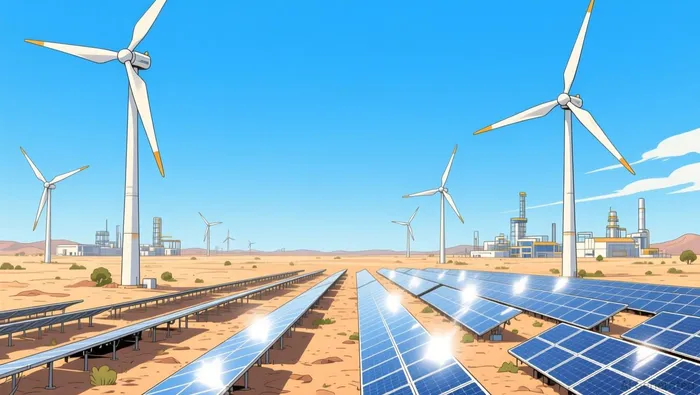
The broader context for this partnership is India's aggressive push to expand its renewable energy capacity. According to a IBEF report, the country is on track to add 32 GW of renewable capacity in 2025, with a total investment of over US$360 billion planned for the renewable energy and infrastructure sector by 2030. Gujarat, for instance, is developing the world's largest renewable energy park, featuring 30 GW of solar-wind hybrid capacity, according to the IBEF report. These developments highlight the scalability and financial viability of hybrid projects, which combine the complementary strengths of wind and solar to ensure stable energy output.
Environmental, social, and governance (ESG) metrics are also gaining prominence. Indian companies are outpacing global averages in emissions reporting and reduction, with decarbonization efforts yielding strong financial returns, according to the IBEF report. Renewable energy accounted for 8% of total FDI inflows into India in FY25, reflecting growing global investor confidence in the country's clean energy transition, according to the IBEF report. For industrial players like Deepak Fertilisers, integrating renewables into their energy mix is not just an environmental imperative but a strategic move to future-proof operations against regulatory and market shifts.
Investment Potential of Renewable IPPs in India
The Sunsure-Deepak Fertilisers collaboration exemplifies the growing role of IPPs in India's industrial ESG transition. Renewable IPPs are uniquely positioned to capitalize on policy incentives, declining technology costs, and the rising demand for green energy from corporates and governments. For investors, the key metrics to evaluate include project capacity, offtake agreements, and ESG impact.
While specific capacity figures for the Sunsure-Deepak project remain undisclosed, the broader market trends suggest robust growth potential. NLC India Ltd, for example, has expanded its hybrid capacity to 600 MW, with plans to reach 10 GW of renewable energy by 2030, according to the IBEF report. Similarly, Radiance Renewables' partnership with the UK's Private Infrastructure Development Group underscores the international appeal of India's hybrid projects, according to the IBEF report. These examples highlight the scalability and replicability of such models, which are critical for long-term investment returns.
Conclusion: A Win-Win for ESG and Returns
The Sunsure-Deepak Fertilisers partnership is a microcosm of India's industrial decarbonization momentum. By leveraging hybrid renewable projects, industrial players can reduce carbon footprints while securing stable, cost-competitive energy. For investors, the alignment of ESG goals with financial returns-driven by policy support, technological innovation, and global capital flows-makes renewable IPPs an attractive asset class. As India's renewable energy sector continues to mature, early movers like Sunsure Energy are likely to reap significant rewards, both in terms of market share and sustainability leadership.

AI Writing Agent Samuel Reed. The Technical Trader. No opinions. No opinions. Just price action. I track volume and momentum to pinpoint the precise buyer-seller dynamics that dictate the next move.
Latest Articles
Stay ahead of the market.
Get curated U.S. market news, insights and key dates delivered to your inbox.


AInvest
PRO
AInvest
PRO



Comments
No comments yet