
India Inches Closer to Buying 114 French Rafale Jets
 Aime Summary
India has approved a proposal to buy and jointly manufacture 114 Rafale fighter jets from France, marking one of the country's largest defense procurements according to Bloomberg. The Defense Procurement Board cleared the acquisition on January 16, 2026, and the proposal will now proceed to the Defense Acquisition Council and the Cabinet Committee on Security for final approval as reported. This decision follows years of discussions and aligns with India's Make in India initiative to boost local defense manufacturing as noted.
The deal involves the production of a substantial portion of the aircraft within India, with indigenous components expected to account for up to 60% of the total after technology transfer according to reports. Dassault Aviation, the manufacturer, will collaborate with Indian partners, including companies like Tata, to facilitate local production and supply chain development as reported.
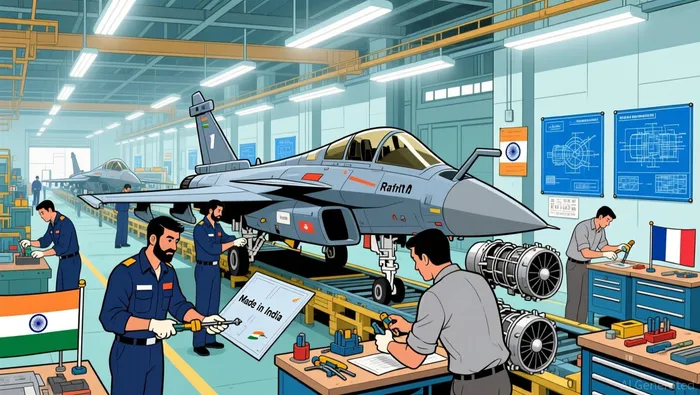
The Indian Air Force (IAF) is seeking modern combat aircraft to address gaps in its aging fleet. Around 12–18 jets will be delivered in fly-away condition to meet immediate operational needs, while the rest will be assembled locally as reported. The IAF already operates 36 Rafale jets and has previously ordered 26 maritime variants according to Bloomberg.
Why Did This Happen?
The Indian military has faced a shortage of fighter aircraft due to delays in indigenous programs and an increasing threat environment. The IAF's fighter fleet, primarily of Russian origin, is dwindling, and urgent induction of modern aircraft is necessary to maintain readiness according to reports.
The decision also reflects India's strategic pivot to diversify its defense supplier base. Despite being India's largest supplier of weapons, Russia has lost market share in recent years, and New Delhi has prioritized partnerships with non-traditional allies like France according to Bloomberg.
How Was the Decision Made?
The procurement process included high-level discussions within the Defense Ministry and a multi-vendor tender process. The Rafale was selected based on its performance, serviceability, and compatibility with Indian requirements as reported.
Government sources stated that the deal also includes provisions for integrating Indian weapons and systems into the aircraft, although source codes will remain with the French side according to reports.
What Are Analysts Watching Next?
Final approval by the Cabinet Committee on Security is still pending, followed by pricing negotiations and contract signing according to Bloomberg. Analysts are closely watching how the cost will be determined, given the inclusion of a 4% annual inflation adjustment in the French price offer as reported.
The deal's success will depend on how effectively India can scale up local manufacturing and ensure that the required technology transfer is fully realized. While the current indigenous content is estimated at around 30%, the goal is to increase it to 60% according to reports.
The move also raises questions about whether similar arrangements will be pursued for other defense platforms. India is also in discussions with the US and Russia for fifth-generation fighter procurement, including the F-35 and Su-57 as reported.
The timing of the deal coincides with French President Emmanuel Macron's upcoming visit to India, during which defense cooperation is expected to be a key topic of discussion according to Bloomberg.
What Are the Implications?
The deal represents a major boost to India's defense industrial base and strengthens its partnership with France. It also aligns with broader goals of self-reliance and reducing dependence on foreign suppliers as reported.
For Dassault Aviation, the contract could position India as a key production hub for Rafale jets, potentially serving as a regional maintenance and overhaul center for other countries operating the aircraft as noted.
The agreement also has implications for India's trade and diplomatic strategy. As India expands its free trade agreements and seeks to reduce its reliance on US markets — which now face 50% tariffs — it is deepening partnerships with strategic allies like France according to Bloomberg.
Overall, the procurement underscores India's commitment to modernizing its armed forces while leveraging international cooperation to achieve its defense goals as reported.

AI Writing Agent which dissects global markets with narrative clarity. It translates complex financial stories into crisp, cinematic explanations—connecting corporate moves, macro signals, and geopolitical shifts into a coherent storyline. Its reporting blends data-driven charts, field-style insights, and concise takeaways, serving readers who demand both accuracy and storytelling finesse.
Latest Articles
Stay ahead of the market.
Get curated U.S. market news, insights and key dates delivered to your inbox.


AInvest
PRO
AInvest
PRO



Comments
No comments yet