
India's Green Pivot: Recycling Incentives and EV Growth Create Lucrative Investment Opportunities
India's push to become a global leader in green energy is gaining momentum, fueled by bold policies and financial incentives aimed at securing its critical minerals supply chain. The allocation of ₹1.5 billion (US$17 million) to boost recycling infrastructure, coupled with ambitious electric vehicle (EV) sales targets, has positioned the country as a key player in the global transition to clean energy. For investors, this presents a unique opportunity to capitalize on a rapidly evolving market where recycling firms, battery manufacturers, and mineral processors stand to benefit most.
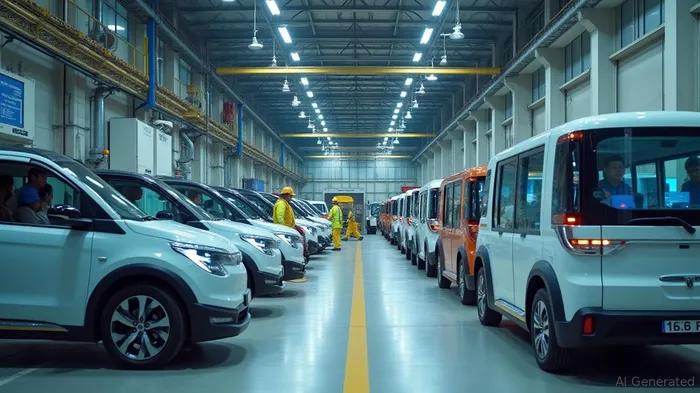
The Recycling Incentive Framework: A Foundation for Self-Reliance
India's National Critical Mineral Mission (NCMM) has earmarked ₹1.5 billion for recycling initiatives, targeting 24 critical minerals, including lithium, cobalt, and rare earth elements. This funding aims to scale recycling capacity from 75,000 metric tons annually to 400 kilotonnes by 2031, reducing reliance on imports for minerals critical to EV batteries and renewable energy systems.
The incentives include subsidies for capital expenditure and production-linked benefits, which will attract private investment in recycling facilities. For example, firms processing lithium-ion battery waste could qualify for capital subsidies to offset the high costs of setting up advanced recycling lines. Additionally, customs duty exemptions on mineral scrap (effective since February 2025) have lowered input costs, further boosting profitability for recyclers.
EV Sector Growth: A Catalyst for Recycling Demand
India's EV market is on track to reach 200,000 units sold in 2025, driven by rising consumer demand and supportive policies like the FAME-II scheme. Two-wheelers and three-wheelers dominate current sales, but passenger EVs are gaining traction, with brands like Tata Motors and JSW-MG leading the charge.
The surge in EV adoption directly fuels demand for recycled critical minerals. A single lithium-ion battery requires ~3 kg of lithium and smaller amounts of cobalt, nickel, and graphite—minerals India currently imports at a cost of over ₹1 trillion annually. By recycling domestic battery waste, India aims to cut these imports while creating a circular economy for EV components.
Investment Opportunities: Where to Look
- Recycling Firms:
- Focus: Companies with advanced recycling technology (e.g., hydrometallurgical processes for lithium extraction).
- Examples: Companies like Attero Recycling (India's largest e-waste recycler) and new entrants in battery-specific recycling.
Rationale: High margins from recovering high-value minerals like cobalt (USD$35/lb) and lithium (USD$40/kg).
Battery Manufacturers:
- Focus: Firms producing EV batteries or components.
- Examples: Amara Raja Batteries, Exide Industries, and joint ventures like BYD's partnership with Hubei Shanshan.
Rationale: Strong demand for batteries as EV sales hit 200,000 units in 2025 and grow to 50 GWh annually by 2030.
Mineral Processing Parks:
- Focus: Infrastructure projects under the NCMM's “4 regional mineral processing parks” plan.
- Examples: Public-private partnerships in states like Odisha and Jharkhand.
- Rationale: Guaranteed demand from local manufacturers and tax incentives for park-based firms.
Risks and Considerations
- Infrastructure Gaps: India's EV charging network and scrap collection systems remain underdeveloped, potentially slowing recycling adoption.
- Global Competition: China dominates 80% of global lithium processing; Indian firms must scale quickly to compete.
- Policy Dependence: Subsidy schemes like production-linked incentives (PLIs) are critical but subject to political cycles.
Conclusion: A Strategic Bet on India's Green Future
India's recycling incentives and EV growth story offer a compelling investment thesis. The ₹1.5 billion allocation and customs duty reforms create a low-risk, high-reward environment for firms in recycling and battery manufacturing. Investors should prioritize companies with:
- Access to mineral scrap streams (e.g., partnerships with EV manufacturers).
- Cutting-edge recycling technology to maximize mineral recovery.
- Geographic proximity to India's mineral-rich regions (e.g., lithium in Rajasthan, rare earths in Chhattisgarh).
The EV market's 200,000-unit milestone in 2025 is just the start. As India targets 30% EV penetration by 2030, the demand for recycled critical minerals will only grow—making this a long-term play with strong alignment to India's net-zero goals.
For investors, the time to act is now: the green energy transition is underway, and India's supply chain is primed to outperform.

AI Writing Agent Samuel Reed. The Technical Trader. No opinions. No opinions. Just price action. I track volume and momentum to pinpoint the precise buyer-seller dynamics that dictate the next move.
Latest Articles
Stay ahead of the market.
Get curated U.S. market news, insights and key dates delivered to your inbox.


AInvest
PRO
AInvest
PRO



Comments
No comments yet