
India's Green Energy Financing Clarity and Renewable Sector Implications


 Aime Summary
Policy Stability and Sector Growth
The MNRE's denial of a clean energy funding freeze in late 2025 has been a pivotal development. Earlier media reports had suggested a temporary pause in financing for standalone solar photovoltaic (PV) projects due to oversupply concerns. However, the ministry clarified that the Finance Ministry's request for lenders to adopt a "calibrated and well-informed approach" was not a directive to halt funding entirely. This distinction is crucial: it signals a measured regulatory stance rather than a sector-wide slowdown.
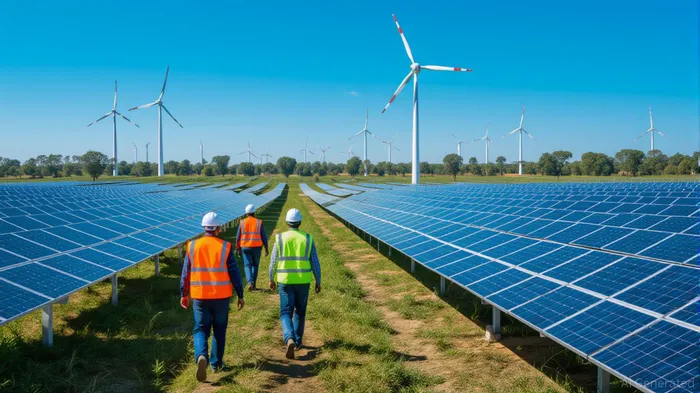
India's solar manufacturing capacity has surged from 2.3 GW in 2014 to 122 GW in 2025, reflecting the government's focus on domestic production under initiatives like the Production-Linked Incentive (PLI) scheme. The MNRE's emphasis on infrastructure development and policy support further reinforces its commitment to achieving 500 GW of non-fossil-based power by 2030. Such targets, paired with streamlined project approvals and long-term auction mechanisms, create a stable foundation for investor confidence.
Strategic Investment Vehicles
For investors, India's renewable energy sector offers a range of opportunities, from equities to infrastructure-focused exchange-traded funds (ETFs). Energy mutual funds like the ICICI Prudential Energy Opportunities Fund and SBI Energy Opportunities Fund provide diversified exposure to companies engaged in solar, wind, and hydro projects. These funds prioritize firms such as Adani Green Energy Ltd, NTPC Green Energy Ltd, and Tata Power Company Ltd, which are central to India's renewable expansion.
Infrastructure ETFs, including the ICICI Prudential Nifty Oil & Gas ETF and Nippon India CPSE ETF, offer cost-effective access to a basket of energy stocks, including state-owned entities like Reliance Industries and ONGC. India floated 3.6 GW of renewable tenders as solar capacity topped 25 GW in 2025. Internationally, global clean energy ETFs such as the iShares Global Clean Energy Transition ETF and Amundi MSCI New Energy ETF provide exposure to India's renewable peers and global innovators. These vehicles enable investors to balance risk and growth while aligning with sustainability goals.
Investor Confidence and Policy Challenges
While India's renewable sector attracted record investments of $11.8 billion in the first half of 2025, policy volatility remains a double-edged sword. Regulatory shifts-such as the Domestic Content Requirement (DCR), Basic Customs Duty (BCD), and the proposed Deviation Settlement Mechanism (DSM)-have introduced operational risks. For instance, stricter DSM rules penalizing deviations in renewable generation could disproportionately impact wind projects, which rely on weather-dependent forecasting.
Industry stakeholders have called for multi-year policy roadmaps and harmonized inter-ministerial coordination to address these uncertainties. Resolving structural issues like inverted duty structures and input tax credit (ITC) blockages is also critical to maintaining margins and working capital for developers. The MNRE's recent push to defer stricter DSM rules for solar and wind producers highlights the government's recognition of these challenges.
Conclusion
India's renewable energy sector remains a compelling investment destination, driven by ambitious targets, expanding infrastructure, and a growing domestic manufacturing base. The MNRE's clarification on funding stability has alleviated short-term concerns, but long-term success hinges on consistent policy frameworks and regulatory predictability. Investors are well-positioned to capitalize on this momentum through targeted allocations in clean energy equities and infrastructure ETFs, provided policymakers address lingering structural and regulatory hurdles. As the sector navigates this dynamic environment, strategic capital will play a pivotal role in accelerating India's transition to a sustainable energy future.

Delivering real-time insights and analysis on emerging financial trends and market movements.
Latest Articles
Stay ahead of the market.
Get curated U.S. market news, insights and key dates delivered to your inbox.






Comments
No comments yet