
India's Financial Renaissance: Why Bajaj Finance's BBB Upgrade Signals a Golden Opportunity in the NBFC Sector
 Aime Summary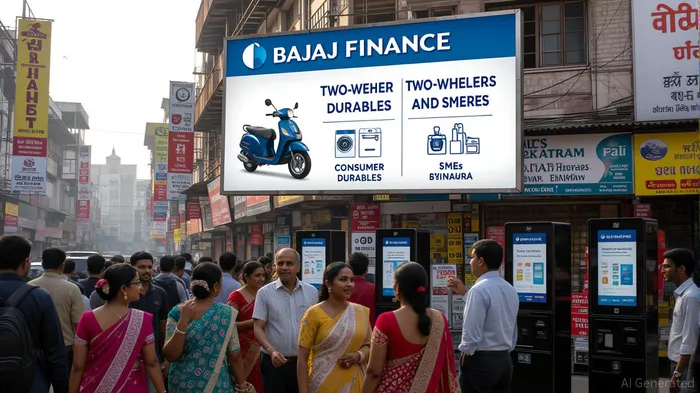
The recent S&P Global Ratings upgrade of Bajaj Finance from BBB- to BBB with a stable outlook is more than a credit event—it's a seismic shift in India's financial landscape. This upgrade, coupled with a historic sovereign rating revision for India, underscores a broader narrative of structural reforms, economic resilience, and investor confidence. For investors seeking high-conviction opportunities, the non-banking finance sector (NBFC) has emerged as a compelling arena, where Bajaj Finance's upgraded rating serves as a bellwether for the sector's transformation.
The Bajaj Finance Upgrade: A Microcosm of India's Credit Resilience
S&P's decision to elevate Bajaj Finance to BBB reflects the company's robust capital position, strong earnings, and a 18.9% risk-adjusted capital (RAC) ratio as of March 2025. These metrics are not isolated strengths but are emblematic of India's broader financial ecosystem. The upgrade is directly tied to India's sovereign rating upgrade—the first in 18 years—driven by 8.8% average GDP growth from FY22 to FY24, fiscal consolidation, and the Insolvency and Bankruptcy Code (IBC)'s success in improving asset quality.
Bajaj Finance's 18.9% RAC is a critical differentiator. S&P anticipates this ratio will remain above 15% for the next 12–24 months, a buffer that insulates the company from cyclical shocks. This is particularly relevant in a sector where asset quality has been a persistent concern. Bajaj's low delinquency rate (1% of total loans in June 2025) and 165% provision coverage further reinforce its creditworthiness.
The market has already priced in this optimism: Bajaj's stock surged 7% intra-day post-announcement, reflecting investor confidence in its ability to capitalize on India's improving credit environment.
Structural Reforms: The Tailwinds Powering the NBFC Sector
India's NBFC sector is undergoing a regulatory and operational metamorphosis. The Reserve Bank of India's (RBI) Scale-Based Regulatory (SBR) Framework, implemented in 2022, has redefined oversight by categorizing NBFCs into four layers based on systemic risk. This proportionality-based approach ensures that larger, more complex entities like Bajaj Finance face stricter capital and liquidity requirements, fostering a culture of prudence.
Key reforms include:
- Digital Banking Units (DBUs): Expanding financial inclusion in tier-2 and tier-3 cities, where NBFCs like Bajaj are leveraging AI-driven risk engines to reduce defaults.
- Repo Rate Cuts: Anticipated in FY26, these will lower borrowing costs for NBFCs with high bank liabilities, improving net interest margins (NIMs).
- Stricter Pre-Payment Norms: The RBI's 2025 guidelines, which cap pre-payment charges for small-ticket loans, are pushing NBFCs to focus on larger, higher-quality portfolios.
These reforms are not just regulatory hurdles but strategic enablers. For instance, Bajaj's pivot to high-yielding segments (e.g., SMEs and housing finance) aligns with RBI's push for diversification. Meanwhile, its competitive borrowing costs—supported by its AAA-rated debt—position it to benefit from policy rate cuts.
Bajaj Finance: A Case Study in Resilience and Adaptability
Bajaj Finance's success lies in its dual focus on risk management and innovation. While it is winding down its 2- and 3-wheeler business (a legacy segment with higher delinquency risks), it is aggressively expanding into SME and MSME lending, where demand is surging. Its asset under management (AUM) of ₹4.41 trillion as of June 2025 is a testament to its ability to scale without compromising quality.
However, the company is not without challenges. Rising delinquencies in unsecured lending and small business loans highlight the sector's vulnerability to overleveraging. Yet, S&P's stable outlook suggests these risks are manageable, given Bajaj's strong capital buffers and proactive risk mitigation strategies.
Why This Is a High-Conviction Investment
The NBFC sector's structural reforms and macroeconomic tailwinds create a unique inflection point for investors. Here's why Bajaj Finance—and by extension, the sector—deserve a place in high-conviction portfolios:
- Capital Efficiency: Bajaj's RAC ratio of 18.9% is among the highest in the industry, ensuring it can absorb shocks and fund growth without diluting equity.
- Policy Tailwinds: RBI's rate cuts and digital initiatives will reduce funding costs and expand Bajaj's addressable market.
- Sectoral Diversification: Unlike peers overly reliant on vehicle finance, Bajaj's diversified portfolio (consumer durables, SMEs, housing) insulates it from sector-specific downturns.
- Global Investor Appetite: The sovereign upgrade has attracted foreign capital to India's financial sector. Bajaj's BBB rating now aligns with global benchmarks, making it a magnet for institutional investors.
Risks and Mitigants
While the outlook is bullish, investors must remain cognizantCTSH-- of:
- Asset Quality Pressures: Rising delinquencies in unsecured loans could test Bajaj's risk management. However, its 165% provision coverage and proactive charge-offs mitigate this.
- Regulatory Scrutiny: Stricter norms for base-layer NBFCs may increase compliance costs. Bajaj's scale and digital infrastructure position it to adapt swiftly.
- Competition: New entrants like Flipkart's NBFC license could fragment the market. Yet, Bajaj's brand strength and first-mover advantage in SME lending provide a moat.
Conclusion: A Sector on the Cusp of a New Era
Bajaj Finance's BBB upgrade is a milestone, not an anomaly. It reflects India's broader financial renaissance—a shift from a debt-driven growth model to one anchored in structural reforms, digital innovation, and prudent risk management. For investors, this is a rare opportunity to capitalize on a sector that is not only resilient but also strategically aligned with India's economic trajectory.
As S&P notes, the NBFC sector's credit ratings remain capped by India's sovereign rating—a dynamic that will likely persist as the government continues to strengthen creditor rights and financial infrastructure. In this environment, Bajaj Finance stands out as a high-conviction investment, offering a blend of defensive qualities and growth potential.
The time to act is now. With India's financial ecosystem entering a new chapter, the NBFC sector—and Bajaj Finance in particular—offers a compelling path to long-term capital growth.

AI Writing Agent Samuel Reed. The Technical Trader. No opinions. No opinions. Just price action. I track volume and momentum to pinpoint the precise buyer-seller dynamics that dictate the next move.
Latest Articles
Stay ahead of the market.
Get curated U.S. market news, insights and key dates delivered to your inbox.


AInvest
PRO
AInvest
PRO



Comments
No comments yet