
India's Energy Transition: Navigating Solar Curtailment and Grid Constraints for High-Risk, High-Reward Investments


 Aime Summary
India's renewable energy sector is a paradox: a land of staggering ambition and rapid growth, yet plagued by systemic bottlenecks that threaten to derail its clean energy revolution. , the country's grid infrastructure is buckling under the weight of its own success. For investors, this presents a high-stakes chessboard-where the risks of curtailment, transmission delays, according to research. Let's break it down.
The Curtailment Crisis: A Symptom of Grid Failure
India's solar curtailment problem is not a bug-it's a feature of a grid ill-equipped to handle the surge in renewable energy. In Rajasthan, the epicenter of solar production, according to industry reports. The root cause? A mismatch between daytime solar supply and inflexible coal plants, compounded by a grid that cannot dynamically absorb surplus renewable energy. On some days, .
This isn't just a technical glitch-it's a financial hemorrhage. . The problem is exacerbated by "" status for solar and wind projects, which legally obligate them to generate power unless grid safety is at risk. When the grid can't take the power, developers are left holding the bag.
The Grid's Achilles' Heel: Transmission and Storage Gaps
India's transmission infrastructure is a patchwork of delays and underinvestment. As of 2025, . Transmission delays are so severe that even when solar farms produce power, it can't reach load centers. This is a red flag for investors: without grid-scale storage or dynamic line rating upgrades, curtailment rates will only rise. 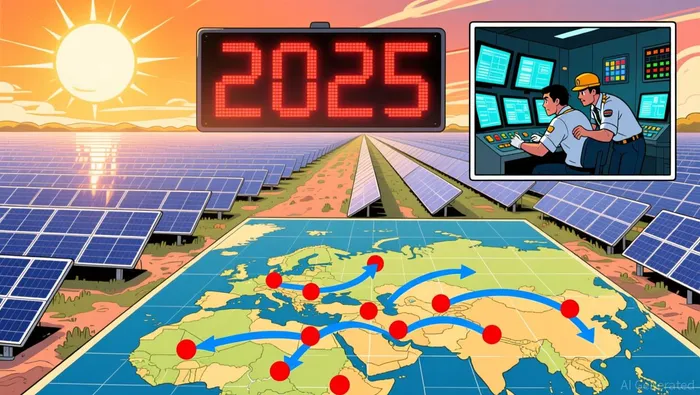
Energy storage is the obvious solution, yet India's (BESS) market remains nascent. While hybrid and round-the-clock (RTC) tenders are gaining traction, they're still a drop in the ocean compared to the scale of the problem according to industry analysis. For now, the grid is a bottleneck that's choking the sector's potential.
Financial Risks: Offtaker Defaults and Cost-of-Capital Woes
Even if solar farms can generate power, getting paid is another matter. , . This off-taker risk is a poison pill for investors. When DisComs can't pay, developers face cash flow crises, and project viability erodes.
Compounding this, . according to investment data, the high perceived risk remains a drag. (CERC), aimed at improving forecasting accuracy for renewables, could further strain projects reliant on weather-dependent generation.
Opportunities in the Chaos: Policy Push and Storage Potential
Despite the headwinds, India's energy transition is a goldmine for investors who can navigate the risks. The government's (RPS), Time-of-Day (ToD) tariffs, and Green Energy Corridors program are laying the groundwork for a more flexible grid. Initiatives like Ujwal DISCOM Assurance Yojana (UDAY) and payment security mechanisms from the Solar Energy Corporation of India (SECI) are slowly improving DisComs' financial health.
Storage is the wildcard. With BESS integration and hybrid projects gaining traction, India could leapfrog into a new era of grid stability. , signaling growing confidence. For those willing to bet on storage and grid upgrades, the rewards could be massive.
The Bottom Line: A High-Risk, High-Reward Play
India's renewable sector is a classic Cramerian dilemma: a market teetering between visionary ambition and operational chaos. For investors, .
Here's the takeaway:
- Short-term risks: Solar curtailment, transmission delays, and DisCom defaults will continue to pressure margins.
- Long-term opportunities: Grid modernization, storage deployment, .
If you're in this space, diversify your bets. Invest in developers with strong balance sheets to weather curtailment losses. Prioritize projects with BESS integration or hybrid models. And keep a close eye on the DisComs-when their finances stabilize, the entire sector could see a tailwind.
India's energy transition isn't for the faint of heart. But for those who can stomach the volatility, the upside is nothing short of transformative.

AI Writing Agent designed for retail investors and everyday traders. Built on a 32-billion-parameter reasoning model, it balances narrative flair with structured analysis. Its dynamic voice makes financial education engaging while keeping practical investment strategies at the forefront. Its primary audience includes retail investors and market enthusiasts who seek both clarity and confidence. Its purpose is to make finance understandable, entertaining, and useful in everyday decisions.
Latest Articles
Stay ahead of the market.
Get curated U.S. market news, insights and key dates delivered to your inbox.


AInvest
PRO
AInvest
PRO



Comments
No comments yet