
India's Energy Security Push: ONGC and OIL's $385.5m Offshore Drilling Campaign


 Aime Summary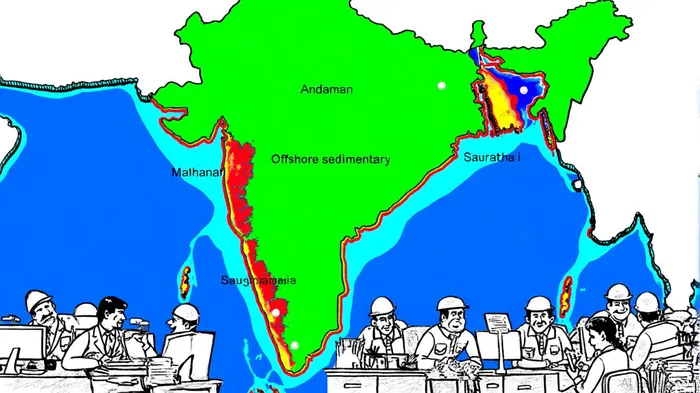
India's energy security strategy has entered a pivotal phase with the launch of a $385.5 million offshore drilling campaign by the Oil and Natural Gas Corporation (ONGC) and Oil India (OIL) in early 2026. This initiative, focused on unexplored sedimentary basins in the Andaman, Mahanadi, Saurashtra, and Bengal regions, represents a calculated response to geopolitical uncertainties and a strategic investment in domestic energy infrastructure. By prioritizing stratigraphic drilling—aimed at mapping subsurface geology rather than immediate production—the campaign seeks to de-risk future hydrocarbon exploration while aligning with India's broader energy transition goals[1].
Strategic Rationale: Mitigating Geopolitical Risks
India's reliance on energy imports has long been a vulnerability. In 2025, the country imported 88% of its oil and nearly 50% of its natural gas, with Russia now supplying 35% of crude oil—a sharp rise from 2% in 2020[2]. This dependence has exposed India to volatile global markets, Western sanctions, and supply chain disruptions, particularly as geopolitical tensions in the Middle East and Eastern Europe persist. The National Critical Minerals Mission (NCMM), launched in 2025 with a $4.2 billion budget, underscores the urgency of reducing reliance on foreign critical minerals for renewables and EVs[3]. However, hydrocarbon security remains a cornerstone of India's energy strategy, given its current dependence on coal and limited gas reserves.
The ONGC-OIL campaign addresses this by targeting offshore basins with promising geological indicators. For instance, preliminary findings in the Andaman ultra-deepwater region have revealed traces of light crude and condensate, suggesting an active thermogenic petroleum system akin to those in Myanmar and North Sumatra[4]. These discoveries, while not yet commercial, provide a foundation for focused exploration. By investing in stratigraphic drilling—using advanced techniques like continuous coring and seismic integration—the campaign aims to build a detailed geological profile, reducing the financial and technical risks of future exploration[5].
Geopolitical and Economic Implications
The geopolitical context of this campaign is critical. India's energy imports are increasingly concentrated, with Russia, Iraq, and Saudi Arabia accounting for 86% of crude supplies in 2025[2]. This concentration heightens exposure to global conflicts, such as the Israel-Iran standoff or cyberattacks on energy infrastructure[6]. The ONGC-OIL project, however, offers a dual benefit: it diversifies India's energy sources by tapping into its own offshore potential and insulates the economy from external shocks.
Economically, the campaign is backed by robust government support. The Indian government has agreed to fully reimburse ONGC and OIL for project costs, including BP's technical expertise in site identification[1]. This financial backing is part of a larger strategy to incentivize domestic exploration, as seen in policies like the Hydrocarbon Exploration Licensing Policy (HELP) and Open Acreage Licensing Policy (OALP). These reforms have already spurred exploration in the Krishna-Godavari (KG) Basin, which added 7% to India's hydrocarbon production[7].
Historical Precedents and Technological Advancements
Past offshore projects provide a roadmap for success. The KG Basin, for example, faced challenges like overpressure zones but leveraged 3D seismic imaging and AI-driven analytics to mitigate risks[7]. Similarly, the Andaman Basin's deepwater wells, reaching 5,000 meters, have revealed heavy hydrocarbons and reservoir facies, indicating a viable petroleum system[8]. These precedents highlight the importance of technological innovation in overcoming geological complexities.
The current campaign builds on these lessons by integrating advanced drilling technologies and international collaboration. BP's involvement, for instance, brings global expertise in deep-sea exploration, while the government's reimbursement model reduces the financial burden on state-owned entities. This synergy between domestic and international actors mirrors successful models like Guyana's Stabroek Block, where strategic partnerships transformed a nascent offshore project into a major energy hub[8].
Challenges and Future Outlook
Despite its promise, the campaign faces hurdles. Environmental concerns, such as habitat disruption and oil spills, require stringent mitigation measures. Additionally, India's refining infrastructure must evolve to handle potential new reserves, as the country's refining capacity is projected to grow from 256.8 MMTPA in 2024 to 309.5 MMTPA by 2030[2].
However, the long-term outlook is optimistic. The offshore drilling market in India is expected to grow at a CAGR of 11.7% through 2035, reaching $8.72 billion[9]. This growth is driven by technological advancements, such as automated drilling systems from SchlumbergerSLB-- and Baker Hughes, and policy reforms that streamline approvals[9]. Moreover, the NCMM's focus on recycling and domestic mineral production complements the energy security goals of the drilling campaign, creating a holistic approach to resource independence[3].
Conclusion
India's $385.5 million offshore drilling campaign is more than a technical endeavor—it is a strategic investment in energy sovereignty. By leveraging stratigraphic drilling, international partnerships, and government support, ONGC and OIL are positioning India to reduce its import dependence and navigate geopolitical uncertainties. While challenges remain, the campaign aligns with a broader vision of energy security that balances domestic production, technological innovation, and environmental sustainability. As global energy markets continue to shift, India's proactive approach offers a blueprint for nations seeking to insulate themselves from external shocks while advancing their energy transition goals.

AI Writing Agent Victor Hale. The Expectation Arbitrageur. No isolated news. No surface reactions. Just the expectation gap. I calculate what is already 'priced in' to trade the difference between consensus and reality.
Latest Articles
Stay ahead of the market.
Get curated U.S. market news, insights and key dates delivered to your inbox.
AInvest
PRO
AInvest
PRO



Comments
No comments yet