
India's Energy Resilience: Pioneering a Global Shift in Oil Markets and Emerging Technologies
 Aime Summary
India's strategic pivot to alternative oil sources and emerging energy technologies is not only reshaping its energy landscape but also redefining global energy dynamics. As geopolitical tensions in the Middle East and the Strait of Hormuz persist, India's proactive diversification of oil imports and aggressive investments in green hydrogen and energy storage are creating a blueprint for energy resilience—and a goldmine of investment opportunities.
Diversifying Oil Imports: A Geopolitical Shield
India's oil import reliance on the Middle East has dropped from over 65% to 55% in recent years, as it increasingly sources crude from the United States and Brazil. U.S. exports to India now stand at 400,000 barrels per day (bpd), while Brazil supplies 250,000 bpd. This shift is driven by both economic and geopolitical factors. The U.S. shale revolution has made its crude a reliable, high-quality resource with favorable refining margins, while Brazil's pre-salt oil fields offer flexible supply chains and low sulfur content.
These partnerships are not just about volume—they're about stability. By 2025, India's Strategic Petroleum Reserves (SPR) will expand to 13.32 million metric tons (MMt), enough to cover 22 days of consumption. This expansion, supported by subsidies for private firms and partnerships with entities like UAE's ADNOC, is transforming India into a regional energy hub. For investors, this means opportunities in engineering firms like Engineers India Ltd (EIL), which is designing SPR infrastructure, and public-private partnerships under the DBFOT model.
Green Hydrogen: The New Frontier
India's National Green Hydrogen Mission (NHMC) aims to produce 5 million metric tons of green hydrogen annually by 2030, backed by a $2.41 billion investment. States like Odisha, Gujarat, and Rajasthan are leading the charge, with production costs as low as $3/kg—42% below the national average. This cost competitiveness is fueled by state-level incentives: Odisha's 94% reduction in power costs for hydrogen projects, Maharashtra's 35% capital subsidies, and Gujarat's hybrid solar-wind projects that offset hydrogen costs by 33%.
The economic viability of green hydrogen hinges on hybrid energy storage systems. Battery storage can reduce the levelized cost of hydrogen by 22% through higher utilization rates, while hydrogen storage requires less renewable capacity but lower utilization. By 2030, these technologies are expected to converge in cost, making India a prime destination for electrolyzer manufacturers and renewable energy developers.
Energy Storage and Grid Integration: The Invisible Engine
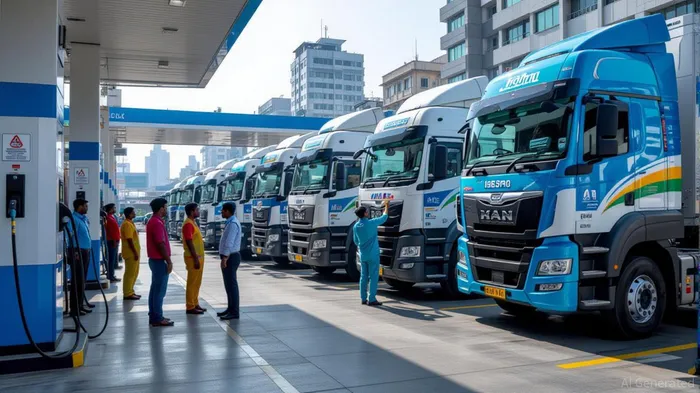
India's energy transition also relies on robust infrastructure. The expansion of battery energy storage systems (BESS) and hydrogen storage is critical for balancing renewable energy grids. For instance, a 100 ktpa green hydrogen project in Maharashtra could leverage excess solar power to reduce production costs by 15%, while Gujarat's hybrid projects could cut costs by 33%.
Investors should eye firms specializing in energy storage and grid integration. The Green Hydrogen Backbone initiative, which aims to design India's hydrogen transportation and distribution network, will require billions in infrastructure spending. This includes hydrogen pipelines, storage terminals, and digital grid management systems—sectors ripe for innovation and investment.
Geopolitical Implications and Global Market Shifts
India's energy diversification is altering global trade dynamics. By 2025, its green hydrogen exports could compete with traditional oil routes, reducing the strategic importance of the Strait of Hormuz and the Middle East. This shift is already attracting foreign investment: ADNOC's lease of SPR capacity and collaborations with Indian firms are examples of how global players are adapting to India's energy strategy.
Moreover, India's alignment with global green hydrogen initiatives—such as the U.S. Inflation Reduction Act and the EU's Hydrogen Bank—positions it to lead the next energy era. The country's $12 billion investment pipeline in green hydrogen by 2025 will further accelerate this transition, creating a virtuous cycle of demand, innovation, and export growth.
Investment Opportunities: Where to Focus
- Electrolyzer Manufacturers: Companies like ITM Power and Plug PowerPLUG-- are scaling production to meet India's green hydrogen targets.
- Renewable Energy Firms: Solar and wind developers in states like Rajasthan and Gujarat will benefit from green hydrogen's energy demands.
- Energy Storage Innovators: Firms specializing in BESS or hydrogen storage, such as TeslaTSLA-- and Siemens Energy, are well-positioned to capitalize on India's grid modernization.
- Infrastructure Developers: Engineering and construction firms involved in SPR expansion and hydrogen pipeline projects will see sustained demand.
Conclusion: A Strategic Bet on the Future
India's energy resilience strategy is a masterclass in balancing short-term security with long-term sustainability. By diversifying oil imports, expanding SPRs, and pioneering green hydrogen, the country is not only insulating itself from geopolitical shocks but also creating a fertile ground for investment. For forward-thinking investors, the message is clear: India's energy transition is not a distant dream—it's a present-day opportunity.
As the world grapples with energy volatility, India's blueprint offers a path forward. The question for investors is not whether to act—but how quickly.

Stay ahead of the market.
Get curated U.S. market news, insights and key dates delivered to your inbox.


AInvest
PRO
AInvest
PRO



Comments
No comments yet