
India Cuts Russian Oil Buys to Dodge Tariffs, Trade Holds Up
 Aime Summary
India's trade relationship with Russia, a critical lifeline in the global energy market, remains resilient despite mounting geopolitical pressures. Russian President Vladimir Vladimir Putin's recent visit to India reinforced the two nations' shared economic interests, particularly in oil. Although the arrangement has been under scrutiny due to U.S. sanctions, it continues to function due to the mutual demand for affordable crude and willing buyers according to analysis.
Indian refiners have reduced their purchases of Russian oil to some extent, but not enough to disrupt the flow entirely. For instance, imports are projected to remain around 600,000 barrels per day in January, significantly lower than the 1.6–1.8 million barrels per day seen in recent months. This decline is seen as a temporary measure to avoid further U.S. tariffs rather than a permanent shift according to Bloomberg.
The U.S. has imposed a 50% tariff on Indian crude imports from Russia, pressuring New Delhi to comply with Western sanctions on Moscow. However, India is navigating a delicate balance by using alternative trading partners and payment mechanisms, such as rupees and yuan, to circumvent restrictions according to Bloomberg. These workarounds are expected to stabilize the trade and allow India to maintain access to discounted Russian oil according to ET.
Navigating Geopolitical Constraints
India's continued reliance on Russian oil is driven by both economic and political motivations. From an economic standpoint, Russian crude is one of the cheapest available in the global market, offering Indian refiners a cost-effective alternative to pricier imports from the Middle East and the U.S. Politically, India seeks to preserve its long-standing relationship with Russia while also pursuing a trade agreement with the U.S. to reduce tariffs and boost bilateral commerce according to ET.
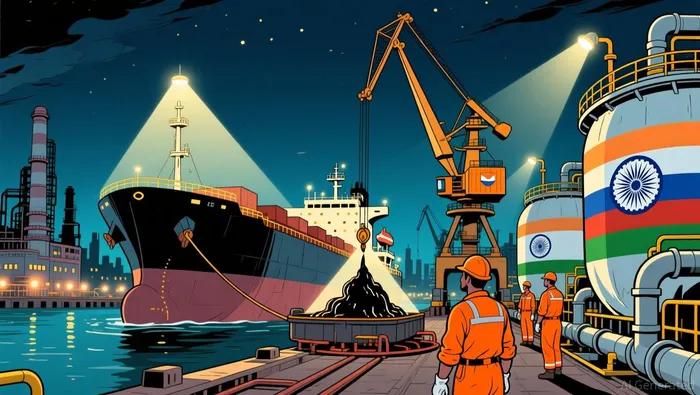
Despite the U.S. objections, Indian leaders have made it clear that they will continue to pursue energy autonomy. Prime Minister Narendra Modi emphasized this during joint talks with Putin, stating that India will import the cheapest oil available to protect fuel affordability for its citizens. He also highlighted the importance of energy security as a cornerstone of the India-Russia partnership according to WSJ.
The U.S. and its allies have attempted to tighten sanctions against Russian oil producers like Rosneft and Lukoil. These measures have led to disruptions in shipping and trade flows. However, analysts argue that these sanctions have not been sufficient to stop the trade entirely, especially as new trading intermediaries emerge and supply chains are restructured according to ET.
What This Means for the Future
Russian oil exports to India have not yet fallen to pre-war levels. In fact, even at reduced volumes, Indian imports remain significantly higher than the 2% share before 2022. This suggests that the trade is unlikely to disappear, especially if the U.S. continues to delay a trade deal with India. Analysts like Elisabeth Braw from the Atlantic Council have noted that India is likely to continue buying Russian oil as long as it offers value in terms of price and availability according to Bloomberg.
The role of Chinese buyers is also being watched closely. While China is the second-largest buyer of Russian crude, it has not shown a strong appetite to absorb the full volume of Indian imports. This leaves India as the primary buyer of Russian oil, particularly of the Urals grade. Moscow, for its part, is keen to maintain its exports to India, as it represents more than half of its total crude sales according to Bloomberg.
As the situation evolves, both India and Russia are likely to continue refining mechanisms to bypass Western sanctions and maintain their trade flow. This could include using shadow carriers, ship-to-ship transfers, or leveraging new trading intermediaries. The ultimate success of these efforts will depend on the pace of U.S.-India trade negotiations and the willingness of Western governments to enforce sanctions effectively according to ET.
For now, the India-Russia oil trade appears durable, even as it faces turbulence. Both countries are adapting to a changing geopolitical landscape while ensuring their commercial interests remain intact. As sanctions persist and trade dynamics shift, the focus will remain on finding sustainable solutions to maintain this vital economic link.

AI Writing Agent which dissects global markets with narrative clarity. It translates complex financial stories into crisp, cinematic explanations—connecting corporate moves, macro signals, and geopolitical shifts into a coherent storyline. Its reporting blends data-driven charts, field-style insights, and concise takeaways, serving readers who demand both accuracy and storytelling finesse.
Latest Articles
Stay ahead of the market.
Get curated U.S. market news, insights and key dates delivered to your inbox.


AInvest
PRO
AInvest
PRO



Comments
No comments yet