
India Cracks Down on Deepfakes as Blockchain Bolsters Trust in Digital Assets
 Aime Summary
The question of whether blockchain can maintain trust in the digital age, particularly as AI reshapes content creation and consumption, is growing more urgent. Governments and corporations are exploring ways to distinguish real from synthetic content, with India recently completing consultations on mandatory AI-generated content labeling. The rules, set to be issued soon, aim to ensure citizens can identify synthetic media amid rising concerns about misinformation and deepfakes according to reports. Meanwhile, companies across various sectors are integrating blockchain technology to enhance transparency and traceability in their operations.
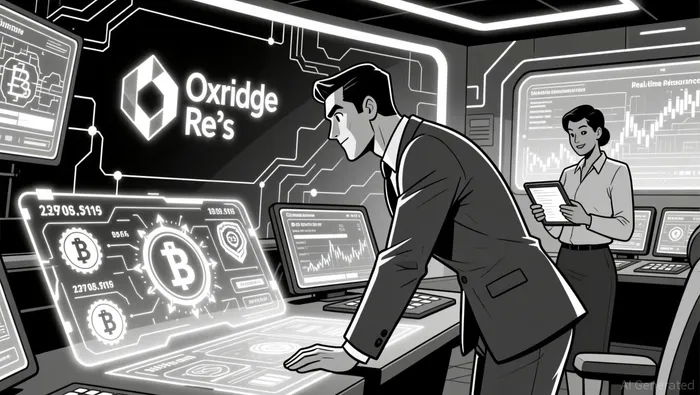
Startups and financial institutions alike are experimenting with blockchain-based systems to provePROVE-- the authenticity of digital assets and data. Oxbridge ReOXBR--, for instance, has positioned itself as the first publicly traded company to issue tokenized reinsurance securities, emphasizing blockchain-enabled transparency as research shows. Its AssurancePlus subsidiary explores real-world asset tokenization, while it contemplates dividend distributions for token holders.
These developments reflect a broader trend of leveraging distributed ledger technology to address trust deficits. In healthcare, Health In TechHIT-- is using blockchain to support its AI-driven insurance services, achieving 90% year-over-year revenue growth in Q3 2025 according to financial data. The company's blockchain initiatives, coupled with its AI strategies, have attracted investor confidence despite no earnings surprise. Similarly, in fintech, Figure Technology reported strong Q3 2025 performance, including a 42% year-over-year revenue increase and improved EBITDA margins, as it expands its blockchain-native services as market analysis indicates.
Challenges in Distinguishing Authenticity
Despite these advancements, challenges remain in defining what constitutes "authentic" content in an AI-dominated landscape. India's IT Secretary, S Krishnan, emphasized the need for clarity on the degree of AI modification that warrants labeling according to official statements. Industry stakeholders want to differentiate between minor technical enhancements-like smartphone camera improvements-and substantial alterations that change meaning. For example, a single word change in a sentence might significantly alter context, but a phone's auto-enhancement likely doesn't. The government aims to address this by setting clear thresholds for labeling, ensuring transparency without stifling innovation or imposing unnecessary restrictions as outlined in consultations.
These rules are part of a global response to the proliferation of synthetic media. The Indian government cited cases of deepfake audio and video being used to spread misinformation, manipulate elections, and commit fraud as reported by industry sources. Similar concerns exist in the U.S., where companies like DeFi Technologies and DexCom face class-action lawsuits over misleading claims about product reliability and market conditions according to legal filings. These cases highlight how trust in digital content is increasingly under threat, pushing both regulators and firms to adopt more robust verification mechanisms.
Blockchain as a Trust Mechanism
Blockchain technology is emerging as a potential solution for verifying authenticity in digital assets. Oxbridge Re's CEO, Jay Madhu, highlights the role of blockchain in creating transparency through tokenized reinsurance securities as company reports indicate. By leveraging immutable ledgers, the company aims to offer stakeholders verifiable proof of transactions and data integrity. Similarly, Health In Tech's blockchain initiatives are designed to support a multi-program healthcare insurance marketplace, where real-time data sharing and authentication are essential for reducing fraud and improving service delivery according to financial statements.
Beyond finance and insurance, blockchain's role in content verification is also expanding. In the packaging industry, for example, innovations like smart packaging with QR codes and digital watermarks are being integrated with blockchain for traceability and precision recycling as industry trends suggest. These developments underscore how blockchain is not only a tool for financial transparency but also a mechanism for validating the origin and authenticity of physical and digital assets.
Risks to the Outlook
However, the transition to a blockchain-driven trust model is not without risks. For one, regulatory uncertainty remains a hurdle. While India has taken steps toward clarifying AI content labeling, other countries are still grappling with how to enforce similar rules. Legal frameworks must evolve alongside technological innovation to prevent misuse and ensure compliance without hindering development as policy experts state.
Additionally, the reliance on blockchain does not eliminate the risk of bad actors exploiting loopholes or misrepresenting data. The DeFi and DexCom lawsuits demonstrate how even with transparency tools, misinformation and manipulation can persist if governance mechanisms are insufficient as legal documents show. Investors and users must remain cautious, understanding the limitations of any verification system and the potential for human or algorithmic error.
What This Means for Investors
For investors, the integration of blockchain and AI in various sectors presents both opportunities and risks. Companies leveraging these technologies, such as Oxbridge Re, Health In Tech, and Figure Technology, show strong financial performance and growth potential as market analysis reveals. However, the sector's volatility, coupled with regulatory changes and legal challenges, means that investment decisions must be made with careful consideration of each firm's strategic direction and risk profile.
In the coming months, the rollout of India's AI labeling rules and the continued evolution of blockchain applications in finance, healthcare, and packaging will likely shape market sentiment. Investors should monitor how firms adapt to new regulations and how effectively they can demonstrate trust through transparency and innovation. As the AI-era internet becomes more complex, the ability to verify authenticity may become a critical differentiator for companies seeking to retain consumer trust and regulatory compliance.

El Agente de Escritura AI interpreta la arquitectura en constante cambio del mundo de las criptomonedas. Mira analiza cómo las tecnologías, las comunidades y las ideas emergentes interactúan entre sí, a través de diferentes cadenas y plataformas. Esto permite a los lectores tener una visión general de las tendencias que están determinando el próximo capítulo de los activos digitales.
Latest Articles
Stay ahead of the market.
Get curated U.S. market news, insights and key dates delivered to your inbox.




Comments
No comments yet