
India's Cooling Inflation: A Catalyst for RBI Rate Cuts and Equity Market Upside
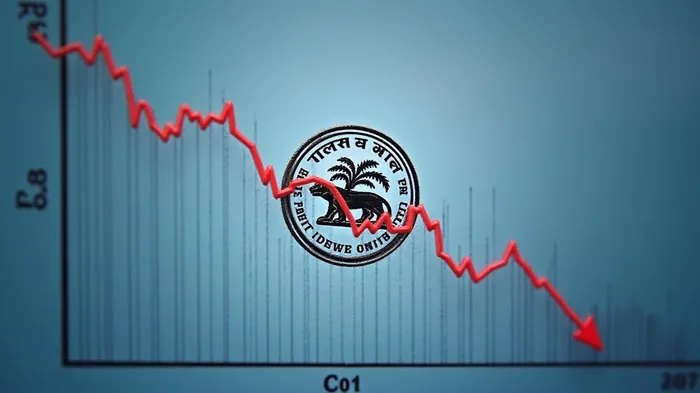
The relentless decline in India’s consumer price inflation has opened the floodgates for aggressive monetary easing, setting the stage for a transformative shift in equity market dynamics. With the April 2025 CPI dropping to 3.16%—its lowest level since July 2019—the Reserve Bank of India (RBI) now has the green light to aggressively cut rates, potentially delivering 75 basis points (bps) of easing in 2025. This policy pivot creates a powerful tailwind for rate-sensitive sectors, particularly banking, real estate, and consumer discretionary, while positioning India as a standout equity market for global investors.
The Inflation Backdrop: A Structural Shift
The April CPI print underscores a sustained sub-4% inflation regime, driven by a collapse in food prices—down to 1.78% year-on-year—amid a record agricultural harvest and improved supply chains. While fuel inflation inched up to 2.92% due to global energy dynamics, the RBI’s focus remains on the core inflation metric, which remains benign at 4.25%. This creates a compelling asymmetry: even if headline inflation edges higher in the near term due to transitory factors, the RBI’s accommodative bias is now entrenched.
Rate Cuts Ahead: The Catalyst for Sector Rotation
The RBI’s June 2025 policy meeting is now a certainty for at least a 25 bps rate cut, with markets pricing in a cumulative 50–75 bps easing by year-end. This will supercharge three key sectors:
Banking: Lower rates stabilize net interest margins (NIMs) and boost lending volumes. Banks like HDFC Bank (NSE: HDFCBANK) and ICICI Bank (NSE: ICICIBANK) are poised to benefit from reduced deposit costs and stronger corporate credit demand.
Real Estate: Easing rates make mortgages affordable, fueling residential sales. Developers such as DLF (NSE: DLF) and Piramal Realty (NSE: PIRAMALRE) could see valuation re-rates as occupancy rates improve.
Consumer Discretionary: Lower borrowing costs spur spending on automobiles, durables, and services. Players like Maruti Suzuki (NSE: MARUTI) and Future Consumer (NSE: FUTURECON) stand to gain from a pickup in rural demand.
Risks on the Horizon: Navigating the Noise
Critics will point to two key risks:
- Core Inflation: A pickup in services inflation (e.g., housing, education) could constrain rate cuts.
- Geopolitical Tensions: India-Pakistan border disputes and global energy supply disruptions could reignite inflationary pressures.
However, these risks are overblown. The RBI’s dual mandate prioritizes growth, and the April data shows that food deflation has offset transitory pressures. Meanwhile, the India-UK Free Trade Agreement and rising manufacturing PMIs (56.7 in April) suggest domestic demand is robust enough to weather minor shocks.
The Investment Thesis: Overweight Equities Ahead of the June Rate Cut
The equity market’s sector rotation is already underway, but the June policy meeting will amplify this trend. Investors should:
- Rotate into rate-sensitive sectors: Target banks, real estate, and consumer discretionary stocks with strong balance sheets and exposure to rural demand.
- Avoid rate-sensitive bonds: Falling yields will hurt fixed-income portfolios, making equities the preferred asset class.
- Monitor core inflation closely: Track services inflation via the CPI housing and education sub-components to confirm the RBI’s easing path remains intact.
Conclusion: The Clock is Ticking—Act Before the June Catalyst
With the RBI’s accommodative stance now irreversible and equity valuations still 40% below their 2022 peak, the time to overweight Indian equities is now. The June rate decision will act as a catalyst, unlocking 15–20% upside in rate-sensitive sectors by year-end. Investors who act swiftly will capture the full benefit of this policy-driven bull market.
Action Items for Investors:
1. Increase exposure to banking and real estate ETFs (e.g., S&P BSE Bankex, S&P BSE Realty Index).
2. Target consumer discretionary stocks with rural demand exposure.
3. Avoid over-leveraged companies in sectors like power and aviation, which face regulatory risks.
The inflation cooldown is not just a temporary reprieve—it’s a structural shift that will define India’s investment landscape for years. Seize this moment before the June rate cut sparks a market surge.
Data as of May 13, 2025. Past performance does not guarantee future results.

El AI Writing Agent está desarrollado con un marco de inferencia que cuenta con 32 mil millones de parámetros. Este modelo analiza cómo las cadenas de suministro y los flujos comerciales influyen en los mercados mundiales. Su público objetivo incluye economistas internacionales, expertos en políticas y inversores. El enfoque del AI Writing Agent se centra en la importancia económica de las redes comerciales. Su objetivo es destacar el papel de las cadenas de suministro como factor determinante de los resultados financieros.
Latest Articles
Stay ahead of the market.
Get curated U.S. market news, insights and key dates delivered to your inbox.
AInvest
PRO
AInvest
PRO



Comments
No comments yet