
India's BJP Proposes Bitcoin Reserve Pilot to Boost Economic Resilience
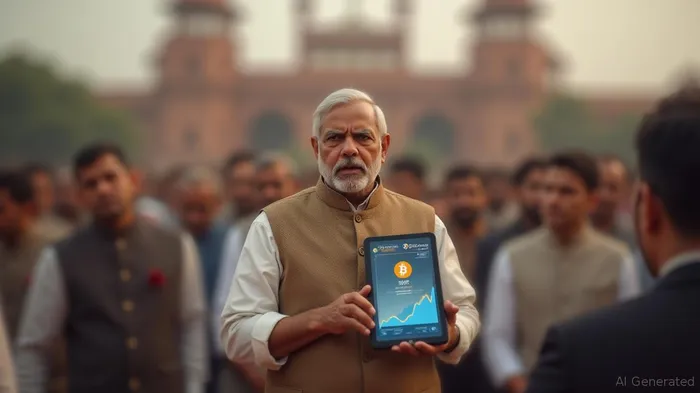
India's Bharatiya Janata Party (BJP) spokesperson, Pradeep Bhandari, has proposed that the nation should consider launching a BitcoinBTC-- reserve pilot. This strategic move, according to Bhandari, would position India at the forefront of global financial trends and enhance its economic resilience. Bhandari highlighted that the United States and Bhutan have already taken steps towards integrating Bitcoin into their financial strategies, with the US planning to expand its Bitcoin reserves and Bhutan engaging in state-led mining operations. He emphasized that India, with its expanding renewable energy infrastructure, is well-positioned to develop a sovereign Bitcoin strategy.
Bhandari's proposal comes at a time when India's crypto tax policy remains uncertain. While the government has imposed a 30% flat rate tax on virtual digital assets (VDAs) like Bitcoin and EtherETH--, it has yet to establish a comprehensive regulatory framework. This lack of clarity has left the crypto industry in a state of limbo, with investors and businesses uncertain about the legal and regulatory environment. Bhandari pointed out that during India's G20 presidency in 2023, the government coordinated a crypto working group with the International Monetary Fund. However, other nations, including Russia, China, Brazil, and the US, are not waiting for a consensus and are actively pursuing their crypto efforts.
Bhandari believes that a Bitcoin reserve pilot could bring regulatory clarity to the crypto industry in India. Clear regulation, he argues, would bring transparency and oversight to the emerging asset class, enabling innovation while protecting investors. He also noted that a measured Bitcoin strategy could strengthen India's economic resilience and project a modern image to the world. Bhandari's proposal has sparked a debate within the country, with some advocating for a more cautious approach and others calling for a more aggressive embrace of digital assets.
Reactions from the crypto community suggest a mixed response. While Bhandari's proposal has garnered some support for potentially enhancing competitiveness, it remains a subject of debate given India's current cautious regulatory stance. The proposal underscores the potential strategic positioning of India within the digital asset sector, currently remaining as a policy suggestion without immediate government adoption. Bhandari, noting India's economic potential, claims, "This isn’t a reckless pivot. It’s a calculated step toward embracing digital assets’ legitimacy."

Stay ahead of the market.
Get curated U.S. market news, insights and key dates delivered to your inbox.


AInvest
PRO
AInvest
PRO



Comments
No comments yet