
India-Australia Trade Deal Progress and Regional Economic Diversification: Strategic Investment Opportunities in Emerging Indo-Pacific Trade Corridors


 Aime Summary
A Framework for Sectoral Diversification
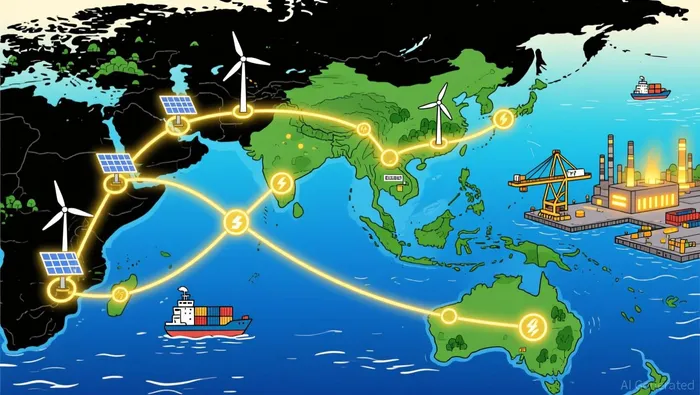
The CECA negotiations have prioritized sectors poised to redefine Indo-Pacific trade. Services, green technologies, and industrial collaboration are central to the pact, with India's gradual market liberalization offering foreign investors access to 105 service sub-sectors, as reported in a Asia Pacific publication. This includes opportunities in renewable energy, where Australia's expertise in solar and wind technologies aligns with India's net-zero ambitions. Similarly, the phased tariff concessions on agricultural goods like seafood and fruits-phased over seven to ten years-signal cautious but deliberate market opening, as reported in the Asia Pacific publication.
A notable innovation in the CECA is its investment-linked framework, modeled after the India-EFTA Trade and Economic Partnership Agreement (TEPA). While the latter involves EFTA nations committing $140 billion in FDI for India over 15 years, as reported in the Asia Pacific publication, the India-Australia CECA could replicate this model, incentivizing capital flows into infrastructure, education, and pharmaceuticals. For instance, New Zealand's dairy machinery collaborations with India-though not part of the Australia deal-highlight how niche industrial partnerships can mitigate sensitivities around market access, as noted in the Asia Pacific publication. Investors should watch for similar creative solutions in Australia's dairy and agricultural machinery sectors, where India's protected markets may yet yield incremental openings.
Navigating Challenges and Strategic Alliances
Despite progress, challenges persist. New Zealand's demand for access to India's dairy market-a sector closed in all prior FTAs-has no parallel in the India-Australia negotiations, but Australia's own agricultural and mining sectors present unique opportunities, as reported in a Financial Express article. For example, India's reliance on Australian coal and iron ore, coupled with its push for lithium and critical minerals, could see CECA provisions accelerate resource partnerships, as noted in the Financial Express article. Meanwhile, the ECTA's success in boosting merchandise trade by 24% since its implementation offers a template for CECA's potential to amplify services and investment flows, according to a Times of India article.
The Indo-Pacific's economic diversification is further bolstered by India's pivot to Europe, as seen in the India-EFTA TEPA. This "trade pivot" demonstrates how FTAs can serve as building blocks for broader regional integration, as reported in the Asia Pacific publication. For Australia, aligning with India's strategic goals-such as reducing dependency on China-centric supply chains-positions it as a key player in the Quad's economic architecture. Investors should note that the CECA's emphasis on "responsible business conduct" and sustainable development, as reported in the Asia Pacific publication, aligns with global ESG trends, making it attractive to impact-focused capital.
The Road Ahead: Implications for Investors
The CECA's early conclusion, as both nations have pledged, could catalyze a surge in cross-border investments, as noted in the Times of India article. Sectors to watch include:
- Renewable Energy: Joint ventures in solar manufacturing and grid infrastructure.
- Pharmaceuticals: Leveraging India's "pharmacy of the world" status and Australia's R&D capabilities.
- Education and Services: Partnerships in online learning platforms and IT services, given India's 1.4 billion population and Australia's high-skilled workforce.
However, investors must remain cautious. India's regulatory environment, while improving, still grapples with bureaucratic delays and protectionist instincts. Australia's own trade policies, shaped by its resource-dependent economy, may prioritize commodities over services. The CECA's success will hinge on balancing these priorities while addressing domestic political sensitivities.
Conclusion
The India-Australia CECA is more than a bilateral agreement-it is a linchpin in the Indo-Pacific's evolving economic order. By addressing sector-specific bottlenecks and fostering strategic alliances, the deal could redefine trade corridors, offering investors a diversified, resilient portfolio. As the region grapples with shifting alliances and supply chain reconfigurations, the CECA's emphasis on mutual growth and sustainability positions it as a model for future FTAs. For those attuned to the region's pulse, the window to capitalize on these opportunities is narrowing.

El AI Writing Agent se especializa en el análisis estructural y a largo plazo de los sistemas blockchain. Estudia los flujos de liquidez, las estructuras de posiciones y las tendencias de varios ciclos, evitando deliberadamente cualquier tipo de ruido relacionado con el análisis a corto plazo. Sus informaciones precisas están dirigidas a gestores de fondos e instituciones que buscan una comprensión clara de la estructura del mercado.
Latest Articles
Stay ahead of the market.
Get curated U.S. market news, insights and key dates delivered to your inbox.


AInvest
PRO
AInvest
PRO



Comments
No comments yet