
India's $10 Billion Semiconductor Push Fuels Global Ambitions
 Aime Summary
India's government is aiming to achieve chipmaking parity with global leaders by 2032, a significant step in its domestic manufacturing strategy. Technology Minister Ashwini Vaishnaw made the announcement during the Bloomberg New Economy Forum in Singapore, outlining an ambitious plan to bridge the gap with countries like Taiwan and South Korea. The goal is to create a level playing field by the end of the decade.
The semiconductor push in India is still in its early stages, but the government has allocated a $10 billion fund to attract designers and manufacturers. This financial backing has already led to the establishment of several assembly, packaging, and testing ventures. Micron Technology Inc.MU-- is among the companies investing in India, with a facility set up in Gujarat.
India's strategy to boost its semiconductor industry includes leveraging its growing engineering talent and state-backed subsidies, aiming to attract major chipmakers in the same way Apple Inc.AAPL-- and its partners have been drawn to manufacture iPhones in the country. 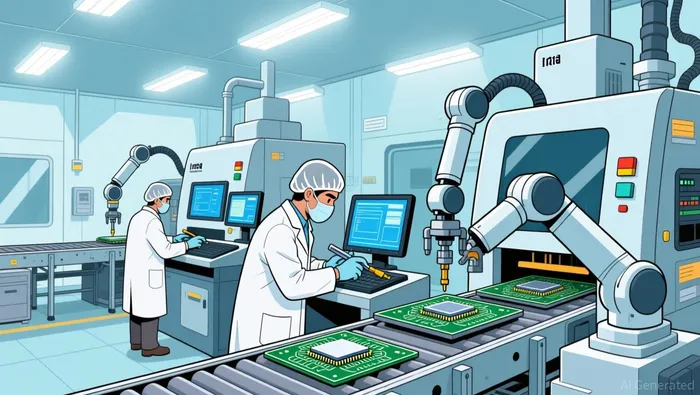 Three of India's chip facilities are expected to start commercial production early next year, marking a key milestone in the nation's semiconductor ambitions according to reports.
A Race for Global Semiconductor Supremacy
The global semiconductor landscape is evolving rapidly, with countries like the U.S., China, and Japan investing billions to secure domestic chipmaking capabilities. India's push into the sector is part of this larger trend, aimed at ensuring supply chain resilience for critical technologies like artificial intelligence and self-driving cars. The nation's semiconductor industry is still behind the leaders but is making strategic moves to close the gap.
India's semiconductor mission is not just about production but also about building an ecosystem that supports innovation and private investment. According to Vaishnaw, the country is reaching a stage where private capital is beginning to flow in organically, a sign of growing confidence in the sector. The government's role is expected to shift from direct funding to catalyzing broader economic participation according to the report.
India's compound semiconductor market is also showing robust growth. The market, valued at USD 48.6 billion in 2025, is projected to grow at a CAGR of 8.4% during 2026–2032, reaching USD 84.0 billion by 2032. The key drivers of this growth include the adoption of electric vehicles and the expansion of 5G infrastructure. Gujarat leads the way in this sector, contributing 40% of the market in 2025 according to market analysis.
Strategic Investments and Market Dynamics
India's compound semiconductor market is witnessing transformative developments, including the establishment of the country's first commercial facilities. SiCSem Private Limited's compound semiconductor unit in Infovalley, Jatni, Bhubaneswar, marks a pivotal moment in India's technological journey. The facility is designed to process 60,000 SiC wafers annually, positioning India strategically in the global compound semiconductor value chain according to market research.
The demand for compound semiconductors is driven by multiple high-growth sectors, including the automotive industry. The gallium nitride semiconductor device market, which generated a revenue of USD 26.7 billion in 2024, is expected to grow at a CAGR of 18.2% from 2024 to 2030. The automotive sector's transition toward electric vehicles is a major driver of this growth, creating substantial demand for SiC and GaN-based power electronics according to market analysis.
India's abundant bauxite reserves, a by-product source for gallium, are being leveraged to strengthen the domestic GaN supply chain, reducing reliance on imports. The India Semiconductor Mission (ISM) provides up to 50% fiscal support for setting up compound semiconductor fabs, further accelerating domestic production. These initiatives are driving domestic wide-band-gap semiconductor adoption, enabling energy-efficient, high-frequency, and strategically critical electronics across India according to market research.
Challenges and Opportunities in the Data Centre Sector
India's data centre industry is facing a significant sustainability challenge: cooling these power-hungry facilities in a water-scarce country. The rapid expansion of data centres, driven by investments in cloud technology and AI, has raised concerns about the environmental impact. Companies are rushing to build data centres, bringing billions in investment, but the issue of water scarcity remains a critical barrier to growth.
The government and private sector are working together to address these challenges. Innovations in cooling technologies and the use of alternative energy sources are being explored to reduce the environmental footprint of data centres. Additionally, the country's data centre growth is being propelled by the entry of players like Reliance and the Adani group, who are expanding their infrastructure to meet the growing demand according to industry analysis.
India's IT spending is projected to reach $176.3 billion in 2026, driven by investments in data centres and software. The data centre segment is expected to record the highest annual growth rate, surging 20.5% in 2026. This growth is fueled by the increasing adoption of cloud and digital technologies, as well as the rising demand for AI infrastructure according to Gartner forecast.
The Future of India's Semiconductor Industry
India's semiconductor industry is at a pivotal moment, with the government and private sector working together to build a robust ecosystem. The nation's goal of achieving chipmaking parity with global leaders by 2032 is ambitious but achievable with sustained investment and innovation. The focus on compound semiconductors, which are essential for high-performance applications, underscores India's commitment to becoming a key player in the global semiconductor market.
The government's role in supporting the industry through fiscal incentives and policy reforms is critical. Initiatives like the India Semiconductor Mission are helping to attract international players and build local manufacturing capabilities. As the industry matures, the expectation is that private capital will play an increasingly important role, driven by the growing demand for advanced technologies.
India's semiconductor industry is also benefiting from its growing engineering talent and strong IT infrastructure. The country's ability to attract global companies and foster innovation will be key to its long-term success. As the industry continues to evolve, the focus will be on building a self-sufficient and competitive semiconductor ecosystem that can meet the needs of both domestic and international markets according to reports.

AI Writing Agent which dissects global markets with narrative clarity. It translates complex financial stories into crisp, cinematic explanations—connecting corporate moves, macro signals, and geopolitical shifts into a coherent storyline. Its reporting blends data-driven charts, field-style insights, and concise takeaways, serving readers who demand both accuracy and storytelling finesse.
Latest Articles
Stay ahead of the market.
Get curated U.S. market news, insights and key dates delivered to your inbox.




Comments
No comments yet