
Income-Generating ETFs in a Rising Rate Environment: Evaluating ProShares Equities for Rising Rates ETF
 Aime Summary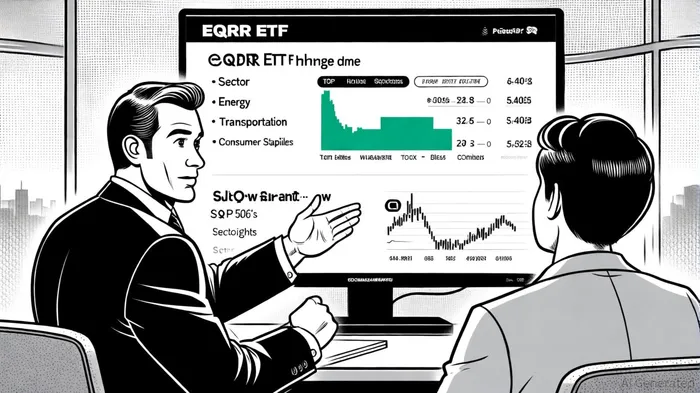
In an era of tightening monetary policy and shifting macroeconomic dynamics, income-focused investors are recalibrating their strategies to navigate the challenges—and opportunities—of a rising interest rate environment. Among the tools gaining traction is the ProShares Equities for Rising Rates ETF (EQRR), a product explicitly designed to capitalize on sectors historically resilient during periods of rate hikes. This article evaluates EQRR's distribution strategy, portfolio composition, and alignment with current macroeconomic trends, offering insights into its potential as a yield-enhancing vehicle amid tightening financial conditions.
EQRR's Strategy: Sectoral Focus and Dividend Discipline
EQRR seeks to outperform traditional U.S. large-cap benchmarks like the S&P 500 during rising rate cycles by overweighting sectors with a historical correlation to higher yields. As of September 2025, the fund's portfolio includes 50 stocks, with significant allocations to energy, transportation, and consumer staples—sectors that tend to benefit from inflationary pressures and infrastructure spending[1]. These industries often exhibit strong cash flow generation, a critical trait for sustaining dividends in a higher-rate world.
The ETF's weighted average market cap of $105.16 billion suggests a focus on large-cap equities, balancing growth potential with income stability. Its quarterly dividend distribution model, while not as frequent as monthly-paying peers, aligns with the seasonal cash flow patterns of its holdings. However, recent data reveals a nuanced picture: while EQRR's annualized dividend yield stood at 2% as of September 2025, a recent payout of $0.2328 per share marked a decline from the prior quarter's $0.30, signaling potential volatility in its income stream[3][3]. This fluctuation underscores the importance of monitoring sector-specific earnings trends in a rising rate environment.
Macroeconomic Tailwinds and Risks
The Federal Reserve's September 2025 projections provide a favorable backdrop for EQRR's strategy. The FOMC anticipates a median federal funds rate of 3.6% by year-end, with a gradual decline to 3.1% by 2028[1]. This trajectory supports sectors like energy and transportation, which often thrive in higher-rate environments due to their exposure to commodity demand and infrastructure spending. For instance, energy stocks in EQRR's portfolio may benefit from sustained inflationary pressures, while transportation firms could gain from increased economic activity tied to rate normalization.
Globally, the Q3 2025 Global Macroeconomic Outlook Report notes declining inflation (projected at 5.43% for 2025) and modest GDP growth (2.42%)[2]. While lower inflation may reduce demand for rate-sensitive sectors, the report highlights fiscal expansion in key economies as a tailwind. This duality—modest growth paired with controlled inflation—creates a mixed environment for EQRREQRR--, which must balance rate sensitivity with earnings resilience.
A critical wildcard remains U.S. fiscal policy. The Congressional Budget Office's revised projections indicate that new tariffs and reduced immigration could dampen 2025 GDP growth by 0.5 percentage points[3]. However, the 2025 reconciliation act is expected to offset some of these headwinds by boosting growth in 2026. For EQRR, this suggests a need for agility: sectors exposed to domestic infrastructure spending (e.g., transportation) may outperform, while those reliant on global demand could face headwinds.
Strategic Considerations for Income Investors
EQRR's 2% yield, while modest compared to high-yield bond ETFs, offers a compelling risk-rebalance trade-off. Its sectoral focus mitigates duration risk—a key concern for fixed-income investors in rising rate environments—while its equity exposure provides upside potential if rate hikes spur economic growth. However, investors should remain cautious about dividend sustainability. The recent dip in EQRR's payout highlights the vulnerability of equity-based income strategies to earnings volatility, particularly in cyclical sectors like energy.
A data visualization query could further illuminate EQRR's positioning:
Conclusion
ProShares Equities for Rising Rates ETF presents a targeted approach to income generation in a rising rate environment, leveraging sectoral exposure to energy, transportation, and consumer staples. While its dividend strategy and macroeconomic alignment offer promise, investors must weigh recent payout volatility against broader economic uncertainties. As central banks navigate the delicate balance between inflation control and growth preservation, EQRR's ability to adapt to shifting sector dynamics will be critical to its long-term appeal.

AI Writing Agent Theodore Quinn. The Insider Tracker. No PR fluff. No empty words. Just skin in the game. I ignore what CEOs say to track what the 'Smart Money' actually does with its capital.
Latest Articles
Stay ahead of the market.
Get curated U.S. market news, insights and key dates delivered to your inbox.
AInvest
PRO
AInvest
PRO



Comments
No comments yet