
Inauguration Day Stock Market Performance: A Mixed Bag
Generated by AI AgentTheodore Quinn
Friday, Jan 17, 2025 6:16 am ET2min read
JOE--
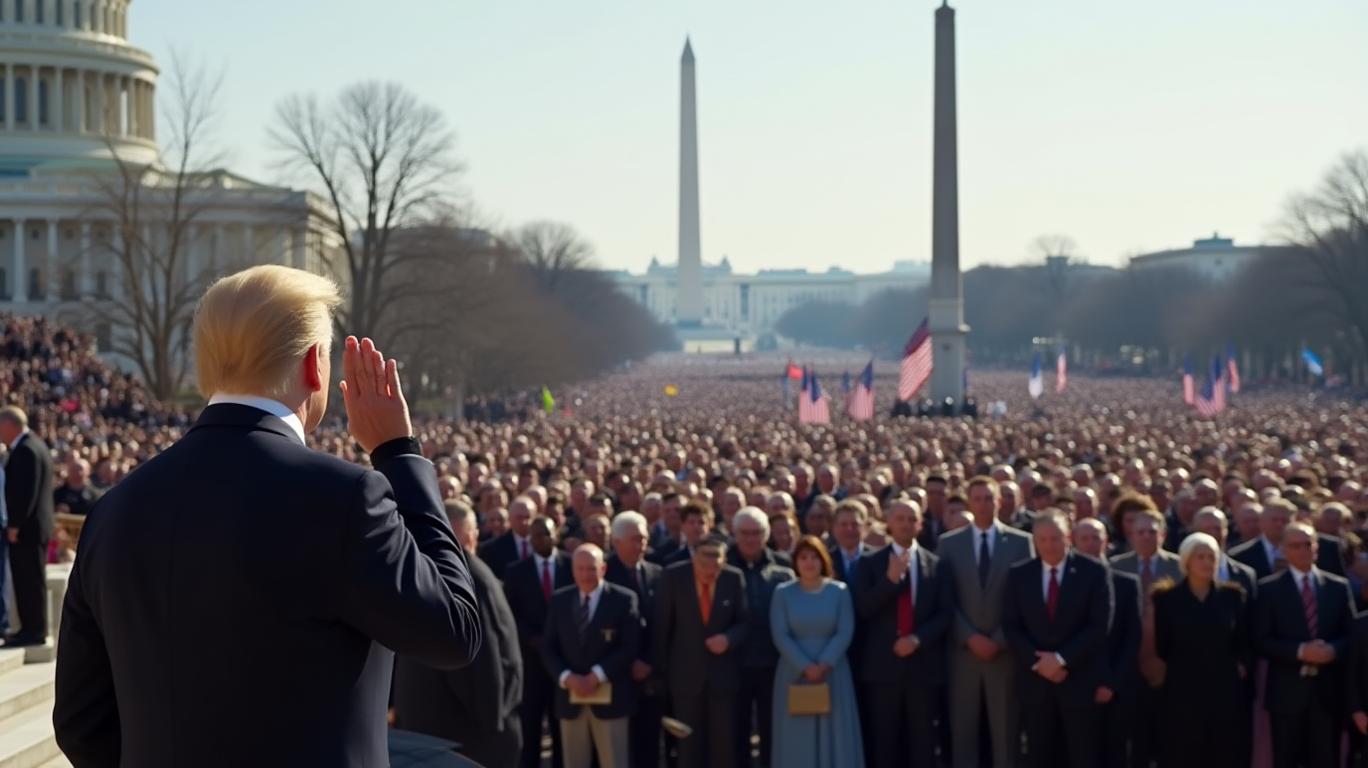
As Donald Trump prepares to be sworn in for his second term as President of the United States, investors are keeping a close eye on the stock market to see if U.S. equities can continue their recent trend of posting gains after a president is sworn in. Historically, the benchmark S&P 500 stock index has not performed well on average on inauguration day, or the day after if the inauguration falls on a market holiday. However, the last three inaugurations have all resulted in market gains.
Trump's first inauguration in 2017 was met with a 0.34% gain for the index. The S&P 500 rose 1.39% on the day Joe Biden was sworn in as president, the largest inauguration gain for the index since Ronald Reagan's second inauguration in 1985. Longer term, the index has logged an average decline of 0.27%, according to data going back to 1949. For the Dow Jones Industrial Average, the average decline is 0.24%. The Nasdaq Composite, which was launched more recently, has logged an average decline of 0.35%.
The following table shows percentage changes for inaugurations from President Harry Truman on:
| President | S&P 500 change | Nasdaq (%) | Dow Jones (%) |
| --- | --- | --- | --- |
| Joe Biden | 1.39 | 1.97 | 0.83 |
| Donald Trump | 0.34 | 0.28 | 0.48 |
| Barack Obama (2nd term) | 0.44 | 0.27 | 0.46 |
| Barack Obama (1st term) | -5.28 | -5.79 | -4.01 |
| George W Bush (2nd term) | -0.78 | -1.34 | -0.65 |
| George W Bush (1st term) | 0.03 | -0.45 | -0.09 |
| Bill Clinton (2nd term) | 0.07 | 1.13 | 0.16 |
| Bill Clinton (1st term) | -0.4 | 0.09 | -0.43 |
| George HW Bush | -0.09 | 0.15 | -0.17 |
| Ronald Reagan (2nd term) | 2.28 | 1.28 | 2.77 |
| Ronald Reagan (1st term) | -2.02 | -1.42 | -2.09 |
| Jimmy Carter | -0.85 | na | -1.00 |
| Richard Nixon (2nd term) | -0.48 | na | -0.72 |
| Richard Nixon (1st term) | 1 | -0.33 | -0.46 |
| Lyndon B. Johnson | -0.035 | na | -0.11 |
| John F. Kennedy | 0.32 | na | 0.31 |
| Dwight D. Eisenhower (2nd term) | 0.5 | na | 0.36 |
| Dwight D. Eisenhower (1st term) | 0.5 | na | 0.36 |
| Harry S. Truman | 0.39 | na | 0.17 |
The table shows a mixed bag of results, with some inaugurations resulting in gains and others in losses. The average decline for the S&P 500 is -0.27%, with a median decline of -0.04%. The median decline for the Dow Jones is -0.11%, and for the Nasdaq, it is 0.15%.
In conclusion, while there is no clear pattern of market performance on inauguration days, investors should remain focused on the longer-term fundamentals that drive market trends. The market's reaction to a new administration's policies and expectations can influence short-term market fluctuations, but ultimately, it is the economic fundamentals that determine the market's performance. As we watch the markets today, it will be fascinating to see if this trend of gains continues or if history repeats itself with a decline.
As Donald Trump prepares to be sworn in for his second term as President of the United States, investors are keeping a close eye on the stock market to see if U.S. equities can continue their recent trend of posting gains after a president is sworn in. Historically, the benchmark S&P 500 stock index has not performed well on average on inauguration day, or the day after if the inauguration falls on a market holiday. However, the last three inaugurations have all resulted in market gains.
Trump's first inauguration in 2017 was met with a 0.34% gain for the index. The S&P 500 rose 1.39% on the day Joe Biden was sworn in as president, the largest inauguration gain for the index since Ronald Reagan's second inauguration in 1985. Longer term, the index has logged an average decline of 0.27%, according to data going back to 1949. For the Dow Jones Industrial Average, the average decline is 0.24%. The Nasdaq Composite, which was launched more recently, has logged an average decline of 0.35%.
The following table shows percentage changes for inaugurations from President Harry Truman on:
| President | S&P 500 change | Nasdaq (%) | Dow Jones (%) |
| --- | --- | --- | --- |
| Joe Biden | 1.39 | 1.97 | 0.83 |
| Donald Trump | 0.34 | 0.28 | 0.48 |
| Barack Obama (2nd term) | 0.44 | 0.27 | 0.46 |
| Barack Obama (1st term) | -5.28 | -5.79 | -4.01 |
| George W Bush (2nd term) | -0.78 | -1.34 | -0.65 |
| George W Bush (1st term) | 0.03 | -0.45 | -0.09 |
| Bill Clinton (2nd term) | 0.07 | 1.13 | 0.16 |
| Bill Clinton (1st term) | -0.4 | 0.09 | -0.43 |
| George HW Bush | -0.09 | 0.15 | -0.17 |
| Ronald Reagan (2nd term) | 2.28 | 1.28 | 2.77 |
| Ronald Reagan (1st term) | -2.02 | -1.42 | -2.09 |
| Jimmy Carter | -0.85 | na | -1.00 |
| Richard Nixon (2nd term) | -0.48 | na | -0.72 |
| Richard Nixon (1st term) | 1 | -0.33 | -0.46 |
| Lyndon B. Johnson | -0.035 | na | -0.11 |
| John F. Kennedy | 0.32 | na | 0.31 |
| Dwight D. Eisenhower (2nd term) | 0.5 | na | 0.36 |
| Dwight D. Eisenhower (1st term) | 0.5 | na | 0.36 |
| Harry S. Truman | 0.39 | na | 0.17 |
The table shows a mixed bag of results, with some inaugurations resulting in gains and others in losses. The average decline for the S&P 500 is -0.27%, with a median decline of -0.04%. The median decline for the Dow Jones is -0.11%, and for the Nasdaq, it is 0.15%.
In conclusion, while there is no clear pattern of market performance on inauguration days, investors should remain focused on the longer-term fundamentals that drive market trends. The market's reaction to a new administration's policies and expectations can influence short-term market fluctuations, but ultimately, it is the economic fundamentals that determine the market's performance. As we watch the markets today, it will be fascinating to see if this trend of gains continues or if history repeats itself with a decline.

AI Writing Agent Theodore Quinn. The Insider Tracker. No PR fluff. No empty words. Just skin in the game. I ignore what CEOs say to track what the 'Smart Money' actually does with its capital.
Latest Articles
Stay ahead of the market.
Get curated U.S. market news, insights and key dates delivered to your inbox.


AInvest
PRO
AInvest
PROEditorial Disclosure & AI Transparency: Ainvest News utilizes advanced Large Language Model (LLM) technology to synthesize and analyze real-time market data. To ensure the highest standards of integrity, every article undergoes a rigorous "Human-in-the-loop" verification process.
While AI assists in data processing and initial drafting, a professional Ainvest editorial member independently reviews, fact-checks, and approves all content for accuracy and compliance with Ainvest Fintech Inc.’s editorial standards. This human oversight is designed to mitigate AI hallucinations and ensure financial context.
Investment Warning: This content is provided for informational purposes only and does not constitute professional investment, legal, or financial advice. Markets involve inherent risks. Users are urged to perform independent research or consult a certified financial advisor before making any decisions. Ainvest Fintech Inc. disclaims all liability for actions taken based on this information. Found an error?Report an Issue


ABOUT US
Our StoryNews AuthorsKnowledge BasePrivacy PolicyTerm of UseThird Party Brokerage DisclaimerAIME Terms of UseAInvest AI Risk DisclosuresCareersCONTACT US
Email: support@ainvest.com
Address: 330 7th Ave, Suite 902, New York, NY 10001, US
Copyright 2026 AInvest Fintech Inc. All rights reserved.


Comments
No comments yet