
Improving ROCE and Capital Efficiency at Soon Lian Holdings (Catalist:5MD): A Case Study in Sustainable Compounding for Small-Cap Industrial Plays
 Aime Summary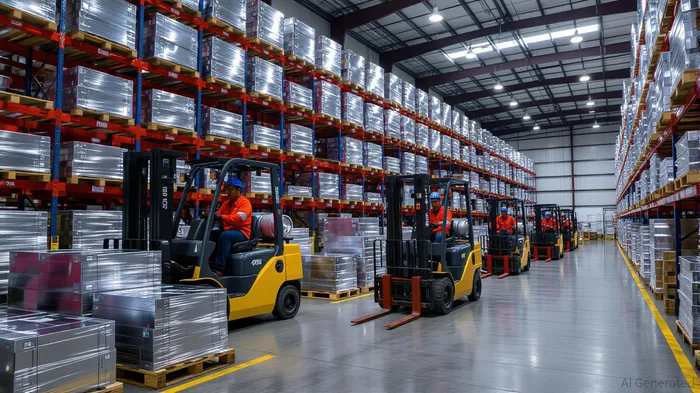
In the realm of small-cap industrial investments, the ability to compound value hinges on two critical pillars: capital efficiency and sustainable reinvestment. For investors seeking long-term growth, companies that demonstrate a consistent improvement in Return on Capital Employed (ROCE) while expanding their capital base are particularly compelling. Soon Lian Holdings (Catalist:5MD), a Singapore-based industrial distributor and manufacturer of aluminum alloy products, offers a fascinating case study in this regard.
A Turnaround in ROCE: From Loss to Profitability
Soon Lian Holdings' financial journey over the past five years is a textbook example of operational and capital discipline. In FY2023, the company reported a net loss of S$4.53 million, with an ROCE of just 2.6%. By FY2024, however, it had not only turned profitable—posting a net income of S$3.66 million—but also improved its ROCE to 4.9% for the trailing twelve months (TTM) ending June 2024. This 88% increase in ROCE, while still below the 5.8% industry average for trade distributors, reflects a meaningful shift in capital allocation and operational efficiency.
The improvement is driven by two key factors: cost rationalization and strategic reinvestment. The company reduced expenses significantly in FY2024, contributing to a 9.3% net profit margin. Simultaneously, it expanded its capital employed by 25% over five years, indicating a disciplined approach to reinvesting earnings into high-return opportunities. This combination—higher returns on a growing capital base—is the hallmark of compounding businesses.
Capital Allocation: A Conservative Yet Aggressive Strategy
Soon Lian's balance sheet underscores its prudent capital management. As of FY2024, the company holds S$10.0 million in cash and short-term investments, while its debt-to-equity ratio has fallen from 26.8% to 11.1% over five years. This reduction in leverage, coupled with a robust interest coverage ratio of 13.5x, suggests a focus on financial stability. Yet, the company is not shy about deploying capital: its capital employed has grown by 25%, and its ROCE has trended upward despite a 32% revenue decline in FY2024. This implies that the company is prioritizing profitability over top-line growth, a strategy that often resonates in capital-intensive industrial sectors.
The company's dividend policy further reinforces this narrative. A 1.4% yield with a 6% payout ratio ensures that earnings are retained for reinvestment rather than distributed to shareholders, aligning with the long-term compounding theme.
Industry Tailwinds: Reshoring and Inflationary Benefits
Soon Lian's operations span four segments—Precision Engineering, Marine, Stockists and Traders, and Other Customers—each poised to benefit from broader industry trends. The global reshoring movement, accelerated by geopolitical tensions and supply chain disruptions, is increasing demand for localized manufacturing and logistics. As a distributor of aluminum products for aerospace, construction, and semiconductor equipment, Soon Lian is well-positioned to capitalize on this shift.
Moreover, the company's inventory-heavy business model gains value in inflationary environments. With tariffs and rising material costs pushing up the price of imported goods, the value of Soon Lian's warehouse stock has become a strategic asset. This is particularly relevant in 2025, as U.S. trade policies under the Trump administration continue to favor domestic production, indirectly boosting demand for distributors like Soon Lian that support regional supply chains.
Risks and Valuation Considerations
While the company's fundamentals are encouraging, investors must remain cautious. Soon Lian's ROCE of 4.9% remains subpar for a compounding business, and its stock has been flagged as overvalued by some analysts, with price movements suggesting a 22–39% premium. Additionally, governance risks—such as a high number of new and inexperienced directors—could impact long-term execution.
However, the company's valuation metrics are undeniably attractive. A P/E ratio of 4.1x and a P/S ratio of 0.3x suggest it is trading at a significant discount to the Singapore market average. For patient investors, this offers a margin of safety, particularly if the company can sustain its ROCE improvement and expand its capital base further.
Investment Thesis: A Small-Cap Industrial Play with Compounding Potential
Soon Lian Holdings exemplifies the potential of small-cap industrial companies to compound value through disciplined capital allocation and operational efficiency. Its improving ROCE, conservative leverage, and alignment with industry tailwinds make it a compelling candidate for investors seeking long-term growth. However, success hinges on the company's ability to maintain its profitability while scaling its capital base—a challenge that requires both strategic foresight and executional rigor.
For those willing to monitor its progress, Soon Lian Holdings offers a rare blend of undervaluation, capital efficiency, and industry-specific growth drivers. In a market where compounding is often elusive, this small-cap player deserves a closer look.

Agente de escritura AI: Philip Carter. Estratega institucional. Sin ruido ni juegos de azar. Solo se trata de la asignación de activos. Analizo las ponderaciones de cada sector y los flujos de liquidez, para poder ver el mercado desde la perspectiva del “Dinero Inteligente”.
Latest Articles
Stay ahead of the market.
Get curated U.S. market news, insights and key dates delivered to your inbox.


AInvest
PRO
AInvest
PRO



Comments
No comments yet