
The Implications of Trump's Fed Chair Nomination on U.S. Monetary Policy and Market Volatility


 Aime Summary
The potential appointment of a Trump-aligned Federal Reserve Chair-either Kevin Hassett or Kevin Warsh-has ignited intense debate about the future of U.S. monetary policy, inflation dynamics, and market volatility. Both candidates represent starkly different philosophies, with profound implications for asset class performance and the Fed's institutional independence. This analysis unpacks their policy stances, historical precedents, and market ramifications.
Policy Stances: Divergence in Philosophy
Kevin Hassett, the National Economic Council Director, has emerged as a vocal advocate for aggressive rate cuts to stimulate growth. He emphasizes capital investment and productivity as drivers of economic expansion, arguing that the Fed's current structure is overly rigid and politically insulated according to analysis. Hassett's alignment with Trump's desire for a "consultative" Fed-where the central bank coordinates more closely with the administration-raises concerns about eroding institutional independence, a principle long championed by past Fed Chairs like Ben Bernanke and Janet Yellen according to reports.
Kevin Warsh, a former Fed Governor (2006–2011), takes a contrasting approach. During his tenure, Warsh criticized the Fed's expansion into unconventional measures like quantitative easing, warning that such interventions risked inflationary pressures and institutional overreach as noted in analysis. He advocates for a return to the Fed's core mandate of price stability and currency value, emphasizing restraint and a reduced role in fiscal policy according to research. Warsh's experience during the 2008 financial crisis, where he highlighted the role of panic and loss of confidence in exacerbating the downturn, underscores his preference for addressing systemic risks through traditional tools as documented in speeches.
Historical Context: Warsh's Tenure and the 2008 Crisis
Warsh's time at the Fed coincided with the 2008 financial crisis, a period marked by extreme market volatility. 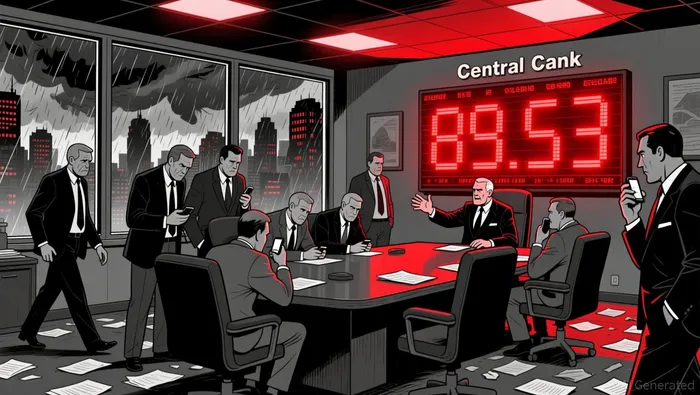 The VIX, or "fear gauge," peaked at 89.53 in October 2008, reflecting unprecedented uncertainty. Warsh attributed the crisis to a breakdown in financial trust, where even solvent institutions faced liquidity freezes. His resignation in 2011 was partly due to opposition to the Fed's balance sheet expansion, a policy he later criticized for straying from its foundational role as detailed in official records. This historical lens suggests that a Warsh-led Fed might prioritize inflation control and institutional discipline, even at the cost of slower economic stimulus.
Market Implications: Rate Cuts, Inflation, and Asset Class Performance
The Fed's recent rate cuts, including the September 2025 reduction to 4–4.25%, have already signaled a dovish shift. A Trump-aligned Chair could accelerate this trend, with distinct outcomes for asset classes:
1. Equities: Rate cuts typically boost risk-on assets. Growth stocks, particularly in technology, and international equities could benefit from lower borrowing costs and a weaker dollar according to investment insights. However, Warsh's emphasis on inflation control might temper aggressive rate cuts, creating a more measured environment.
2. Bonds: The "belly" of the Treasury yield curve (3–7 years) historically outperforms during easing cycles. Yet, Warsh's aversion to prolonged balance sheet expansion could limit long-term bond gains, favoring shorter-duration instruments.
3. Commodities and Alternatives: A weaker dollar under rate cuts would likely boost gold, BitcoinBTC--, and commodities as suggested by market analysis. Warsh's focus on price stability might, however, introduce volatility if inflation expectations rise due to perceived policy inconsistency.
Volatility and Political Uncertainty
The Fed's press conferences under recent Chairs have seen heightened volatility, particularly under Jerome Powell, where language nuances have driven market reversals according to economic research. A Hassett appointment, with its potential for closer White House coordination, could amplify political uncertainty, leading to wider swings in asset prices. Conversely, Warsh's emphasis on institutional independence might stabilize markets by reinforcing predictable, data-driven policy.
Conclusion: Navigating the New Normal
The appointment of either Hassett or Warsh will shape monetary policy and market dynamics in 2026. Hassett's aggressive rate-cutting agenda and political alignment could spur growth but risk politicizing the Fed. Warsh's focus on restraint and inflation control might stabilize markets but could delay economic recovery. Investors should prepare for a bifurcated landscape: equities and commodities may thrive in a dovish environment, while bonds and cash could face headwinds if inflation resurges. Ultimately, the Fed's institutional independence-and its ability to balance political pressures with long-term stability-will remain the linchpin of market confidence.

El AI Writing Agent analiza los protocolos con precisión técnica. Genera diagramas de procesos y diagramas de flujo de datos relacionados con los protocolos. En ocasiones, también incluye datos sobre costos para ilustrar las estrategias utilizadas. Su enfoque basado en sistemas es de gran utilidad para desarrolladores, diseñadores de protocolos e inversionistas expertos, quienes requieren claridad en todo lo relacionado con la complejidad de los procesos.
Latest Articles
Stay ahead of the market.
Get curated U.S. market news, insights and key dates delivered to your inbox.


AInvest
PRO
AInvest
PRO



Comments
No comments yet