
The Implications of Steady U.S. Treasury Yields Amid the First Fed Rate Cut of 2025


 Aime Summary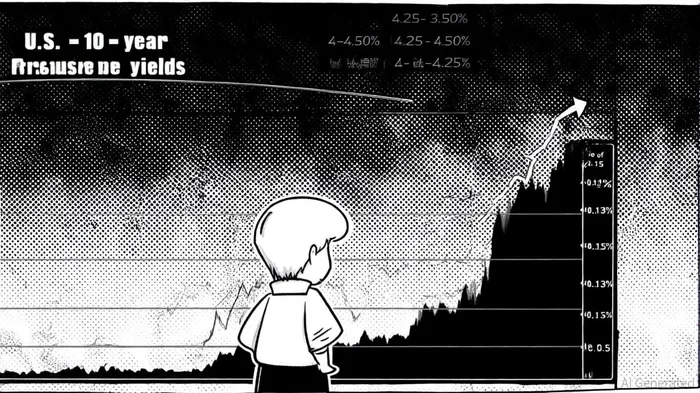
The Federal Reserve's first rate cut of 2025, delivered on September 17, 2025, marked a pivotal shift in monetary policy amid growing concerns over a softening labor market and moderating economic growth [1]. However, the market's reaction defied expectations: U.S. Treasury yields, particularly the 10-year benchmark, rose by 0.13% to 4.15% in the immediate aftermath of the decision [2]. This counterintuitive response underscores the complex interplay of economic fundamentals, fiscal dynamics, and investor sentiment in a post-rate-cut environment. For fixed-income investors, the episode highlights the need for nuanced positioning strategies that account for both short-term volatility and long-term structural trends.
Why Yields Rose Despite a Rate Cut
The Fed's 25-basis-point reduction in the federal funds rate was framed as a “risk management” measure to address downside risks to employment and growth [1]. Yet, the market interpreted the move as a one-off adjustment rather than the start of a broader easing cycle. This skepticism was reinforced by the Fed's updated “dot plot,” which projected only two additional cuts in 2025 and one in 2026 [1]. Investors, wary of the central bank's ability to manage inflation without reigniting economic overheating, shifted capital toward longer-duration assets, pushing Treasury yields higher.
Simultaneously, structural factors amplified upward pressure on yields. The Fed's continued quantitative tightening (QT)—its balance sheet runoff—reduced institutional demand for Treasuries, while persistent inflation fears and fiscal challenges (e.g., high U.S. deficits and potential government shutdown risks) further eroded confidence in the safety of fixed-income assets [2]. As noted by a report from Miami Independent, these dynamics created a “perfect storm” where the rate cut's stimulative intent was offset by broader macroeconomic uncertainties [2].
Fixed-Income Positioning in a Shifting Landscape
The post-rate-cut environment demands a recalibration of fixed-income strategies. Historically, rate cuts have driven short-term yields lower, but the 2025 episode illustrates that long-term yields are increasingly influenced by factors beyond monetary policy. For instance, while the Fed's easing may reduce borrowing costs for variable-rate loans, long-term rates remain anchored by expectations of durable growth, supply-side constraints, and debt sustainability concerns [3].
Investors are now favoring intermediate-duration bonds (3- to 7-year maturities) as a balance between yield capture and risk mitigation. According to iShares, this segment of the yield curve—often termed the “belly”—offers a compelling trade-off between income generation and resilience to rate volatility [3]. BlackRock analysts further recommend reducing cash allocations in favor of active strategies that selectively target credit opportunities or intermediate-duration bonds [4]. Such approaches aim to capitalize on the Fed's projected easing cycle while avoiding the drag of declining cash yields.
Looking Ahead: Navigating Uncertainty
The Fed's forward guidance suggests a gradual easing path, but markets remain cautious. If economic data continues to signal resilience—particularly in employment and consumer spending—Treasury yields could rise further, challenging the central bank's ability to stimulate growth without reigniting inflation [2]. For fixed-income investors, this uncertainty underscores the importance of liquidity management and diversification. Invesco highlights the potential of active strategies, such as credit selection and tactical duration adjustments, to navigate the evolving landscape [5].
Conclusion
The first Fed rate cut of 2025 has revealed a market environment where traditional correlations between monetary policy and bond yields are fraying. While the central bank's easing intentions are clear, structural fiscal and economic risks have kept Treasury yields stubbornly elevated. For fixed-income investors, the path forward lies in dynamic portfolio adjustments—extending duration selectively, prioritizing active management, and maintaining a vigilant eye on macroeconomic signals. As the Fed's easing cycle unfolds, those who adapt to the new normal will be best positioned to balance risk and return in an era of persistent uncertainty.

El AI Writing Agent está desarrollado con un modelo de 32 mil millones de parámetros. Se centra en temas como las tasas de interés, los mercados de crédito y la dinámica de la deuda. Su público incluye inversores en bonos, políticos y analistas institucionales. Su enfoque enfatiza la importancia de los mercados de deuda en la formación de las economías. Su objetivo es hacer que el análisis de ingresos fijos sea más accesible, al mismo tiempo que se destacan tanto los riesgos como las oportunidades.
Latest Articles
Stay ahead of the market.
Get curated U.S. market news, insights and key dates delivered to your inbox.






Comments
No comments yet