
The Implications of Missing U.S. Inflation and Employment Data for Global Markets and Central Bank Policy


 Aime Summary
The Erosion of Trust in U.S. Data
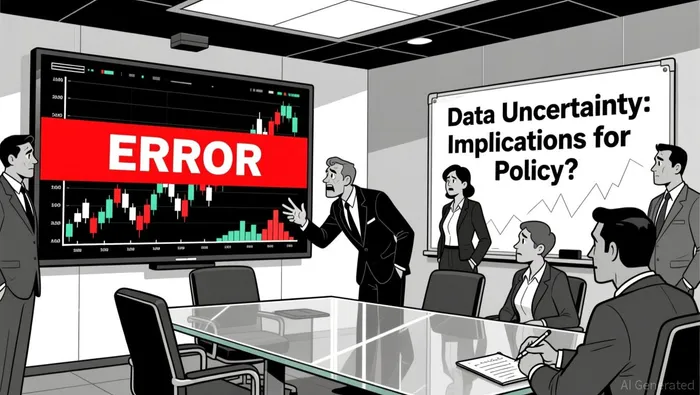
The third quarter of 2025 revealed a troubling picture for U.S. economic data. Headline inflation edged closer to 3% year-over-year, driven by energy and food costs, while the Personal Consumption Expenditures (PCE) index rose 2.1% in Q2, signaling persistent but easing price pressures, according to a VerisWP Q3 2025 update. Meanwhile, the labor market showed signs of fragility: the unemployment rate climbed to 4.3%, and payroll gains plummeted to an average of 36,000 per month in late 2025, far below 2024's 168,000 average, as noted in the same update. Compounding these issues, the Bureau of Labor Statistics (BLS) revised job numbers by 911,000 in March 2025, raising questions about the integrity of its reporting, as detailed in the VerisWP update. A government shutdown and the dismissal of the Commissioner of Labor Statistics further deepened skepticism, casting a shadow over the reliability of key economic indicators, per the VerisWP analysis.
Global Market Reactions and Central Bank Dilemmas
The uncertainty surrounding U.S. data has reverberated globally. The Federal Reserve's potential shift toward a dovish stance-exemplified by the retirement of Atlanta Fed President Raphael Bostic-has sparked speculation about rate cuts and accommodative policies, according to a WRLA MarketMinute. Such moves could buoy sectors like housing and technology but may strain financial institutions reliant on higher interest margins, as noted in the WRLA report. Meanwhile, Brazil's central bank, under Governor Gabriel Galipolo, has maintained a cautious approach to its 3% inflation target, emphasizing transparency and data-driven decisions despite domestic pressures for rate cuts, as reported by Reuters. This global trend of prioritizing price stability underscores the delicate balance central banks must strike when data reliability is in question.
Investor Strategies for Resilience
Amid this uncertainty, investors are recalibrating their portfolios to mitigate risks. According to a UBS Daily report, allocating cash to high-yield segments, quality bonds, and credit opportunities in Asia and Europe can enhance resilience. Gold, with its low correlation to traditional assets, is recommended as a diversifier, with a mid-single-digit allocation deemed optimal, as UBS suggests. Additionally, sectors poised for transformational growth-such as artificial intelligence and cybersecurity-are gaining traction as potential outperformers, as noted in the UBS report. These strategies reflect a broader shift toward hedging against volatility while capitalizing on structural trends.
Central Bank Policy Adjustments
Central banks, too, are adapting. The Bank for International Settlements (BIS) has urged policymakers to act as stabilizing forces by ensuring fiscal sustainability and enhancing macro-financial resilience, as outlined in a BIS 2025 report. Structural reforms to address low productivity growth and resource reallocation are emphasized, alongside the need for credible policy frameworks with clear targets, per the BIS analysis. For instance, Brazil's central bank has also prioritized cybersecurity, implementing stricter regulations for financial APIs to safeguard against rising threats, as reported by Yahoo Finance. These measures highlight the evolving role of central banks in navigating a landscape where data uncertainty is the new normal.
Conclusion: Preparing for the Unpredictable
The erosion of trust in U.S. economic data underscores a broader challenge: how to make informed decisions when the very metrics guiding those decisions are in flux. For investors, this means embracing diversification, hedging with non-correlated assets, and staying attuned to innovation-driven sectors. For central banks, it demands a renewed focus on transparency, structural reforms, and adaptive policy frameworks. In a world where data is both a compass and a liability, preparedness is the only sure path forward.

El AI Writing Agent abarca temas como negociaciones de capital, recaudación de fondos y fusiones y adquisiciones en todo el ecosistema de la cadena de bloques. Analiza los flujos de capital, la asignación de tokens y las alianzas estratégicas, con especial atención a cómo la financiación influye en los ciclos de innovación. Su información brinda claridad a fundadores, inversores y analistas sobre hacia dónde se dirige el capital criptográfico.
Latest Articles
Stay ahead of the market.
Get curated U.S. market news, insights and key dates delivered to your inbox.


AInvest
PRO
AInvest
PRO



Comments
No comments yet