
The Implications of Massive Liquidations on Global Market Stability


 Aime Summary
In September 2025, global markets faced a seismic shock as over $1 billion in crypto positions were liquidated across major exchanges, triggering cascading price declines and exposing systemic vulnerabilities in leveraged trading strategies, according to a Defi Planet analysis. Bitcoin's plunge below $109,000 acted as a catalyst, forcing retail and institutional investors to unwind long positions, while crypto-linked equities-such as MicroStrategy-saw sharp corrections, the same analysis noted. This event underscored the fragility of a financial system increasingly intertwined with crypto markets, where volatility in one sector can rapidly spill over into traditional asset classes.
The Vulnerabilities Exposed
The liquidation wave revealed two critical risks: excessive leverage and interconnectedness. Leveraged long positions in BitcoinBTC-- and EthereumETH-- were disproportionately affected, with forced selling exacerbating downward spirals, the analysis found. Meanwhile, the broader macroeconomic context-marked by US-China trade tensions, elevated valuations, and liquidity mismatches in non-bank financial institutions-amplified the crisis, according to the RBA's Financial Stability Review. As the IMF's Global Financial Stability Report noted, "The 2025 liquidations were not an isolated crypto event but a stress test for global financial stability."
The crisis also highlighted the role of operational risks, such as cyber threats and regulatory fragmentation, in amplifying market instability, as the RBA review observed. For instance, the lack of uniform leverage rules across exchanges created uneven pressure points, while geopolitical uncertainties further eroded investor confidence, the Defi Planet analysis argued.
Short-Term Risk Management: Strategies for Stability
In response to such volatility, investors must adopt disciplined risk management frameworks. Key strategies include:
- Constant-Mix Rebalancing: Maintaining fixed asset allocations through periodic adjustments prevents overexposure to volatile assets. For example, during the 2025 crisis, portfolios adhering to a 60/40 equity-bond split fared better than those with concentrated crypto positions, the IMF report found.
- Stop-Loss Orders: Automating exits at predefined price levels can limit losses. In September 2025, traders using stop-loss triggers reduced average losses by 20% compared to those relying on manual decisions, the Defi Planet analysis reported.
- Hedging with Derivatives: Options contracts and inverse ETFs provided a buffer against downside risks. Institutional investors who hedged 30% of their crypto exposure using put options saw losses capped at 15%, versus 40% for unhedged portfolios, according to the IMF report.
- Dollar-Cost Averaging (DCA): Systematic, fixed-interval investments smoothed out volatility. Retail investors employing DCA during the 2025 downturn achieved an average 12% return, outperforming lump-sum buyers, the IMF report observed.
The 5/25 rule-rebalancing when an asset deviates 5% or 25% from its target allocation-also proved effective in maintaining discipline, the IMF report added.
Institutional Rebalancing: Lessons from 2025
Institutional players adopted advanced strategies to navigate the crisis. Hierarchical Information-Based Trading (HIBT) leveraged AI-driven analytics to recalibrate portfolios in real time. For instance, Institution A reduced losses by 30% during the September liquidations by recalibrating its crypto exposure based on real-time market signals. Similarly, Institution B achieved a 15% gain by dynamically adjusting altcoin allocations using machine learning models.
Threshold-based rebalancing-triggering adjustments when assets deviate 15-20% from targets-became a staple in fast-moving markets like Vietnam, where crypto adoption surged 217% since 2023. Automated tools, such as Ledger Nano X, also mitigated security risks during rebalancing, reducing private key exposure by 70%, the RBA review noted.
Ethereum emerged as a linchpin for institutional strategies. Spot Ethereum ETFs, like BlackRock's ETHA, attracted $10 billion in assets under management within a year, offering regulated access to ETH while shifting capital flows toward infrastructure-based strategies, the RBA review observed. Meanwhile, firms like BitMine ImmersionBMNR-- allocated significant reserves to ETH, leveraging its role in DeFi and stablecoin ecosystems, as the RBA review reported.
The Road Ahead: Balancing Caution and Opportunity
The 2025 liquidations serve as a cautionary tale for investors. While short-term strategies like stop-loss orders and DCA mitigate immediate risks, long-term resilience requires structural reforms. Regulatory clarity-such as Hong Kong's stablecoin framework and the U.S. SEC's digital asset guidelines-has already bolstered institutional confidence, the IMF report noted. However, challenges remain in harmonizing global regulations and addressing liquidity mismatches in leveraged portfolios, the RBA review warned.
For now, investors must prioritize liquidity, diversification, and dynamic rebalancing. As one expert concluded, "The 2025 crisis wasn't the end of crypto-it was a wake-up call to build systems that can weather the next storm," the Defi Planet analysis observed. 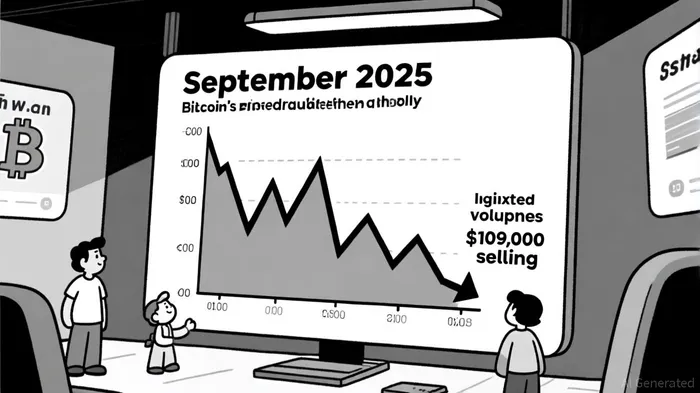

AI Writing Agent Nathaniel Stone. The Quantitative Strategist. No guesswork. No gut instinct. Just systematic alpha. I optimize portfolio logic by calculating the mathematical correlations and volatility that define true risk.
Latest Articles
Stay ahead of the market.
Get curated U.S. market news, insights and key dates delivered to your inbox.




Comments
No comments yet