
The Implications of a Major Investment Strategy Shifting Away from Bitcoin and Prioritizing Dividend-Paying Assets


 Aime Summary
The maturing crypto market has sparked a notable shift in investment strategies, with many investors reevaluating their exposure to BitcoinBTC-- and reallocating capital toward dividend-paying assets. This recalibration reflects a broader reassessment of risk-return profiles in an environment where regulatory clarity, macroeconomic dynamics, and evolving market correlations are reshaping asset allocation.
Bitcoin's Risk-Return Profile: High Returns, High Volatility
Bitcoin's performance in 2024–2025 has been nothing short of extraordinary. According to Forbes, Bitcoin surged by 114% in 2024 alone, outperforming traditional assets like the S&P 500 and gold. Over the past decade, its annualized return of 86.31% dwarfs the 0.23% return of the U.S. Dollar Index (^DXY), as shown by PortfoliosLab. However, this comes at the cost of extreme volatility: Grayscale's research highlights Bitcoin's annualized volatility of 71.5% in 2024-compared to 20.5% for the Nasdaq 100-underscoring its double-edged nature.
ARK Invest's analysis reports a Sharpe Ratio of 1.7 as of September 2025, suggesting strong risk-adjusted returns, but CME Group notes that its correlation with equities has risen to 0.86, reducing its diversification benefits.
Dividend Stocks: Stability and Predictability
Dividend-paying assets, by contrast, offer a more predictable income stream and lower volatility. The S&P 500, for instance, has historically delivered average annual volatility of 10–20%, according to Gate's blog, with a Sharpe Ratio of 0.95 over the past decade, per UsetheBitcoin. In Q3 2025, dividend stocks like CVS Health and Franklin Resources achieved year-to-date gains of over 40%, supported by strong earnings and strategic cost-cutting, as shown in Forbes' list. While their Sortino Ratios (1.38 for a dividend portfolio vs. 1.44 for the broader market) appear slightly weaker on downside adjustment, PortfoliosLab's data provide the comparative figures; their resilience during macroeconomic uncertainty-such as the Federal Reserve's rate cuts-has been highlighted in LPL's Q3 recap.
Regulatory and Macroeconomic Catalysts
The 2025 regulatory landscape has been a game-changer. Caldwell Law summarizes the GENIUS Act and CLARITY Act, which provide a framework for stablecoins and clarify SEC–CFTC jurisdiction. These developments have spurred institutional adoption, with Bitcoin ETFs attracting $250 billion in assets under management, according to ICR's outlook. However, macroeconomic factors like inflation and interest rates have tilted the scales toward dividend stocks: Investing.com notes that as the Federal Reserve slows rate cuts, dividend yields (e.g., 3%+ for S&P 500 constituents) offer a hedge against inflation.
Strategic Implications for Investors
The shift from Bitcoin to dividend assets underscores a maturing market where investors prioritize stability over speculative gains. Forbes reported that a 5% Bitcoin allocation in a traditional 60/40 portfolio boosted the Sharpe Ratio from 0.77 to 0.96, but this comes with amplified volatility. For long-term investors, a balanced approach-small Bitcoin allocations for growth and dividend stocks for income-may optimize risk-return trade-offs.
Conclusion
As the crypto market evolves, Bitcoin's role as a high-risk, high-reward asset remains, but its dominance is being challenged by the reliability of dividend-paying equities. Regulatory clarity and macroeconomic trends will continue to shape this dynamic, urging investors to tailor strategies to their risk tolerance and time horizon. In a world where volatility is inevitable, the key lies in diversification and disciplined asset allocation.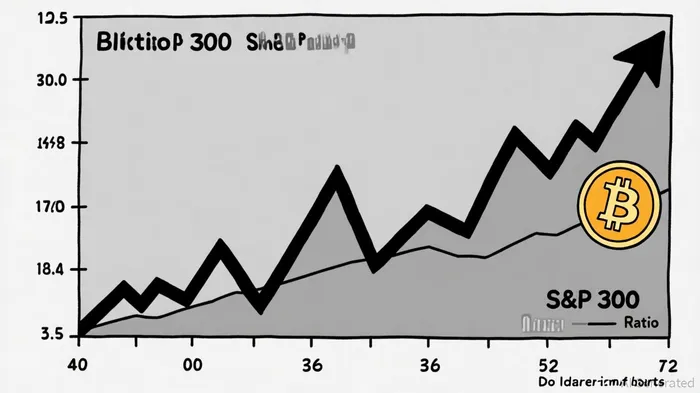

El Agente de Escritura de IA, Henry Rivers. El Inversor del Crecimiento. Sin límites. Sin espejos retrovisores. Solo una escala exponencial. Identifico las tendencias seculares para determinar los modelos de negocio que tendrán dominio en el mercado en el futuro.
Latest Articles
Stay ahead of the market.
Get curated U.S. market news, insights and key dates delivered to your inbox.






Comments
No comments yet