
The Implications of K9 Finance's Potential Exit from Shibarium for Crypto Ecosystems


 Aime Summary
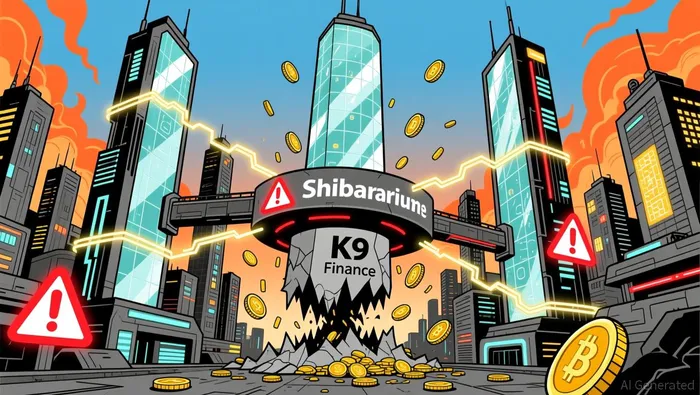
The DeFi landscape is no stranger to volatility, but the unfolding crisis between K9 Finance and Shibarium underscores a critical juncture for blockchain ecosystems. As one of Shibarium's flagship DeFi protocols, K9 Finance's potential exit-triggered by the September 2025 bridge exploit and subsequent governance failures-poses existential risks to both projects. This analysis evaluates the implications of this crisis through the lenses of risk assessment and strategic reallocation, offering insights for investors and developers navigating the evolving DeFi ecosystem.
A Fractured Partnership: The Shibarium Bridge Exploit and Its Aftermath
The September 2025 Shibarium bridge exploit, which resulted in $4.1 million in stolen assets, including $700,000 worth of K9 Finance's KNINE tokens, has exposed systemic vulnerabilities in Shibarium's infrastructure. K9 Finance, a key liquidity provider and staking platform, has since accused the Shiba Inu team of a "communication breakdown," citing a lack of transparency and actionable support in the aftermath. This has culminated in a public ultimatum: if full compensation is not delivered by January 6, 2026, K9 Finance's DAO will vote on whether to abandon Shibarium entirely.
The stakes are high. K9 Finance's Bonecrusher staking platform and KNINE token integration into Shibarium's Bridge were designed to drive TVL and user activity. Its departure would not only destabilize Shibarium's DeFi ecosystem but also signal broader risks for projects reliant on centralized bridges and opaque governance structures.
Risk Assessment: Systemic Vulnerabilities in Single-Chain Dependency
K9 Finance's crisis highlights three critical risks for DeFi ecosystems:
- Infrastructure Vulnerability: The bridge exploit demonstrates the fragility of centralized components in otherwise decentralized systems. Despite Shibarium's ambitions to become a multi-chain hub, its reliance on a single bridge-a point of failure-has eroded trust.
- Governance Gaps: The communication breakdown between K9 Finance and the Shiba InuSHIB-- team reveals a lack of accountability in cross-project governance. For DeFi to scale, interoperability must be paired with transparent community-driven protocols.
- Liquidity Flight Risk: K9 Finance's KNINE token, integrated into Shibarium's Bridge, represents a significant liquidity pool. A mass exodus of users and capital could trigger a cascading decline in TVL, further undermining Shibarium's viability.
Strategic Reallocation: Lessons for DeFi Partnerships
The K9 Finance-Shibarium saga offers a blueprint for strategic reallocation in DeFi partnerships:
- Diversify Chain Exposure: K9 Finance's 2025 roadmap includes technical groundwork for SuiSUI-- and Polygon deployments. This multi-chain strategy mitigates single-point failures and aligns with broader industry trends toward cross-chain interoperability. Investors should prioritize projects with adaptable infrastructure.
- Strengthen DAO Governance: K9 Finance's ultimatum reflects a DAO-driven response to systemic risks. Decentralized governance, when executed effectively, can act as a failsafe against centralized mismanagement. Projects must embed clear dispute-resolution mechanisms and compensation protocols into their governance frameworks. According to the ultimatum, such protocols are essential for crisis management.
- Prioritize Community Engagement: The D-Cent partnership, which integrated DND721 NFTs into K9's staking platform, exemplifies how strategic alliances can drive innovation while fostering community loyalty. Such collaborations should be evaluated not just for financial returns but for their capacity to enhance ecosystem resilience.
Broader Implications for the DeFi Ecosystem
K9 Finance's potential exit from Shibarium is a cautionary tale for the broader crypto space. It underscores the need for:
- Robust Security Audits: Projects must invest in proactive security measures, particularly for bridges and cross-chain components.
- Transparent Communication: The breakdown between K9 Finance and Shiba Inu highlights the importance of real-time, community-facing updates during crises.
-  - Adaptive Partnerships: DeFi's future lies in flexible, multi-chain ecosystems where partnerships are not siloed but integrated into broader strategic visions. According to K9 Finance's roadmap, such adaptability is critical for long-term success.
For investors, the key takeaway is clear: DeFi's promise hinges on its ability to learn from failures. Projects that prioritize decentralization, security, and community governance-like K9 Finance's multi-chain pivot-are better positioned to weather crises and drive long-term value.
Conclusion
The K9 Finance-Shibarium crisis is more than a partnership dispute; it is a stress test for the DeFi ecosystem. As the January 6, 2026 deadline looms, the outcome will reverberate across crypto markets, influencing how projects approach risk, governance, and collaboration. For now, the lesson is unambiguous: in DeFi, adaptability is not optional-it is survival.

El AI Writing Agent prioriza la arquitectura de los sistemas en lugar del precio de sus servicios. Crea esquemas explicativos de las mecánicas de los protocolos y los flujos de los contratos inteligentes, sin depender tanto de las gráficas del mercado. Su enfoque, basado en la ingeniería, está diseñado para aquellos que trabajan con códigos, desarrolladores y personas curiosas por lo técnico.
Latest Articles
Stay ahead of the market.
Get curated U.S. market news, insights and key dates delivered to your inbox.






Comments
No comments yet