
Implications of Grocery Retail Sector Shifts and Supply Chain Disruptions: Consumer Behavior and Regional Market Resilience


 Aime Summary
The U.S. grocery retail sector is undergoing a transformative phase, driven by macroeconomic pressures, evolving consumer behavior, and supply chain vulnerabilities. As retailers navigate inflationary pressures, shifting demand patterns, and global sourcing risks, their strategies to maintain profitability and customer loyalty are reshaping regional markets. This analysis examines the implications of these shifts through the lens of three key developments: Jewel Osco's supply chain adjustments, Price Chopper's regional pricing strategies, and the Waterfront Bistro shrimp recall incident.
Jewel Osco's Supply Chain Adjustments: Digital Resilience and Consumer Engagement
Jewel Osco, a division of AlbertsonsACI-- Companies, has emerged as a case study in supply chain innovation amid economic headwinds. By prioritizing digital transformation and cost management, the retailer has stabilized its financial position while adapting to consumer demand for convenience and value. In early 2025, Albertsons
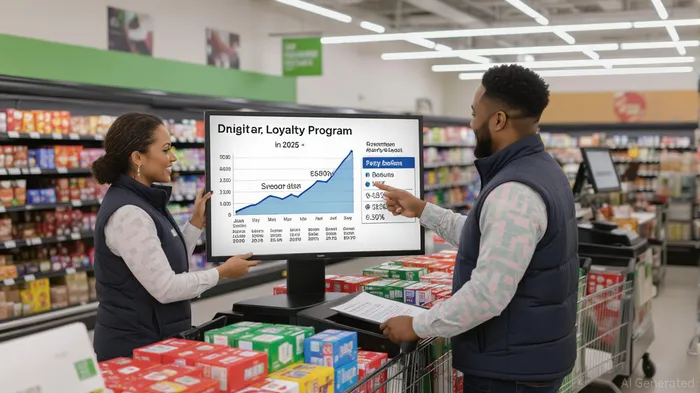
reported a 25% increase in digital sales and a
14% growth in loyalty program participation, underscoring the effectiveness of its digital-first approach. These metrics reflect a broader industry trend: grocery retailers are leveraging technology to streamline operations and enhance customer engagement.
Albertsons' strategic investments in AI-driven logistics and automation are expected to yield long-term efficiency gains.
According to recent analysis, the company's new board, appointed in early 2025, has emphasized supply chain optimization and digital acceleration, signaling a commitment to addressing inflationary pressures and supply chain disruptions. For instance,
Albertsons' focus on private-label products-known for greater price stability compared to national brands-has allowed it to maintain margins while offering value-driven options to cost-conscious consumers.
 However, the success of these strategies hinges on regional market dynamics. Albertsons' use of AI-powered localized deals enables hyper-personalized promotions, aligning with consumer preferences for tailored experiences. This approach not only strengthens customer retention but also
mitigates the impact of rising food prices by dynamically adjusting offers based on local demand and competitive pricing.
Price Chopper's Regional Pricing Strategies: Balancing Value and Resilience
Price Chopper, now part of the merged entity Northeast Grocery, Inc., has adopted a value-driven pricing strategy to counteract inflation and shifting consumer behavior.
According to company reports, the merger with Tops Markets in 2021 created a regional powerhouse with 300 stores across six states, enabling economies of scale and enhanced local responsiveness. However,
the company's recent exploration of a potential sale-facilitated by UBS-highlights ongoing challenges in competing with national grocers.
Price Chopper's 2025 strategy emphasizes AI-driven localized promotions, which
optimize over 9,000 weekly offers by analyzing customer purchase history, regional purchasing power, and inventory levels. This data-centric approach has driven a 2.5% growth in sales and margins,
demonstrating the efficacy of hyper-personalization in retaining price-sensitive shoppers. Additionally, the retailer's Double Up Food Bucks NY initiative, which
matches SNAP benefits on fresh produce, addresses regional food insecurity while supporting local farmers-a dual benefit for community resilience.
Consumer behavior in 2025 reflects heightened price sensitivity, with
75.2% of U.S. shoppers prioritize stores for the best prices. Price Chopper's dynamic pricing models, which adjust in real time to market conditions, align with this trend. However, the rise of tariffs and inflation has also led to stockpiling of non-perishable goods and increased shopping frequency,
challenging retailers to balance inventory management with promotional agility.
The Waterfront Bistro Shrimp Recall: Supply Chain Trust and Retailer Adaptation
The 2025 recall of 83,800 pounds of Waterfront Bistro shrimp due to Cesium-137 contamination underscores the fragility of global supply chains. Traced to imported shrimp from Indonesia, the incident exposed gaps in quality control and supplier vetting,
prompting calls for enhanced traceability measures. For retailers, such events erode consumer trust and necessitate costly adjustments to sourcing strategies.
The recall's implications extend beyond immediate financial losses. It highlights the growing risk of contamination in global seafood supply chains, particularly for retailers relying on international suppliers. In response, grocers like Albertsons and Price Chopper are likely to prioritize localized sourcing and supplier diversification to mitigate future disruptions. This shift could accelerate the adoption of blockchain-based traceability systems,
which provide real-time visibility into product origins and handling.
Investment Implications: Navigating a Fragmented Landscape
The grocery sector's resilience in 2025 is contingent on retailers' ability to harmonize digital innovation, regional adaptability, and supply chain robustness. For investors, key considerations include:
1. Digital Transformation: Retailers with advanced AI and automation capabilities-such as Albertsons' AI-powered promotions-are better positioned to manage costs and retain customers.
2. Regional Market Resilience: Companies like Price Chopper, which combine localized pricing with community-focused initiatives, demonstrate how regional players can thrive despite national competition.
3. Supply Chain Diversification: The Waterfront Bistro recall underscores the need for diversified sourcing and enhanced quality control, particularly for perishable goods.
Conclusion
The grocery retail sector's evolution in 2025 is defined by a delicate balance between technological innovation, consumer-centric strategies, and supply chain adaptability. While macroeconomic pressures persist, retailers that prioritize digital agility, hyper-localized engagement, and resilient sourcing are likely to outperform peers. For investors, these trends highlight the importance of scrutinizing a company's strategic investments in technology, regional market penetration, and supply chain governance.

Stay ahead of the market.
Get curated U.S. market news, insights and key dates delivered to your inbox.
AInvest
PRO
AInvest
PRO



Comments
No comments yet