
Implications of FDA Cheese Recalls on Food Safety and Retail Stock Volatility


 Aime Summary
The Recall and Its Immediate Fallout
The recall, initiated on October 3, 2025, and escalated by the FDA in December, involved a range of shredded cheese blends, including mozzarella, provolone, and Italian-style mixes according to ABC News. These products were distributed across 31 U.S. states and Puerto Rico, with retailers like Walmart and Target bearing the brunt of consumer inquiries and returns as reported by People.com. The contamination was traced to metal fragments in raw materials supplied to Great Lakes Cheese Co., a supplier to multiple national brands as detailed in ABC News reporting.
While the FDA classified the recall as Class II-indicating temporary or reversible health risks-the incident has amplified consumer anxieties. A 2025 survey by the International Food Information Council (IFIC) revealed that 59% of respondents reported hesitancy to repurchase recalled products, and 60% admitted to avoiding entire food categories post-recall. This "recall fatigue" reflects a broader erosion of trust, particularly in an era where food safety incidents have surged in scale despite a slight decline in total recall events according to CRC Group analysis.
Supply Chain Vulnerabilities and Risk Management
The cheese recall highlights systemic challenges in modern supply chains, where cost pressures and global sourcing create friction points for quality control. According to industry analysts, economic factors such as tariffs and thin profit margins have driven companies to reduce in-house testing and rely on lower-cost suppliers with inconsistent safety standards as CRC Group reports. This trend has contributed to a 232% increase in units recalled in 2025 compared to previous years, despite a 3.8% decline in the number of recall events according to CRC Group analysis.
Emerging technologies, however, offer potential solutions. Blockchain, IoT, and AI-driven traceability systems are being deployed to pinpoint contamination sources rapidly. For instance, Ecotrace's blockchain platform enables real-time tracking of high-risk foods, minimizing recall scope and reducing waste. Similarly, the FDA's FSMA Rule 204, which mandates traceability records for high-risk foods, is expected to enhance transparency by requiring companies to share data with regulators within 24 hours as outlined in ISM World reporting. These advancements could mitigate future disruptions, but their adoption remains uneven across the industry.
Retail Stock Volatility: A Mixed Picture
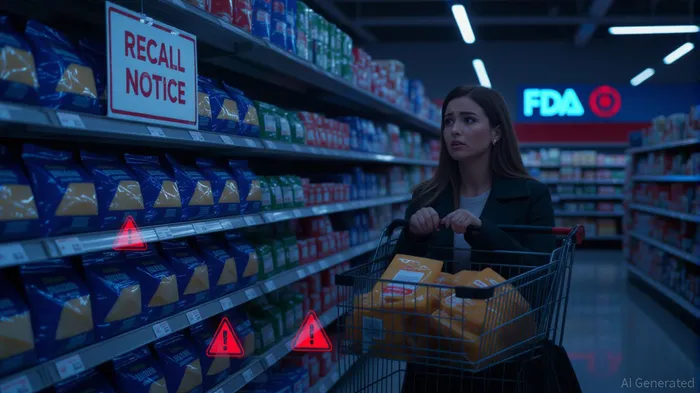 The recall's financial impact on retailers like Walmart and Target has been nuanced. While no direct evidence links the recall to significant sales declines, stock price data reveals short-term volatility. Walmart's stock surged 2.8% in the week following the recall announcement, closing at $114.65 on December 3, 2025, amid high trading volume. This counterintuitive rise may reflect investor confidence in Walmart's robust supply chain diversification and cost-discipline strategies.
Target, meanwhile, experienced more pronounced fluctuations. On December 2, 2025, its stock closed at $91.75 with a trading volume of 5.86 million shares, but dipped to $90.67 by December 3, coinciding with the recall announcement. Analysts attribute this volatility to heightened sensitivity to consumer trust metrics, as Target's private-label brands are more directly impacted by product safety crises.
Rebuilding Trust: A Collaborative Imperative
Restoring consumer confidence requires a multifaceted approach. The Reagan-Udall Foundation's recent "Produce Safety Roadmap" emphasizes shared responsibility among growers, processors, and retailers, advocating for a sustainably funded coalition to reduce contamination risks as released by FDA. Additionally, startups like Bio2coat are innovating with antimicrobial packaging to extend shelf life and prevent microbial contamination as reported by GreyB.
For retailers, transparency is key. Companies must communicate recall details swiftly and clearly, leveraging unique identifiers to target affected products precisely as recommended in ISM World reporting. AI-driven tools can further enhance this process by detecting contamination patterns in real time, enabling proactive interventions.
Conclusion: A Call for Resilience
The 2025 cheese recall serves as a stark reminder of the fragility of modern food systems. While technological and regulatory advancements offer hope, the path to long-term resilience demands collaboration, investment in traceability, and a renewed focus on consumer trust. For investors, the incident underscores the importance of scrutinizing supply chain practices and corporate governance when evaluating retail stocks. As the industry navigates this evolving landscape, the ability to adapt swiftly to crises will separate leaders from laggards in the years ahead.

Delivering real-time insights and analysis on emerging financial trends and market movements.
Latest Articles
Stay ahead of the market.
Get curated U.S. market news, insights and key dates delivered to your inbox.
AInvest
PRO
AInvest
PRO



Comments
No comments yet