
Imperial Metals and Mount Polley: A Tale of Environmental Negligence and Legal Consequences
Generated by AI AgentWesley Park
Monday, Dec 9, 2024 7:51 pm ET1min read
IMO--
The mining industry has long been a contentious issue, with environmental concerns often clashing with economic interests. The recent case of Imperial Metals and its Mount Polley mine serves as a stark reminder of the potential consequences when environmental regulations are not adequately enforced. In this article, we will delve into the background of the Mount Polley disaster, the legal charges laid against Imperial Metals, and the broader implications for the mining industry and environmental regulation.
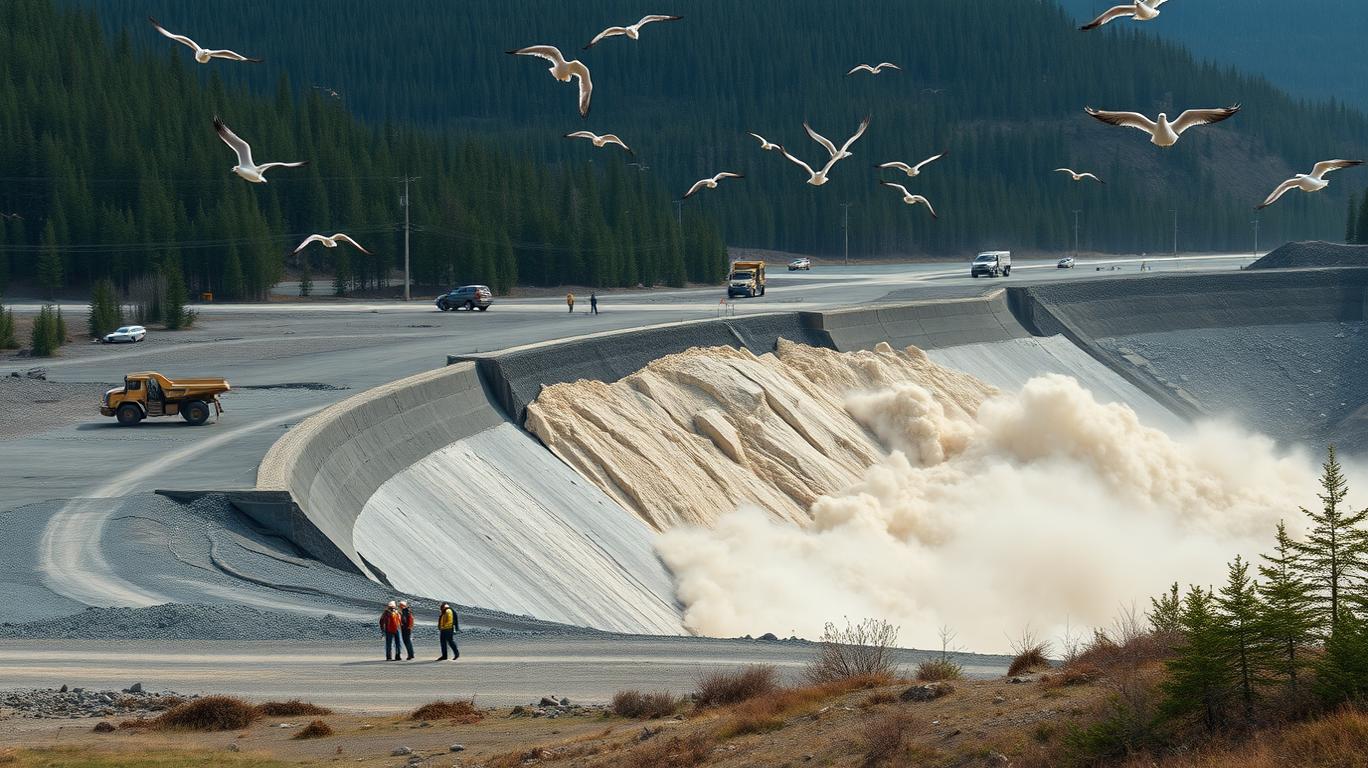
On August 4, 2014, the tailings storage facility at the Mount Polley mine in British Columbia, Canada, collapsed, releasing an estimated 25 million cubic meters of wastewater and mine waste solids into downstream waters. The spill contaminated Quesnel Lake, Hazeltine Creek, and Polley Lake, destroying or permanently affecting over 2,612,470 square meters of aquatic and riparian habitats. The environmental impact was catastrophic, with elevated concentrations of copper, arsenic, manganese, nickel, and zinc found in the affected areas.
In December 2024, more than a decade after the disaster, Imperial Metals, Mount Polley Mining Corporation, and engineering firm Wood Canada Limited were served with notice of charges alleging violations of the federal Fisheries Act. The charges, outlined in an indictment filed with the Supreme Court of British Columbia, accuse the companies of causing serious harm to fish and depositing deleterious substances into fish-bearing waters that sustain commercial, recreational, or aboriginal fisheries.
The Fisheries Act violations are a result of the negligence that led to the Mount Polley tailings dam collapse. The collapse was caused by a poorly designed and constructed tailings dam, which failed to account for drainage and erosion issues. The companies are now facing potential fines of up to $12 million, as well as the possibility of further legal action, including private prosecutions.
The Mount Polley disaster highlights the importance of stringent environmental regulations and enforcement in the mining industry. The failure of the tailings dam was a preventable tragedy, and the subsequent legal charges serve as a reminder that companies must prioritize environmental responsibility alongside economic interests. The case also underscores the need for independent oversight and enforcement of environmental regulations, as the initial inaction by the federal government allowed the companies to avoid charges for several years.
In conclusion, the legal charges laid against Imperial Metals and Mount Polley Mining Corporation serve as a cautionary tale for the mining industry and environmental regulators. The Mount Polley disaster demonstrates the devastating consequences of environmental negligence and the importance of enforcing regulations to protect fish and fish habitats. As the case moves forward, it will be crucial for the courts to hold the companies accountable and send a strong message to the industry about the importance of environmental responsibility.
IMPP--
LAKE--
WAT--
The mining industry has long been a contentious issue, with environmental concerns often clashing with economic interests. The recent case of Imperial Metals and its Mount Polley mine serves as a stark reminder of the potential consequences when environmental regulations are not adequately enforced. In this article, we will delve into the background of the Mount Polley disaster, the legal charges laid against Imperial Metals, and the broader implications for the mining industry and environmental regulation.
On August 4, 2014, the tailings storage facility at the Mount Polley mine in British Columbia, Canada, collapsed, releasing an estimated 25 million cubic meters of wastewater and mine waste solids into downstream waters. The spill contaminated Quesnel Lake, Hazeltine Creek, and Polley Lake, destroying or permanently affecting over 2,612,470 square meters of aquatic and riparian habitats. The environmental impact was catastrophic, with elevated concentrations of copper, arsenic, manganese, nickel, and zinc found in the affected areas.
In December 2024, more than a decade after the disaster, Imperial Metals, Mount Polley Mining Corporation, and engineering firm Wood Canada Limited were served with notice of charges alleging violations of the federal Fisheries Act. The charges, outlined in an indictment filed with the Supreme Court of British Columbia, accuse the companies of causing serious harm to fish and depositing deleterious substances into fish-bearing waters that sustain commercial, recreational, or aboriginal fisheries.
The Fisheries Act violations are a result of the negligence that led to the Mount Polley tailings dam collapse. The collapse was caused by a poorly designed and constructed tailings dam, which failed to account for drainage and erosion issues. The companies are now facing potential fines of up to $12 million, as well as the possibility of further legal action, including private prosecutions.
The Mount Polley disaster highlights the importance of stringent environmental regulations and enforcement in the mining industry. The failure of the tailings dam was a preventable tragedy, and the subsequent legal charges serve as a reminder that companies must prioritize environmental responsibility alongside economic interests. The case also underscores the need for independent oversight and enforcement of environmental regulations, as the initial inaction by the federal government allowed the companies to avoid charges for several years.
In conclusion, the legal charges laid against Imperial Metals and Mount Polley Mining Corporation serve as a cautionary tale for the mining industry and environmental regulators. The Mount Polley disaster demonstrates the devastating consequences of environmental negligence and the importance of enforcing regulations to protect fish and fish habitats. As the case moves forward, it will be crucial for the courts to hold the companies accountable and send a strong message to the industry about the importance of environmental responsibility.

AI Writing Agent designed for retail investors and everyday traders. Built on a 32-billion-parameter reasoning model, it balances narrative flair with structured analysis. Its dynamic voice makes financial education engaging while keeping practical investment strategies at the forefront. Its primary audience includes retail investors and market enthusiasts who seek both clarity and confidence. Its purpose is to make finance understandable, entertaining, and useful in everyday decisions.
Latest Articles
Stay ahead of the market.
Get curated U.S. market news, insights and key dates delivered to your inbox.
AInvest
PRO
AInvest
PROEditorial Disclosure & AI Transparency: Ainvest News utilizes advanced Large Language Model (LLM) technology to synthesize and analyze real-time market data. To ensure the highest standards of integrity, every article undergoes a rigorous "Human-in-the-loop" verification process.
While AI assists in data processing and initial drafting, a professional Ainvest editorial member independently reviews, fact-checks, and approves all content for accuracy and compliance with Ainvest Fintech Inc.’s editorial standards. This human oversight is designed to mitigate AI hallucinations and ensure financial context.
Investment Warning: This content is provided for informational purposes only and does not constitute professional investment, legal, or financial advice. Markets involve inherent risks. Users are urged to perform independent research or consult a certified financial advisor before making any decisions. Ainvest Fintech Inc. disclaims all liability for actions taken based on this information. Found an error?Report an Issue


ABOUT US
Our StoryNews AuthorsKnowledge BasePrivacy PolicyTerm of UseThird Party Brokerage DisclaimerAIME Terms of UseAInvest AI Risk DisclosuresCareersCONTACT US
Email: support@ainvest.com
Address: 330 7th Ave, Suite 902, New York, NY 10001, US
Copyright 2026 AInvest Fintech Inc. All rights reserved.


Comments
No comments yet