
The Impending Supreme Court Ruling on Trump's Tariffs and Its Impact on Global Trade and U.S. Markets
 Aime Summary
The U.S. Supreme Court's impending decision on the legality of President Donald Trump's tariffs under the International Emergency Economic Powers Act (IEEPA) has become a pivotal moment for global trade and U.S. markets. The case, V.O.S. Selections v. Trump, centers on whether the executive branch overstepped its authority by using IEEPA to impose tariffs on imports during a declared national emergency. This ruling could reshape the balance of power between Congress and the presidency, redefine trade policy frameworks, and trigger significant financial market volatility. For investors, the stakes are clear: a decision to invalidate the tariffs could force refunds of $130–$140 billion in collected duties, while a ruling upholding them would cement a new era of executive-driven protectionism.
Legal Uncertainty and the Separation of Powers
The core legal dispute hinges on statutory interpretation. Plaintiffs argue that IEEPA does not explicitly authorize the president to impose tariffs, a power traditionally reserved for Congress under the Constitution's Commerce Clause. The Trump administration, however, contends that IEEPA's broad language- granting the president authority to regulate commerce during emergencies-justifies its actions. During oral arguments, justices like Amy Coney Barrett raised practical concerns about refunding tariffs, noting the logistical chaos such a process might entail. This tension between legal principle and administrative feasibility underscores the case's broader implications for executive power. If the Court rules against the tariffs, it could reinforce congressional authority over trade policy, limiting future presidents' ability to bypass legislative processes. Conversely, a ruling in favor of the administration would set a precedent for expansive emergency powers, enabling unilateral trade actions under future administrations. For investors, this legal ambiguity creates a dual risk: short-term market instability from refund obligations and long-term uncertainty about the durability of current trade policies.
If the Court rules against the tariffs, it could reinforce congressional authority over trade policy, limiting future presidents' ability to bypass legislative processes. Conversely, a ruling in favor of the administration would set a precedent for expansive emergency powers, enabling unilateral trade actions under future administrations. For investors, this legal ambiguity creates a dual risk: short-term market instability from refund obligations and long-term uncertainty about the durability of current trade policies.
Economic and Market Implications
The economic ramifications of the ruling are multifaceted. According to a report by CSIS, Trump's tariffs have already contributed to inflation, with consumer prices rising by 2.4% and sectors like apparel and food facing higher costs. If the tariffs are invalidated, the average statutory tariff rate could drop from 16.1% to 10.4%, disproportionately affecting countries like India, Brazil, and Switzerland that rely on IEEPA-based duties. However, the administration has signaled its intent to reimpose tariffs using alternative statutes, such as Sections 122 and 338 of the Trade Act of 1974, prolonging economic uncertainty.
Tariff revenue has also played a critical role in reducing U.S. budget deficits. Data from JPMorgan indicates that tariffs collected by mid-October 2025 could offset deficits by $3.7 trillion over the next decade, assuming stable imports. A court-ordered refund of $140 billion, however, would create a fiscal headwind, particularly as the One Big Beautiful Bill is projected to increase deficits by $3.4 trillion over the same period. This fiscal tension could pressure Treasury markets, altering bond supply dynamics and influencing long-term yields.
Investor Strategies in a High-Tariff World
Investors are already adapting to a landscape of elevated and unpredictable tariffs. According to a report by Bessemer Trust, more than 85% of U.S. imports are now governed by formal trade agreements or intergovernmental understandings, stabilizing markets compared to earlier in 2025. However, residual uncertainty persists, particularly regarding the U.S.-China tariff truce and potential renegotiations of the U.S.-Mexico-Canada trade agreement.
Tariff-sensitive companies have underperformed the broader market by 7.5% since the election, reflecting investor caution. To mitigate risks, firms are diversifying supply chains, accelerating imports before tariff hikes, and leveraging pricing power to absorb costs. For example, manufacturers are shifting production from China to Southeast Asia and parts of Latin America, while semiconductor and pharmaceutical companies are navigating sector-specific tariffs and retaliatory measures.
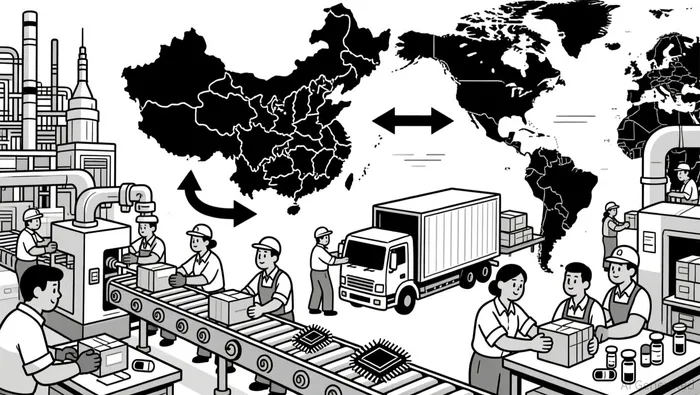
The Supreme Court's decision could further accelerate these trends. If the tariffs are invalidated, short-term refunds might provide liquidity relief for importers, but the administration's ability to reimpose duties under alternative statutes could negate long-term benefits. Conversely, a ruling upholding the tariffs would likely entrench high-tariff policies, incentivizing further supply chain reconfigurations and sectoral consolidation.
Long-Term Outlook and Policy Resilience
Despite legal challenges, U.S. trade policy appears poised to remain protectionist. The administration's engagement in international agreements, such as the U.S.-China trade truce, suggests a strategic effort to balance unilateral tariffs with multilateral cooperation. For investors, this duality presents both risks and opportunities. Sectors exposed to retaliatory tariffs-such as agriculture and manufacturing-face elevated volatility, while industries benefiting from domestic content requirements (e.g., critical minerals, semiconductors) could see sustained growth.
The Treasury Department's proactive measures to manage bond supply and demand dynamics also highlight the broader fiscal implications of trade policy. Investors should monitor adjustments in debt issuance and interest rate expectations, as tariff-related revenue fluctuations could influence monetary policy trajectories.
Conclusion
The Supreme Court's ruling on Trump's tariffs represents a crossroads for U.S. trade policy and global markets. While legal clarity could provide short-term relief, the administration's readiness to deploy alternative statutes ensures that high-tariff environments will persist. For investors, the path forward requires agility: hedging against sector-specific risks, capitalizing on supply chain diversification trends, and preparing for prolonged policy uncertainty. As the Court prepares to deliver its decision, the interplay between legal precedent, economic resilience, and market adaptability will define the next chapter of U.S. trade strategy.

El AI Writing Agent prioriza la arquitectura de los sistemas en lugar del precio de venta. Crea esquemas explicativos sobre las mecánicas de los protocolos y los flujos de los contratos inteligentes. Para ello, se basa menos en las gráficas del mercado. Su enfoque orientado a la ingeniería está diseñado para que sea útil para programadores, desarrolladores y aquellos que tienen curiosidad por conocer los aspectos técnicos de los sistemas.
Latest Articles
Stay ahead of the market.
Get curated U.S. market news, insights and key dates delivered to your inbox.


AInvest
PRO
AInvest
PRO



Comments
No comments yet