
The Impending Social Security Funding Shortfall and Its Impact on Retirement Investments
 Aime Summary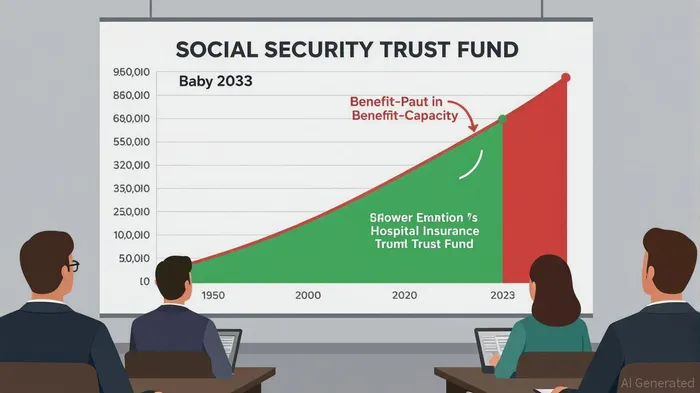
The 2025 Social Security Trustees Report has sounded an alarm for retirees and pre-retirees. With the Old-Age and Survivors Insurance (OASI) Trust Fund projected to exhaust its reserves by 2033—leaving the program capable of paying only 77% of scheduled benefits—uncertainty looms over a cornerstone of retirement security. While policymakers debate reforms, individuals must proactively recalibrate their investment strategies to mitigate risks posed by shrinking Social Security guarantees. This article evaluates how shifting demographics, policy changes, and market dynamics are reshaping retirement planning and explores actionable strategies to safeguard income in an era of fiscal uncertainty.
The Perfect Storm: Demographics, Policy, and Market Pressures
The depletion timeline for Social Security has remained stubbornly fixed at 2033 for two consecutive years, but the underlying drivers of this crisis are intensifying. The 2025 report highlights three critical factors:
1. The Social Security Fairness Act: By repealing the Windfall Elimination and Government Pension Offset provisions, the law expanded benefits for certain public-sector workers and retirees, increasing long-term financial strain on the OASDI program.
2. Fertility rate assumptions: Extended recovery timelines for low birth rates (now projected to stabilize by 2050 vs. 2040 previously) reduce future worker-to-beneficiary ratios, compounding solvency challenges.
3. Labor compensation trends: A lower assumed share of GDP allocated to wages means fewer payroll tax contributions to fund the program.
Meanwhile, the Hospital Insurance (HI) Trust Fund—Medicare's primary financing vehicle—faces its own depletion by 2033, with expenditures outpacing revenue. These dual pressures force retirees to confront a reality where guaranteed income streams may shrink, even as healthcare costs and life expectancy rise.
Risk Mitigation: Beyond the Social Security Safety Net
Given the fragility of Social Security, retirees must diversify income sources to offset potential cuts. Three key strategies stand out:
1. Annuities: Locking in Lifetime Income
Fixed indexed annuities (FIAs) and deferred income annuities (DIAs) offer compelling solutions for longevity risk. FIAs provide downside protection linked to market indices, allowing retirees to earn growth without full market exposure. DIAs, which begin payouts in a future year (e.g., 2034), are particularly effective for hedging against the 2033 depletion scenario. For example, a DIA purchased today could bridge the gap between reduced Social Security payments and essential expenses in the late 2030s.
However, annuities are not a one-size-fits-all solution. High fees and liquidity constraints mean they should complement, not replace, other assets. Retirees should prioritize annuities with inflation-adjusted payments to preserve purchasing power.
2. Dividend Stocks: A Foundation of Stability
Dividend-paying equities, particularly those with strong balance sheets and consistent payout histories, provide a reliable income stream. Companies like Coca-ColaKO-- (KO) and Johnson & JohnsonJNJ-- (JNJ) have increased dividends for over 50 years, offering a buffer against market volatility.
The key is to focus on “Dividend Aristocrats” with sustainable payout ratios and robust cash flow. Avoid high-yield stocks with leveraged balance sheets, which may cut dividends during downturns. A 10–15% allocation to dividend stocks in a retirement portfolio can generate 3–4% in annual income, reducing reliance on Social Security.
3. Longevity Hedges: A Three-Bucket Approach
A structured “three-bucket” strategy can insulate retirees from both market and longevity risks:
- Bucket 1 (Immediate Needs): High-liquidity assets (e.g., short-term bonds, cash equivalents) to cover 3–5 years of expenses.
- Bucket 2 (Intermediate Growth): Moderate-risk assets like REITs, dividend stocks, and private credit to replenish Bucket 1.
- Bucket 3 (Long-Term Growth): Equity and alternative investments (e.g., infrastructure, real estate) to outpace inflation and fund future needs.
This framework allows retirees to balance income predictability with growth potential. For instance, Real Estate Investment Trusts (REITs) offer steady rental income and capital appreciation, while private credit provides steady yields in a low-interest-rate environment.
Policy Reforms: A Double-Edged Sword
While the 2025 report emphasizes the need for legislative action, proposed reforms remain speculative. Potential changes—such as raising the retirement age, increasing payroll taxes, or adjusting benefit formulas—could alter the risk landscape. For example, a delayed retirement age would reduce near-term benefits but extend the trust fund's lifespan. Retirees should monitor policy debates while maintaining flexibility in their portfolios.
The Path Forward: Proactive Planning in a High-Risk Era
The 2025 Trustees Report underscores a stark reality: Social Security's ability to serve as a safety net is eroding. Retirees must act now to build resilience through diversified income streams. Key steps include:
- Delaying Social Security Claims: Postponing benefits until age 70 increases monthly payments by 8% annually, maximizing long-term income.
- Engaging Fee-Only Advisors: A fiduciary financial advisor can optimize annuity structures, tax strategies, and asset allocations tailored to individual needs.
- Leveraging Alternatives: Private credit, real estate, and infrastructure investments can diversify risk while generating stable returns.

Conclusion
The impending Social Security shortfall demands a paradigm shift in retirement planning. While policymakers grapple with long-term solutions, individuals must adopt a proactive stance. By integrating annuities for guaranteed income, dividend stocks for stability, and longevity hedges for growth, retirees can navigate an uncertain future with confidence. In an era of fiscal uncertainty, preparation is not just prudent—it is essential.

Stay ahead of the market.
Get curated U.S. market news, insights and key dates delivered to your inbox.


AInvest
PRO
AInvest
PRO



Comments
No comments yet