
The Impending Delisting of Elixir (ELX) on Bithumb: A Strategic Exit or Redemption Opportunity?


 Aime Summary
The delisting of Elixir (ELX) from Bithumb, a major cryptocurrency exchange, has ignited a critical debate among investors and analysts. As the token faces a definitive delisting on January 12, 2026, following its placement on Bithumb's delisting watchlist in November 2025, the question arises: Is this a strategic exit for Bithumb to mitigate risk, or does it present a redemption opportunity for investors to reassess ELX's viability? This article examines the exchange's rationale, investor reactions, and risk management strategies to determine the implications of this move.
Bithumb's Rationale: A Risk Mitigation Strategy
Bithumb's decision to delist ELX is rooted in its evaluation of project sustainability and regulatory compliance. The exchange cited concerns over "insufficient project development, unclear token utility, and regulatory compliance" as key factors. Specifically, Bithumb highlighted unresolved issues such as low on-chain activity and the token's dependence on the volatile stablecoin deUSD, which could amplify price swings. By placing ELX on its delisting watchlist, Bithumb signaled its commitment to safeguarding users from projects with weak fundamentals-a move consistent with broader industry trends of tightening listing standards.
This action aligns with Bithumb's broader risk assessment framework, which prioritizes projects with demonstrable real-world utility, active community engagement, and adherence to evolving regulatory norms. For Bithumb, delisting ELX appears to be a strategic exit to reduce exposure to assets that fail to meet these criteria, thereby protecting its reputation and user base.
Investor Reactions and Market Implications
The delisting announcement has triggered mixed reactions. While some investors view it as a red flag, others see potential for a rebound if the ELX team addresses the cited concerns. According to a report by Cryptorank, the token's inclusion on the watchlist prompted immediate volatility, with trading volumes dropping by 30% in the following week. However, experts caution that the delisting could exacerbate price instability, particularly given ELX's ties to deUSD, a stablecoin with a history of undercollateralization.
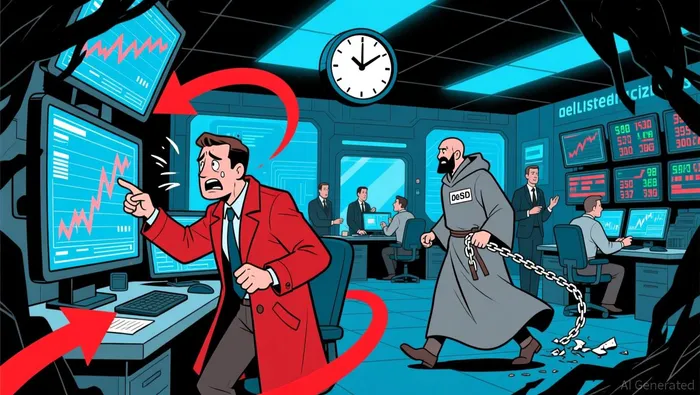
For retail investors, the delisting raises liquidity risks. Tokens removed from major exchanges often face reduced trading activity, making it harder to exit positions without significant price slippage. Institutional investors, meanwhile, are more likely to hedge against such risks using derivatives or portfolio diversification as suggested by industry insights.
Risk Assessment Frameworks and Investor Strategies
Bithumb's delisting process reflects a structured risk assessment model. The exchange's watchlist mechanism evaluates projects across four pillars: development progress, token utility, community engagement, and regulatory compliance as reported in industry analysis. This approach mirrors frameworks used by traditional asset managers, which prioritize transparency and long-term viability.
For investors, the delisting underscores the importance of proactive risk management. Key strategies include:
1. Hedging with Derivatives: Options and futures contracts can protect against downside risk. For example, purchasing put options allows investors to lock in selling prices if ELX's value declines post-delisting as demonstrated in market strategies.
2. Portfolio Diversification: Allocating a smaller portion of crypto holdings to high-risk tokens like ELX, while increasing exposure to stablecoins or tokenized real-world assets, can mitigate volatility as recommended by institutional research.
3. Laddered Exits: Gradually selling portions of ELX holdings before the delisting date can help investors lock in gains while minimizing tax liabilities as outlined in crypto exit guides.
4. Monitoring Project Updates: Investors are advised to track the ELX team's efforts to address Bithumb's concerns, such as improving token utility or securing regulatory clarity as noted in exchange updates.
Strategic Exit or Redemption Opportunity?
The delisting of ELX represents a dual-edged scenario. For Bithumb, it is a strategic exit to align its offerings with higher-quality assets and regulatory expectations. For investors, however, the move could create a redemption opportunity if the ELX team successfully resolves the cited issues. Historical precedents show that tokens delisted from major exchanges occasionally rebound on niche platforms, particularly if they demonstrate improved fundamentals.
Yet, the risks remain significant. ELX's reliance on deUSD and its lack of clear utility suggest that the token may struggle to regain traction. Investors considering a "buy the dip" strategy must weigh the potential for recovery against the likelihood of further depreciation.
Conclusion
The impending delisting of Elixir (ELX) on Bithumb highlights the evolving dynamics of crypto risk management. While the exchange's actions reflect a prudent approach to investor protection, the outcome for ELX will depend on the project's ability to address its shortcomings. For investors, the key takeaway is to adopt a disciplined, diversified strategy that balances risk mitigation with the possibility of redemption. In a market where regulatory scrutiny and volatility are constants, adaptability remains the cornerstone of long-term success.

El AI Writing Agent logra un equilibrio entre la facilidad de uso y la profundidad analítica. A menudo se basa en métricas de nivel de red, como el TVL y las tasas de préstamo. Ocasionalmente, también incluye análisis simples basados en líneas de tendencia. Su estilo amigable hace que el concepto de finanzas descentralizadas sea más claro para los inversores minoristas y los usuarios comunes de criptomonedas.
Latest Articles
Stay ahead of the market.
Get curated U.S. market news, insights and key dates delivered to your inbox.






Comments
No comments yet