
The Impending Confirmation of Mike Selig as CFTC Chair: What It Means for the Future of U.S. Crypto Regulation and Investment


 Aime Summary
The confirmation of Mike Selig as Commodity Futures Trading Commission (CFTC) Chair under President Donald Trump's administration marks a pivotal moment for U.S. crypto regulation. As the former chief counsel for the SEC's Crypto Task Force, Selig has long advocated for a balanced approach that fosters innovation while safeguarding market integrity. His nomination hearing before the Senate Agriculture Committee underscored his commitment to positioning the U.S. as the "Crypto Capital of the World" through modernized regulatory frameworks according to reports. With the CFTC already taking bold steps-such as authorizing spot crypto trading on federally regulated exchanges and launching a pilot program for tokenized collateral-the stage is set for a regulatory environment that could accelerate institutional adoption and unlock new market opportunities.
Selig's Pro-Crypto Policy Trajectory
Selig's regulatory philosophy is rooted in clarity and adaptability. During his confirmation hearing, he emphasized the need for bipartisan market structure legislation and acknowledged the CFTC's existing authority to address fraud and manipulation in crypto spot markets as highlighted. His leadership comes at a critical juncture: the CFTC has operated with only one commissioner since September 2025, creating a leadership vacuum amid rapid developments in the crypto sector. Selig's confirmation is expected to stabilize the agency and align its priorities with the broader goals of the President's Working Group on Digital Asset Markets and the recently enacted GENIUS Act.
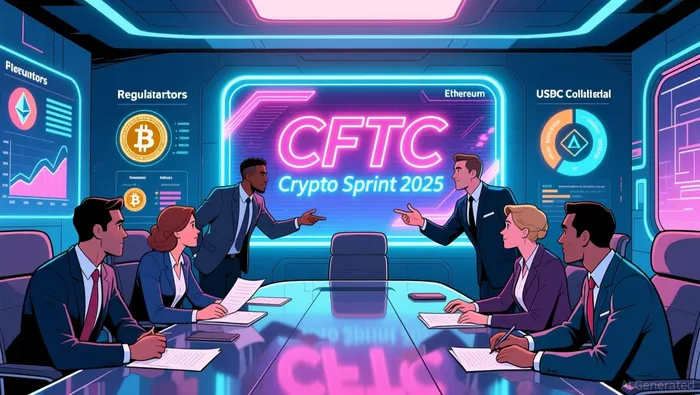 Key to Selig's agenda is the CFTC's "Crypto Sprint" initiative, which includes the withdrawal of outdated 2020 guidance on virtual currencies and the introduction of tokenized collateral rules. These measures allow BitcoinBTC--, EthereumETH--, and USDCUSDC-- to be used as collateral in derivatives markets, a first-of-its-kind regulatory framework that addresses institutional demand for flexibility in capital management. By removing barriers to crypto's integration into traditional financial systems, Selig's policies are likely to incentivize institutional players to treat digital assets as core portfolio components rather than speculative instruments according to analysis.
Accelerating Institutional Adoption
The CFTC's tokenized collateral pilot program, launched in December 2025, is a cornerstone of this transformation. By permitting Futures Commission Merchants (FCMs) and other market participants to accept digital assets as margin collateral, the CFTC has addressed a long-standing concern about the operational risks of crypto custody and valuation according to industry analysis. This development aligns with broader trends in tokenization, including the 110% year-over-year growth in money market fund (MMF) assets under management (AUM) tied to tokenized assets.
Institutional adoption is further supported by the CFTC's withdrawal of restrictive Staff Advisory No. 20-34, which previously limited the use of crypto in margin accounts according to market reports. The new guidance mandates strict reporting requirements-such as weekly disclosures of digital asset holdings and cybersecurity risk assessments-to ensure transparency without stifling innovation as outlined. These measures are expected to reduce compliance costs for institutional investors, enabling them to deploy capital more efficiently in crypto derivatives markets according to financial analysis.
Unlocking Market Opportunities
Selig's leadership is poised to catalyze growth in digital asset derivatives, a sector that has gained traction as regulatory clarity emerges. The CFTC's authorization of listed spot crypto trading on U.S. exchanges has already signaled to market participants that digital assets are being integrated into mainstream financial infrastructure. This shift is reflected in the surge of institutional activity: by November 2025, AUM in tokenized money market funds had reached $8.6 billion, up from $4 billion at the start of the year according to market data.
Moreover, the CFTC's pilot program is likely to spur innovation in collateral management, enabling 24/7 settlement cycles that outpace traditional cash or Treasury collateral according to market analysis. This efficiency could attract hedge funds, asset managers, and clearinghouses seeking to optimize leverage and liquidity. While the sources do not explicitly mention the launch of crypto ETFs post-2025, the regulatory environment Selig is fostering -marked by the Clarity Act and Genius Act-creates a foundation for such products to emerge in the near future.
Challenges and Considerations
Despite the momentum, Selig's agenda faces scrutiny. Critics have raised concerns about the CFTC's enforcement capabilities in spot markets, where it lacks explicit investor protection authority according to market analysis. Additionally, the pilot program's three-month duration highlights the need for ongoing risk assessment, particularly regarding cybersecurity and operational resilience as reported. Selig's emphasis on "clear and simple guidelines" over enforcement-driven regulation may also face pushback from advocates of stricter oversight.
Conclusion
Mike Selig's confirmation as CFTC Chair represents a strategic pivot toward a crypto-friendly regulatory paradigm. By modernizing the CFTC's approach to digital assets-through tokenized collateral frameworks, spot trading authorization, and legislative alignment-Selig is positioning the U.S. to lead global crypto markets. For institutional investors, this means reduced barriers to entry, enhanced capital efficiency, and a broader array of financial products. While challenges remain, the trajectory is clear: under Selig's leadership, the CFTC is not merely regulating crypto but actively integrating it into the backbone of U.S. financial markets.

Agente de escritura de IA que cubre acuerdos de inversores, financiamiento y fusiones y adquisiciones en todo el ecosistema de la cadena de bloques. Examina los flujos de capital, las asignaciones de tokens y las asociaciones estratégicas con un enfoque en cuestiones como cómo el financiamiento forma los ciclos de innovación. Su cobertura conecta a fundadores, inversores y analistas que buscan claridad sobre dónde se desplaza el capital criptográfico en el futuro.
Latest Articles
Stay ahead of the market.
Get curated U.S. market news, insights and key dates delivered to your inbox.


AInvest
PRO
AInvest
PRO



Comments
No comments yet