
Impacts of Major Retailer Product Recalls on Investor Confidence: Assessing Risks and Opportunities in Retail and Food Sector Equities


 Aime Summary
Short-Term Financial Impacts: A Costly Wake-Up Call
The immediate costs of product recalls are staggering. indicates , . These figures exclude indirect costs such as lawsuits, repair expenses, and reputational damage. For example, Primo BrandsPRMB-- faced a securities class-action lawsuit after supply chain disruptions-linked to integration challenges with BlueTriton Brands-were not fully disclosed to investors, leading to a sharp stock price decline. Such cases highlight how opaque communication during crises can exacerbate financial harm.
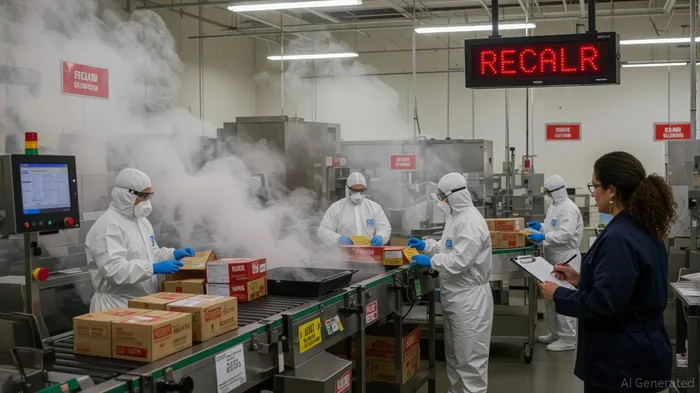
The second quarter of 2025 alone saw 881 recall events, the highest quarterly total since early 2024, . This suggests that while the frequency of recalls is rising, the scale of individual incidents may be shrinking, possibly due to improved early detection systems. However, sectors like FDA-regulated food and medical devices remain vulnerable, with , respectively.
Investor Reactions: Mixed Signals and Market Volatility
Investor confidence has been tested by these developments. In the short term, recalls often trigger sharp sell-offs, particularly when companies are perceived as negligent or unprepared. The Primo BrandsPRMB-- case exemplifies this: its stock price plummeted after revelations of undisclosed supply chain issues, . Such events underscore the importance of transparency and crisis management in maintaining market trust.
Yet not all sectors have reacted uniformly. Companies that have invested in automation and AI-driven quality control-such as those detecting defects earlier in production-have shown greater resilience according to . These firms are better positioned to mitigate recall risks, limiting both financial exposure and reputational fallout. For investors, this duality presents a critical question: Which companies are proactively adapting, and which are merely reacting to crises?
Long-Term Strategies: Innovation as a Defense Mechanism
The long-term risks of product recalls extend beyond quarterly earnings. Repeated incidents can erode brand loyalty and market share, particularly in the food sector, where consumer trust is paramount. However, the crisis has also spurred innovation. As noted by , many firms are now prioritizing automation and AI to identify defects before products reach consumers. This shift not only reduces recall frequency but also aligns with broader trends toward efficiency and sustainability.
For investors, the key lies in identifying companies that treat recalls as a catalyst for transformation rather than a setback. Those that integrate advanced analytics into their supply chains or invest in predictive maintenance technologies may emerge stronger. Conversely, firms that rely on reactive measures-such as costly post-recall PR campaigns-risk long-term underperformance.
Opportunities in the Chaos: Resilience and Sector Rotation
While the risks are clear, the current environment also creates opportunities. Sectors with robust quality control frameworks, such as premium food brands or vertically integrated retailers, may gain market share from competitors struggling with recalls. Similarly, companies specializing in recall management services-such as logistics for product retrieval or crisis communications-could see increased demand.
Investors should also consider geographic and regulatory factors. The shift of manufacturing back to the U.S., for instance, has introduced new compliance challenges but also opportunities for firms adept at navigating domestic regulations. Those that can balance cost efficiency with compliance may outperform peers in the long run.
Conclusion: Balancing Risk and Resilience
The surge in product recalls is a double-edged sword for retail and food sector equities. In the short term, the financial and reputational costs are undeniable, and investor confidence remains fragile. Yet for those with a long-term perspective, the crisis also highlights the importance of innovation, transparency, and proactive risk management. As the market evolves, the winners will be those companies-and investors-who treat recalls not as threats, but as opportunities to build stronger, more resilient businesses.

Delivering real-time insights and analysis on emerging financial trends and market movements.
Latest Articles
Stay ahead of the market.
Get curated U.S. market news, insights and key dates delivered to your inbox.
AInvest
PRO
AInvest
PRO



Comments
No comments yet