
The Impact of ZKsync's Recent Endorsement on Ethereum's Layer 2 Adoption


 Aime Summary
ZKsync's Technical and Institutional Momentum
ZKsync's recent advancements underscore its technical credibility. The Atlas upgrade, which Buterin explicitly validated, achieved 15,000 transactions per second and near-instant finality, leveraging innovations like the GKR protocol and Airbender proof system. These metrics outpace optimistic rollups like ArbitrumARB-- and OptimismOP--, which, despite leading in total value locked (TVL), struggle with withdrawal delays and lower throughput. By December 2025, ZKsync plans to double its capacity to 30,000 TPS via the Fusaka upgrade, positioning it as a direct competitor to Ethereum's broader scaling ambitions.
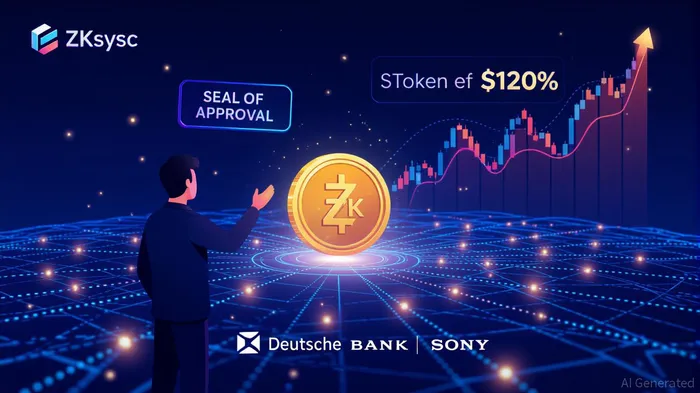
Institutional adoption further solidifies ZKsync's trajectory. Partnerships with Deutsche Bank, Sony, and Citi highlight its appeal to traditional finance (TradFi) entities seeking blockchain solutions for high-frequency transactions, privacy, and compliance. These collaborations are not merely symbolic; they represent a tangible shift in how enterprises view Ethereum's L2 infrastructure as a bridge between decentralized and centralized systems.
Market Share Dynamics and Competitive Pressures
While ZKsync's momentum is undeniable, the Ethereum L2 landscape remains fragmented. As of November 2025, Arbitrum dominates with $16.63 billion in TVL (45% of the total L2 market), driven by its 1.5 million daily transactions and robust ecosystem of 250 decentralized applications (DApps). Optimism, with $6 billion in TVL, focuses on modular infrastructure and developer incentives, making it a strong contender for long-term growth.
ZKsync's TVL of $3.5 billion (combined with StarkNetSTRK-- and Scroll) lags behind these leaders but is growing rapidly. The key differentiator lies in ZKsync's cryptographic security and cost efficiency, which appeal to use cases like gaming, microtransactions, and real-time DeFi. Analysts note that ZKsync's deflationary tokenomics-featuring buybacks, burns, and staking-create a compelling value proposition for token holders, contrasting with Arbitrum's governance-focused ARBARB-- token.
Investment Implications for Crypto Infrastructure
For investors, the ZKsync endorsement and its technical progress highlight three critical trends:
Token Performance and Institutional Capital Flows: The $ZK token's 120% surge post-endorsement reflects growing confidence in ZKsync's utility and governance model. Institutional inflows, particularly from TradFi players, suggest that ZKsync is being positioned as a hybrid infrastructure layer, capable of serving both decentralized and enterprise needs. This dual appeal could drive sustained demand for $ZK, especially as Fusaka's 30,000 TPS target approaches.
Ethereum's Post-Merge Roadmap: Vitalik Buterin's roadmap envisions Ethereum handling 100,000 TPS by 2025, with L2s like ZKsync playing a central role. The success of ZKsync's upgrades aligns with this vision, making it a strategic bet for investors aligned with Ethereum's long-term scalability goals. Analysts at Standard Chartered have even forecast a bullish $12,000 target for ETH by 2026, contingent on successful L2 integrations like Fusaka and Pectra.
Fragmentation and Diversification Risks: While ZKsync's rise is notable, the L2 market remains competitive. Arbitrum's ecosystem maturity and Optimism's modular infrastructure ensure they retain significant market share. Investors must weigh ZKsync's technical edge against the established networks' broader adoption. A diversified portfolio across L2s-prioritizing ZKsync for speed and security, Arbitrum for TVL, and Optimism for developer tools-may offer the most balanced approach.
Conclusion: A New Era for Ethereum Scaling
ZKsync's endorsement by Buterin and its institutional partnerships mark a turning point in Ethereum's scaling narrative. The protocol's technical achievements, coupled with deflationary tokenomics and real-world enterprise adoption, position it as a formidable player in the L2 space. However, the competitive landscape remains dynamic, with Arbitrum and Optimism retaining strong positions. For investors, the key takeaway is that Ethereum's infrastructure is no longer a single-layer story. The future belongs to those who can navigate the interplay between L1's foundational role and L2s' specialized capabilities. As Buterin's roadmap unfolds, ZKsync's ability to deliver on its promises will be a litmus test for the broader viability of ZK-based scaling-and a critical signal for capital allocation in 2026 and beyond.

Combinación de tradicional sabiduría de comercio con las últimas información de criptomonedas.
Latest Articles
Stay ahead of the market.
Get curated U.S. market news, insights and key dates delivered to your inbox.






Comments
No comments yet