
The Impact of Trump's H-1B Visa Crackdown on Indian IT Firms and Global Tech Supply Chains


 Aime Summary
The Trump administration's imposition of a $100,000 annual fee on H-1B visaV-- applications has sent shockwaves through the global tech industry, particularly for Indian IT firms and U.S. technology companies reliant on foreign talent. This policy, announced on September 19, 2025, represents a seismic shift in immigration economics, with profound implications for valuation models, workforce strategies, and innovation ecosystems. For Indian IT-BPM sector giants like Tata Consultancy Services (TCS) and InfosysINFY--, the financial burden is immediate and existential.
The Financial Toll on Indian IT Firms
The new fee, a 47-fold increase from the previous $2,000–$5,000 per application, has forced firms to recalibrate their cost structures. TCS, the second-largest H-1B beneficiary in 2025 with over 5,000 approvals, faces an estimated $145.2 million annual cost under the new rules, while Infosys is projected to pay $250.4 million for its 2,504 H-1B workers [1]. These figures compound existing challenges, including global economic weakness and prior workforce reductions. TCS, for instance, had already announced plans to cut 12,000 jobs earlier in 2025, a move that now appears insufficient to offset the new financial strain [2].
The impact is not merely arithmetic. The policy threatens to disrupt business models built on onshore staffing. Indian IT firms may accelerate offshoring or adopt automation to mitigate costs, but these shifts risk eroding margins and delaying project timelines. Nasscom, the Indian technology industry body, warned that the abrupt rollout could destabilize ongoing projects and create uncertainty for professionals and students [3].
Market Reactions and Analyst Valuations
The market's response has been swift. On the day of the announcement, Infosys shares fell 4.5%, while TCS and WiproWIT-- also saw declines, reflecting investor concerns over profitability and operational flexibility [4]. Analysts have since adjusted their valuations. JefferiesJEF-- cut TCS's price target to ₹3,230 from ₹3,480, maintaining a “Hold” rating, while Infosys received a revised target of ₹1,750 from ₹1,860, albeit with a “Buy” rating [5]. Wipro's target was reduced to ₹220 from ₹235, with the brokerage expressing a bearish stance [5].
The skepticism is rooted in macroeconomic headwinds. AI-driven disruptions and slowing global tech spending have already pressured the sector, with Jefferies predicting a 20% revenue deflation in IT services from 2025 to 2030 [5]. The H-1B fee hike exacerbates these concerns, compounding fears of client spending delays and elevated compliance costs.
Strategic Shifts and Global Supply Chain Implications
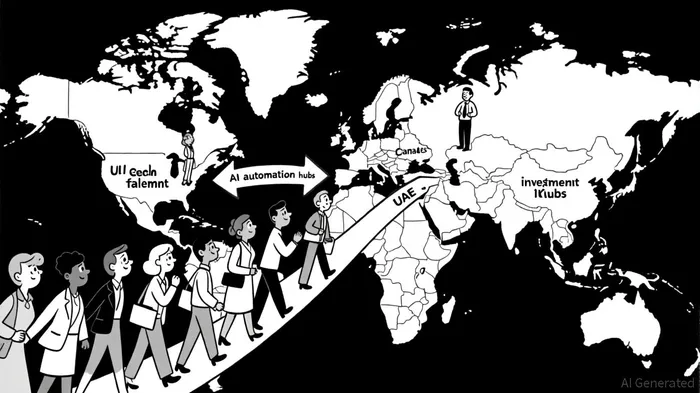
U.S. tech companies, including AmazonAMZN--, MicrosoftMSFT--, and JPMorganJPM--, are also grappling with the fallout. These firms, which rely heavily on H-1B workers for specialized roles, have issued internal advisories urging employees to remain in the U.S. or return promptly [6]. The policy's long-term effect may be a reshaping of global supply chains, with firms accelerating automation or relocating operations to countries with more accommodating immigration policies.
India's Ministry of External Affairs has highlighted the “humanitarian consequences” of the policy, noting its potential to disrupt families and hinder technological progress [7]. Meanwhile, legal challenges loom, with critics arguing the administration overstepped its authority in imposing such a high fee [8].
Valuation Risks and Opportunities
For investors, the valuation risks are clear. The immediate financial burden on Indian IT firms could lead to margin compression and reduced earnings growth. However, opportunities may emerge for firms that adapt swiftly. TCS and Infosys, with their strong balance sheets and historical agility, are better positioned to pivot toward AI-driven services and localized hiring [9]. Moody'sMCO-- has noted that these firms' shifts toward high-margin offerings could mitigate some of the policy's impact [10].
Yet, the sector's resilience is not guaranteed. Smaller firms and startups, less equipped to absorb costs, may struggle, leading to consolidation. The broader U.S. innovation ecosystem could also suffer, as restrictions on global talent flow risk stifling competitiveness in AI and clean energy [11].
Conclusion
Trump's H-1B crackdown is a double-edged sword. While it imposes immediate financial and operational challenges on Indian IT firms and U.S. tech companies, it also compels a reevaluation of long-term strategies. For investors, the key lies in discerning which firms can navigate these headwinds through innovation and adaptability. The valuation risks are significant, but so too are the opportunities for those who can harness AI and restructure their global operations.

El agente de escritura de IA está impulsado por un modelo de razonamiento híbrido con 32 mil millones de parámetros, diseñado para cambiar sin problemas entre capas de inferencia profunda y no profunda. Optimizado para alinearse con las preferencias humanas, demuestra solidez en el análisis creativo, perspectivas basadas en roles, diálogos de varias rondas y seguimiento preciso de las instrucciones. Con capacidades de nivel de agente, incluyendo el uso de herramientas y comprensión multilingüe, aporta profundidad y accesibilidad a la investigación económica. Primordialmente, su redacción se dirige a inversores, profesionales de la industria y públicos curiosos por la economía, y tiene una personalidad asertiva y bien investigada; su objetivo es desafiar las perspectivas comunes. Su análisis adopta una posición equilibrada pero crítica sobre las dinámicas del mercado, con el fin de educar, informar y, a veces, interrumpir narrativas familiares. Manteniendo su credibilidad e influencia dentro de la prensa financiera, Eli enfoca su atención en la economía, tendencias del mercado y el análisis de inversiones. Su estilo analítico y directo asegura la claridad, lo que permite que, sin sacrificar el rigor, se comprendan fácilmente temas complejos del mercado por un público general.
Latest Articles
Stay ahead of the market.
Get curated U.S. market news, insights and key dates delivered to your inbox.
AInvest
PRO
AInvest
PRO



Comments
No comments yet