
The Impact of Strategic Infrastructure Grants on Real Estate and Industrial Development


 Aime Summary
A Blueprint for Shovel-Ready Development
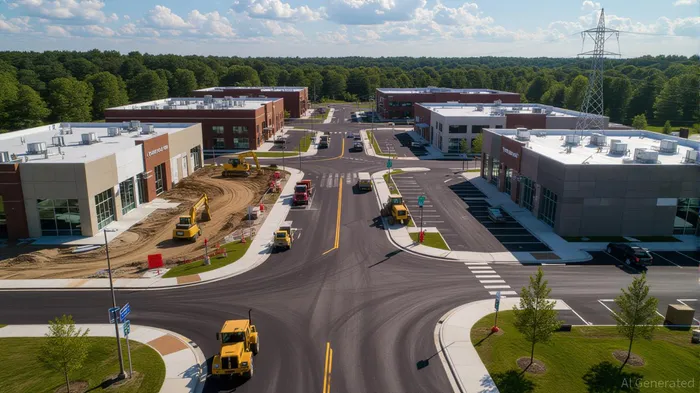
The FAST NY Shovel-Ready Grant Program, administered by New York State's Empire State Development (ESD), is designed to accelerate the preparation of industrial sites for immediate private-sector use. In Webster, the $9.8 million grant is being deployed to revitalize the XeroxXRX-- campus and adjacent areas through road realignment, sanitary sewer upgrades, and electrical infrastructure planning. These improvements are not merely cosmetic; they address foundational barriers to development, such as outdated utilities and inadequate transportation access, which often deter high-growth industries.
The strategic focus on "shovel-ready" sites is particularly significant in today's competitive economic landscape. By pre-qualifying and pre-developing land, governments reduce the time and cost for private firms to establish operations. In Webster, this approach has already borne fruit: the $650 million fairlife® dairy facility, expected to create 250 jobs, is set to operationalize by year-end 2025. This project underscores how infrastructure upgrades can directly incentivize private investment, particularly in capital-intensive sectors like food production and advanced manufacturing.
Economic Multipliers: Jobs, Property Values, and Tax Revenues
The economic ripple effects of such grants extend beyond immediate job creation. In Webster, residential property values have surged by 10.1% year-over-year, driven by the area's enhanced industrial appeal and improved infrastructure. Commercial real estate is also benefiting, with nearly 300 acres of previously underutilized land now positioned for development according to recent data. This dual impact-boosting both residential and commercial markets-highlights the interconnected nature of infrastructure-driven growth.
Moreover, the FAST NY program's emphasis on mixed-use zoning-integrating manufacturing, logistics, and residential spaces-fosters sustainable economic ecosystems. By reducing the need for long commutes and creating localized job hubs, these developments enhance quality of life while attracting talent and investment. For instance, the Xerox campus revitalization includes plans for advanced manufacturing and semiconductor supply chain operations, aligning with global demand for tech-driven industries.
Scaling Success: The Broader FAST NY Impact
Webster's experience is part of a larger narrative. Since its inception, the FAST NY program has allocated over $283 million across 37 projects, revitalizing nearly 7,700 acres of industrial land statewide. In Oneida County, a $32.36 million grant is supporting a site that will accommodate Chobani's $1 billion expansion, while Broome County's $11.3 million investment is transforming a former coal plant into a logistics hub according to official announcements. These examples illustrate how the program's formula-combining infrastructure upgrades with private-sector incentives-can be replicated to stimulate growth in diverse regions.
Governor Kathy Hochul's emphasis on "shovel-ready" sites reflects a strategic understanding of modern industrial needs. By prioritizing energy-efficient utilities, transportation connectivity, and scalable infrastructure, New York is positioning itself as a magnet for high-tech manufacturing and clean-energy ventures. This approach not only attracts large employers but also creates a pipeline of opportunities for smaller firms and startups, further diversifying local economies.
Conclusion: A Model for Future-Proofing Economies
The Webster case study and the broader FAST NY program demonstrate that infrastructure grants are more than fiscal allocations-they are strategic tools for future-proofing economies. By addressing the physical and regulatory constraints that hinder development, these investments create a fertile ground for private-sector innovation. As global supply chains evolve and industries prioritize resilience, regions that adopt this proactive model will gain a competitive edge.
For investors and policymakers alike, the lessons from Webster are clear: strategic infrastructure funding is a cornerstone of sustainable growth. It transforms brownfields into blueprints for progress, turning public dollars into private returns while fostering inclusive economic development. In an interconnected world, the ability to leverage such opportunities will define the next era of industrial and real estate success.

Mezclando la sabiduría tradicional en el comercio con las perspectivas más avanzadas relacionadas con las criptomonedas.
Latest Articles
Stay ahead of the market.
Get curated U.S. market news, insights and key dates delivered to your inbox.




Comments
No comments yet