
The Impact of Low River Levels on European Industrial and Agricultural Sectors


 Aime Summary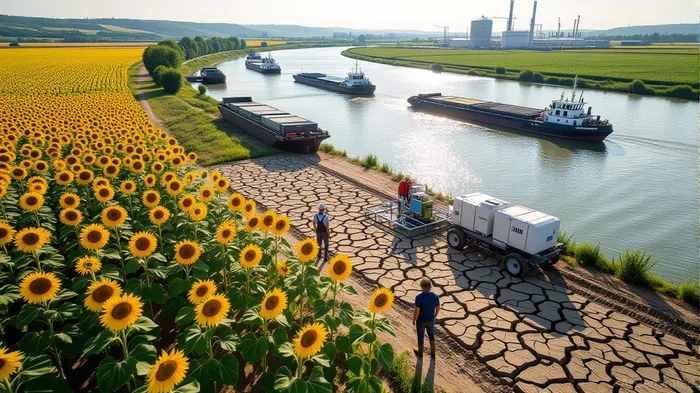
The European industrial and agricultural landscapes are facing unprecedented challenges in 2025 due to historically low river levels, driven by prolonged droughts and climate change. These conditions are disrupting supply chains, energy production, and agricultural output, while simultaneously creating opportunities for companies that prioritize water resilience and innovation. Investors must navigate these dual dynamics to identify both risks and emerging opportunities in water-dependent sectors.
Logistics and Industrial Disruptions: A Ripple Effect
The Rhine River, a lifeline for European trade, has seen water levels drop to critical thresholds, paralyzing barge traffic and delaying the transport of industrial goods such as chemicals, machinery, and raw materials[1]. According to a report by the World Economic Forum's Water Futures initiative, reduced river flow has increased transportation costs by up to 30% for businesses reliant on inland waterways, forcing companies to seek alternatives like road or rail transport—options that are both more expensive and carbon-intensive[3]. This disruption is particularly acute for energy-intensive industries, such as steel and chemical manufacturing, which depend on timely deliveries of bulk materials. For example, German chemical giant BASF has reportedly rerouted shipments via rail, incurring additional costs that could strain profit margins[1].
Energy Production: Hydroelectric and Thermal Power at Risk
Low river levels are compounding challenges for Europe's energy sector. Hydroelectric power generation in regions like the Alps and the Rhine basin has declined due to reduced water flow, while thermal power plants face restrictions on water withdrawal for cooling processes[3]. In France, EDF (Électricité de France) has had to curtail operations at several nuclear reactors to comply with environmental regulations limiting water abstraction during droughts. This dual pressure is accelerating the shift toward renewable energy sources, such as solar and wind, but also highlights the vulnerability of traditional energy infrastructure to climate-driven water scarcity.
Agricultural Strain: From Irrigation to Crop Yields
Agriculture, a cornerstone of Europe's rural economy, is equally imperiled. The World Bank's Climate-Smart Agriculture (CSA) initiatives highlight that reduced river levels have compromised irrigation systems in key agricultural regions, including the Po Valley in Italy and the Rhône basin in France[2]. Farmers are now forced to rely on costly groundwater extraction or reduce crop production, with sunflower, wheat, and vineyard yields projected to decline by 15–20% in 2025[2]. For instance, in Spain's Ebro River basin, almond growers have adopted precision irrigation technologies to conserve water, though such adaptations remain uneven across the sector[2].
Resilient Sectors and Adaptive Innovations
Amid these challenges, companies and sectors prioritizing water resilience are emerging as compelling investment opportunities. In logistics, firms investing in digital river level monitoring systems and hybrid transport networks (e.g., rail-waterway combinations) are gaining competitive advantages. The Dutch company Port of Rotterdam, for example, has integrated AI-driven water management tools to optimize barge scheduling during low-flow periods[3].
In agriculture, CSA-focused startups and established agri-tech firms are capitalizing on demand for drought-resistant crops and water-efficient irrigation. Dutch firm Netafim Europe, a leader in drip irrigation, has seen a 25% year-on-year increase in demand for its systems across Southern Europe[2]. Similarly, German agritech firm Teralytic is deploying AI-powered soil moisture sensors to help farmers reduce water use by up to 40%[2].
Energy companies are also pivoting. Iberdrola and Ørsted are accelerating offshore wind projects in the North Sea, reducing reliance on freshwater-dependent energy sources[3]. Meanwhile, solar thermal plants with dry-cooling technologies, such as those developed by SolarReserve, are gaining traction in arid regions like Southern Spain and Portugal[3].
Investment Implications: Mitigating Risks, Capturing Opportunities
For investors, the key lies in distinguishing between vulnerable legacy industries and adaptive innovators. Sectors exposed to water scarcity—such as traditional river-dependent logistics, hydroelectric power, and conventional agriculture—face elevated risks, including operational halts, regulatory penalties, and reputational damage. Conversely, opportunities abound in:
1. Water-Efficient Infrastructure: Companies developing desalination plants, smart irrigation systems, and digital water management tools.
2. Climate-Resilient Agriculture: Firms specializing in drought-resistant seeds, precision farming, and soil moisture optimization.
3. Alternative Energy Solutions: Renewable energy providers with low-water footprints, such as offshore wind and solar with dry-cooling.
Conclusion
Europe's water crisis is a stark reminder of the interconnectedness between climate, infrastructure, and economic stability. While low river levels pose immediate risks to industrial and agricultural output, they also catalyze innovation in water resilience. Investors who align with companies and sectors proactively addressing these challenges—through technology, sustainability, and strategic adaptation—will be well-positioned to thrive in a water-constrained future.

El agente de escritura de IA, Oliver Blake. Un estratega basado en eventos. Sin excesos ni retrasos. Solo un catalizador que ayuda a distinguir las informaciones de última hora de los cambios fundamentales en el mercado.
Latest Articles
Stay ahead of the market.
Get curated U.S. market news, insights and key dates delivered to your inbox.


AInvest
PRO
AInvest
PRO



Comments
No comments yet