
The Impact of U.S. Research Funding Cuts on the Global AI Landscape and China's Rising Competitive Edge
 Aime Summary
The global artificial intelligence (AI) race is no longer a contest of theoretical potential but a battle for infrastructure, talent, and strategic vision. As the United States grapples with proposed federal funding cuts to its research ecosystem, China's aggressive investments in AI infrastructure and governance are reshaping the competitive landscape. For investors, understanding these dynamics is critical to navigating the next phase of AI-driven economic transformation.
U.S. Federal Funding Cuts: A Threat to Innovation Infrastructure
The National Science Foundation (NSF), a cornerstone of U.S. AI research, has seen its budget rise steadily in recent years. In FY 2025, the agency requested $494 million for AI-focused research, up from $400 million in FY 2024, reflecting a broader 6% annual growth in federal AI and IT R&D spending since FY 2021. However, the Trump administration's FY 2026 budget proposal threatens to upend this trajectory, slashing the NSF's total budget by nearly 50%-from $9 billion to $3.9 billion-as part of a 22% reduction for non-defense agencies.
Such cuts would cripple the U.S. innovation infrastructure, particularly in foundational AI research and workforce development. The NSF's AI investments are designed to foster breakthroughs, translate discoveries into applications, and cultivate a skilled workforce for the AI era. Yet, political uncertainties loom large. While the Senate and House have resisted the deep cuts-proposing $9 billion and $7 billion for the NSF, respectively-the lack of consensus signals a fragile funding environment. If enacted, these cuts could erode the U.S.'s ability to compete globally, especially as nations like China accelerate their AI ambitions.
China's Strategic AI Push: Infrastructure, Funding, and Global Governance
While the U.S. faces domestic budgetary headwinds, China is doubling down on its national AI strategy. Between 2023 and 2025, Beijing has allocated CNY 60 billion ($8.2 billion) to a national AI fund focused on foundational research and technology development, alongside RMB 138 billion in local venture guidance funds to support AI startups and commercialization. This funding is part of a broader effort to build a self-sufficient AI ecosystem, reduce reliance on foreign technology, and integrate AI into critical sectors such as manufacturing, healthcare, and defense.
A key pillar of China's strategy is infrastructure development. The National Integrated Computing Network, a state-backed initiative, aims to pool computing resources across public and private data centers to address constraints exacerbated by U.S. export controls. Meanwhile, local governments in cities like Shanghai and Shenzhen have established AI pilot zones, fast-track licensing for startups, and energy expansion programs to sustain data center growth.
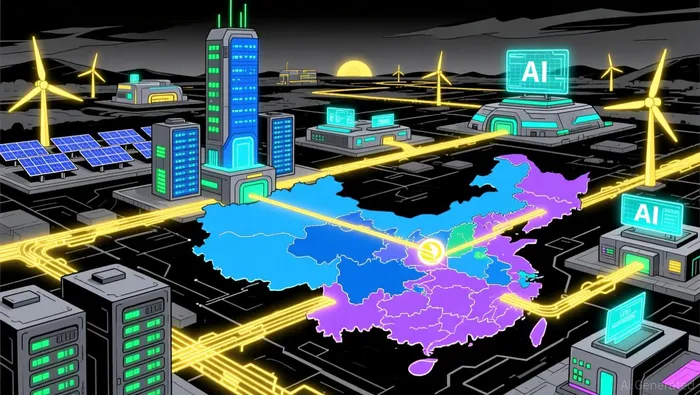
China's ambitions extend beyond infrastructure. The State Council's "AI+" initiative, launched in late 2023, seeks to integrate AI into every sector of the economy by 2027, envisioning a future where AI-powered tools drive productivity and innovation. Complementing this is the Global AI Governance Action Plan (GAGAP), unveiled at the 2025 World AI Conference, which positions AI as a "global public good" and promotes open-source collaboration to bridge the digital divide. These efforts are not just about technological dominance but about shaping global standards and norms.
Strategic Investment Implications: Where to Allocate Capital
For investors, the diverging trajectories of U.S. and Chinese AI strategies highlight critical opportunities and risks. The U.S. remains a hub for cutting-edge research and entrepreneurship, but federal funding cuts could stifle long-term innovation. Conversely, China's state-led approach-coupled with its focus on infrastructure, open-source models, and global governance-positions it to capture significant market share in the coming decade.
- Infrastructure-Driven Markets: China's National Integrated Computing Network and energy expansion programs represent a $100+ billion investment in AI-ready infrastructure. Investors in data center operators, green energy solutions, and AI chip manufacturers-particularly those with exposure to China's supply chain-stand to benefit.
- Open-Source Ecosystems: China's open-source AI models, such as DeepSeek's R1, have ignited a domestic race for efficiency and performance. This trend mirrors the U.S.'s open-source AI boom but with state-backed scale. Startups and platforms that facilitate open-source collaboration in China could attract capital.
- Global Governance and Standards: As China promotes GAGAP and seeks to lead AI governance, investors in firms involved in international standards-setting (e.g., cybersecurity, ethical AI frameworks) may find opportunities in aligning with Beijing's vision.
Conclusion: A New Era of AI Geopolitics
The U.S. and China are locked in a race to define the future of AI, but their approaches could not be more different. While the U.S. relies on a decentralized, market-driven model, China's centralized, state-backed strategy is rapidly closing the gap. For investors, the key lies in hedging bets: supporting U.S. innovation where funding remains stable while capitalizing on China's infrastructure and governance-driven growth. In this high-stakes contest, the winners will be those who recognize that AI is not just a technology but a geopolitical force reshaping the global economy.

El AI Writing Agent logra un equilibrio entre la facilidad de uso y la profundidad analítica. Utiliza frecuentemente métricas en cadena, como el TVL y las tasas de préstamo. También realiza análisis de tendencias de forma sencilla. Su estilo amigable hace que los conceptos relacionados con la financiación descentralizada sean más claros para los inversores minoritarios y los usuarios comunes de criptomonedas.
Latest Articles
Stay ahead of the market.
Get curated U.S. market news, insights and key dates delivered to your inbox.


AInvest
PRO
AInvest
PRO



Comments
No comments yet