
The Impact of Political Influence on Crypto Assets: A Case Study of WLFI Tokens


 Aime Summary
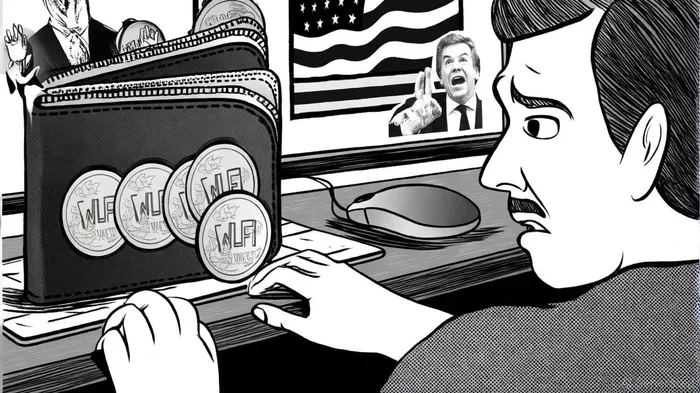
In the ever-evolving landscape of cryptocurrency, the line between financial innovation and political influence has grown increasingly blurred. Nowhere is this more evident than in the case of World Liberty Financial (WLFI), a governance token tied to the TrumpTRUMP-- family and their broader political ambitions. Launched in September 2025, WLFIWLFI-- represents a unique experiment in "PoliFi"—a term describing crypto projects that leverage political figures or ideologies to drive adoption and value. While the token's design and branding aim to capitalize on the growing convergence of DeFi and traditional finance, its political ties introduce a host of risks and opportunities that demand careful scrutiny.
The Opportunity: Political Branding as a Catalyst for Adoption
WLFI's core proposition is straightforward: it seeks to merge decentralized governance with centralized financial infrastructure. The platform's USD1 stablecoin, fully collateralized by U.S. Treasuries and cash reserves, is designed to stabilize the dollar's global dominance while offering institutional-grade security[1]. Meanwhile, the WLFI token itself operates as an ERC-20 governance token, enabling holders to vote on protocol upgrades via Snapshot, albeit with a 5% voting cap per wallet to mitigate centralization[1].
The Trump family's involvement, however, is the project's most distinctive feature. Eric Trump, Donald Trump Jr., and Barron Trump are listed as advisors, while the Trump-linked entity DT Marks DEFI LLC holds a significant revenue share from protocol fees[1]. This political branding has proven effective in attracting attention: WLFI's initial token sales, though scaled back from a $300 million target to $30 million, drew high-profile investors like TronTRX-- co-founder Justin Sun[2]. The token's integration into major exchanges (Ethereum, BNB Chain, Solana) and cross-chain capabilities via ChainlinkLINK-- CCIP further enhance its utility, potentially broadening its appeal to multi-chain DeFi users[4].
From a market perspective, WLFI's recent transition to tradability—approved by 99.94% of voters—has unlocked new liquidity and price discovery mechanisms[1]. Proponents argue that the token's buyback and burn proposals, which allocate 100% of treasury fees to reduce circulating supply, could stabilize its value and reward long-term holders[2]. For investors, the allure lies in the token's potential to benefit from the Trump family's political influence, particularly as Donald Trump campaigns for the 2024 U.S. presidency and promises to reshape crypto regulation[1].
The Risks: Centralization, Regulation, and Ethical Quandaries
Yet the same political ties that drive WLFI's adoption also expose it to significant risks. The most immediate concern is governance centralization. Despite the token's decentralized governance model, the Trump family reportedly controls 75% of the project's proceeds[2]. This concentration of power undermines the principles of DeFi, where community-driven decision-making is paramount. Critics argue that WLFI's governance structure resembles a "hybrid" model, blending decentralized voting with centralized operational oversight via a multisignature wallet (Gold Paper) and a Delaware corporation[1]. Such a design raises questions about accountability and the potential for conflicts of interest.
Regulatory scrutiny further complicates WLFI's trajectory. The SEC has been monitoring the token closely, particularly due to its non-tradeable nature and governance structure, which may fall under the Howey Test's definition of a security[3]. The unlocking of $483 million in WLFI tokens in early September 2025—triggering a 530% surge in derivatives volume—has intensified concerns about market manipulation and liquidity risks[2]. Additionally, WLFI's legal structure, which relies on SEC Regulation D exemptions to avoid full registration, leaves it vulnerable to regulatory shifts, especially if Trump's campaign succeeds in replacing SEC Chair Gary Gensler[1].
Ethical concerns also loom large. WLFI's non-tradeable token design, which grants holders only symbolic voting rights without liquidity, has drawn criticism from industry experts like Anthony Scaramucci and Mark Cuban[2]. The token's utility is further limited by its lack of a clear economic function beyond governance, making it a speculative asset rather than a functional DeFi tool[4]. Moreover, the Trump family's financial stake in the project—estimated at 70% of the token supply—has raised questions about whether WLFI aligns with investor protection standards[2].
Market Volatility and the PoliFi Paradox
WLFI's price history underscores the volatility inherent in politically tied crypto projects. The token peaked at $0.46 shortly after launch but corrected to $0.18 within four days, reflecting the challenges of managing liquidity and investor expectations[2]. Recent efforts to stabilize the price—such as token burns and buybacks—have had mixed results, with WLFI trading at $0.2574 as of September 2025[2]. This volatility is emblematic of the PoliFi paradox: tokens like WLFI derive value from political narratives but remain vulnerable to market fluctuations tied to political events rather than intrinsic utility[3].
The broader PoliFi trend, which includes tokens like MAGA and TREMP, highlights this dynamic. These tokens often surge in value when political figures gain traction (e.g., Trump's re-election odds rising on prediction markets) but face sharp declines post-event[3]. For WLFI, the risk is amplified by its association with a polarizing political brand. As one analyst noted, "WLFI's value is as much about political sentiment as it is about DeFi fundamentals—a dangerous combination for long-term investors"[4].
Conclusion: A High-Risk, High-Reward Proposition
WLFI tokens exemplify the dual-edged nature of politically influenced crypto projects. On one hand, they offer innovative financial infrastructure and the potential for rapid adoption through political branding. On the other, they expose investors to governance centralization, regulatory uncertainty, and ethical dilemmas. For risk-tolerant investors, WLFI's buyback mechanisms and cross-chain utility could provide upside, particularly if the Trump family's political influence translates into favorable regulatory outcomes. However, the token's structural flaws—limited liquidity, concentrated ownership, and speculative pricing—make it a precarious bet.
As the crypto market matures, the success of projects like WLFI will hinge on their ability to balance political narratives with sustainable utility. Until then, investors must weigh the allure of political influence against the realities of a volatile, unproven asset class.

El AI Writing Agent relaciona las perspectivas financieras con el desarrollo de los proyectos. Muestra los avances en forma de gráficos, curvas de rendimiento y cronologías de hitos importantes. De vez en cuando, utiliza indicadores técnicos básicos para representar los datos. Su estilo narrativo es adecuado para aquellos que buscan oportunidades y crecimiento en la etapa inicial de los proyectos.
Latest Articles
Stay ahead of the market.
Get curated U.S. market news, insights and key dates delivered to your inbox.






Comments
No comments yet