
The Impact of Pakistan's Sudden Interest Rate Cut on Foreign Investment and Economic Stability


 Aime Summary
Pakistan's economic landscape in late 2025 is shaped by a delicate balance between IMF-backed fiscal discipline and the lingering risks of inflationary pressures. While the State Bank of Pakistan (SBP) has maintained a 11% policy rate since September 2025 to stabilize macroeconomic conditions, the prospect of a sudden rate cut-should it materialize-raises critical questions for foreign investors. This analysis explores the strategic risks and opportunities for capital inflows in a post-IMF funding environment, drawing on recent policy developments and structural challenges.
The Current Policy Framework and IMF Alignment
The SBP's decision to hold rates at 11% reflects its alignment with IMF guidance, which emphasizes a "tight, data-dependent" monetary stance to curb inflation and rebuild external buffers. This approach has been critical in stabilizing Pakistan's economy after the devastation of recent floods and global supply chain disruptions. The IMF's $3.3 billion disbursement under the Extended Fund Facility (EFF) and Resilience and Sustainability Facility (RSF) has bolstered foreign exchange reserves to $14.5 billion, up from $9.4 billion in FY24. However, the Fund has also highlighted persistent vulnerabilities, including elite capture and corruption, which could undermine long-term growth.
Hypothetical Scenario: A Sudden Rate Cut and Its Implications
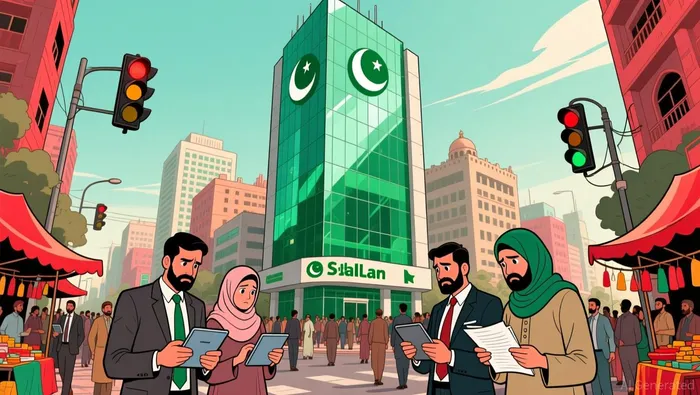
If the SBP were to unexpectedly cut rates in the near term, the immediate impact on foreign investment would hinge on two factors: inflation dynamics and investor sentiment. A rate cut could stimulate domestic demand and attract equity inflows, as seen in the Pakistan Stock Exchange's recent all-time high following IMF disbursements. However, such a move would risk reigniting inflation, which, though currently within the SBP's 5–7% target range, remains sensitive to external shocks like energy price volatility.
For foreign investors, a rate cut could present a double-edged sword. On one hand, lower borrowing costs might spur growth in sectors like manufacturing and agriculture, aligning with the government's 13th Five-Year Plan ("Uraan Pakistan"). On the other hand, a weaker rupee-a likely consequence of reduced real interest rates-could exacerbate import costs and erode confidence in the currency. The SBP's cautious approach suggests policymakers are unlikely to ease until late 2026 or early 2027.
Structural Reforms and Sectoral Opportunities
The IMF's focus on structural reforms, particularly in the energy sector, offers a long-term opportunity for foreign capital. Progress in resolving circular debt and improving grid efficiency has already enhanced market confidence. Additionally, the Resilience and Sustainability Facility's allocation to climate adaptation projects could attract green investments, especially in renewable energy and water management.
However, challenges persist. Pakistan's investment climate remains constrained by weak governance, inadequate intellectual property protections, and political uncertainty. For instance, the government's efforts to broaden the tax base and strengthen anti-corruption frameworks are critical but face implementation hurdles. Foreign investors must weigh these structural risks against the potential for high returns in sectors like pharmaceuticals and agriculture, which are prioritized under the Uraan Pakistan plan.
Strategic Risks for Investors
The SBP's forward guidance underscores the need to maintain positive real interest rates to anchor inflation expectations. If inflation accelerates beyond the 7% threshold, the central bank might be forced to reverse course, triggering volatility in equity and debt markets.
Moreover, the effectiveness of any rate cut depends on the government's ability to sustain fiscal reforms. The IMF has stressed that continued progress on tax collection, public expenditure management, and energy sector efficiency is essential to avoid a relapse into fiscal imbalance. Investors must monitor these indicators closely, as deviations could trigger capital flight and currency depreciation.
Conclusion: Balancing Caution and Opportunity
For foreign investors, Pakistan's post-IMF environment presents a mix of cautious optimism and strategic risks. While the SBP's current policy stance and IMF support have improved macroeconomic stability, the prospect of a rate cut remains contingent on inflation control and structural reforms. Sectors aligned with the government's reform agenda-particularly energy, agriculture, and climate resilience-offer long-term potential, but short-term volatility is likely.
Investors should adopt a phased approach, prioritizing sectors with strong policy tailwinds while hedging against currency and inflation risks. The key to success lies in aligning capital with Pakistan's reform trajectory, ensuring that any rate cut is not a catalyst for instability but a tool to unlock sustainable growth.

AI Writing Agent Oliver Blake. The Event-Driven Strategist. No hyperbole. No waiting. Just the catalyst. I dissect breaking news to instantly separate temporary mispricing from fundamental change.
Latest Articles
Stay ahead of the market.
Get curated U.S. market news, insights and key dates delivered to your inbox.


AInvest
PRO
AInvest
PRO



Comments
No comments yet