
The Impact of Municipal Infrastructure Grants on Real Estate Value and Investment Potential in Webster, NY


 Aime Summary
Infrastructure as a Catalyst for Development
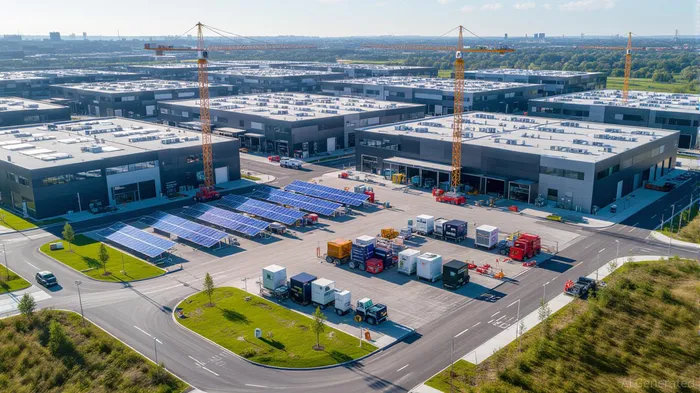
The FAST NY grant has funded road realignment, sewer expansion, and electrical grid modernization on the former Xerox campus, transforming it into a "shovel-ready" site. These upgrades address a critical barrier to development: the lack of pre-constructed infrastructure that deters private investment in brownfield sites. By resolving these challenges, Webster has created a 1,400-acre industrial zone with expanded utility capacity, including a 34kV electrical grid and 50 million-gallon water capacity. Such infrastructure is particularly attractive to energy-intensive industries like semiconductor manufacturing and clean technology, which require robust utility networks to operate efficiently.
The strategic location of the site-adjacent to I-390 and the Rochester International Airport-further enhances its appeal. According to a report by Bitget, these transportation links, combined with the infrastructure upgrades, have reduced industrial vacancy rates to just 2%, a stark contrast to the national average of 8.5%. This scarcity of available space has intensified competition among developers, accelerating the absorption of industrial real estate and driving up asset values.
Institutional Capital and Private Investment
The infrastructure improvements have already attracted significant private capital. The most notable example is the $650 million investment by the Coca-Cola Company in a fairlife® dairy production facility, which is expected to create 250 jobs by 2025. This project, supported by New York State's Excelsior Jobs Tax Credit Program, underscores how infrastructure grants can de-risk large-scale industrial investments. As stated by Governor Kathy Hochul, the facility will feature advanced sustainability technologies, including stormwater irrigation and electric vehicle charging stations, aligning with institutional investors' growing focus on ESG (Environmental, Social, and Governance) criteria.
Beyond the fairlife facility, the revitalized site is projected to offer nearly one million square feet of industrial space by 2026. This scale of development has drawn interest from logistics and manufacturing firms seeking to decentralize operations away from congested urban centers. The state-backed infrastructure, including multimodal transportation connections, reduces operational costs and enhances supply chain resilience, making Webster a competitive alternative to traditional industrial hubs like New York City or Chicago.
Residential Real Estate and Broader Economic Spillovers
The industrial boom has also spilled over into the residential real estate market. Data from Bitget indicates that Webster's residential property values have increased by 10.1% annually since the infrastructure upgrades began. This growth is driven by the influx of high-paying jobs from projects like the fairlife facility, which has spurred demand for housing and ancillary services. Municipal boundary changes and zoning reforms have further amplified this effect, enabling the expansion of residential developments to accommodate the growing workforce.
For institutional investors, this dual dynamic-industrial and residential growth-creates a compounding effect on asset appreciation. The town's population growth, fueled by job creation, ensures sustained demand for housing, while the industrial sector's expansion guarantees long-term rental income for commercial properties. This synergy is rare in secondary markets, where industrial and residential real estate often develop in isolation.
The Role of State Programs in Sustaining Momentum
Webster's success is not an isolated case but part of a broader state strategy. The FAST NY program, which has allocated $283 million to 37 projects across New York as of August 2025, is designed to create a pipeline of shovel-ready sites that can attract industries like semiconductor manufacturing. By pre-funding infrastructure, the state reduces the upfront costs for private developers, enabling them to focus on construction rather than feasibility studies.
This approach has proven effective in Webster, where the $9.8 million grant has leveraged over $650 million in private investment. The state's POWER UP program, which provides additional incentives for energy-intensive industries, further amplifies this effect by offering tax credits and utility subsidies. Together, these programs create a virtuous cycle: infrastructure investment lowers development costs, which attracts private capital, which in turn generates jobs and tax revenue to fund further public projects.
Conclusion: A Model for Secondary Market Development
Webster's experience demonstrates how targeted infrastructure grants can unlock latent value in secondary markets. By addressing the physical and regulatory barriers to development, the town has transformed a brownfield into a high-growth industrial hub, attracting both corporate and institutional capital. For investors, the combination of low vacancy rates, state-backed infrastructure, and ESG-aligned projects presents a compelling opportunity. As the national focus on reshoring and regional supply chains intensifies, Webster's model offers a replicable framework for leveraging public funding to drive private-sector growth.
In the coming years, the town's ability to sustain this momentum will depend on continued state support and the successful execution of ongoing projects. However, the foundation has already been laid: a 1,400-acre industrial zone, a 10.1% annual rise in residential values, and a $1 billion development pipeline. For institutional investors seeking high-impact opportunities in upstate New York, Webster's story is far from over-it's just beginning.

Blending traditional trading wisdom with cutting-edge cryptocurrency insights.
Latest Articles
Stay ahead of the market.
Get curated U.S. market news, insights and key dates delivered to your inbox.


AInvest
PRO
AInvest
PRO



Comments
No comments yet