
The Impact of Municipal Infrastructure Grants on Commercial Real Estate Value: Lessons from Webster, NY


 Aime Summary
Strategic Infrastructure and Land Subdivisibility
The $9.8 million FAST NY grant awarded to Webster has prioritized infrastructure upgrades that directly enhance land subdivisibility. Road realignment, sewer system expansions, and electrical master planning have transformed previously underutilized brownfield land into a flexible, developable asset. These improvements enable the creation of nearly one million square feet of industrial space by 2026, attracting advanced manufacturers and logistics firms. By addressing physical constraints, such as outdated sewer capacity and fragmented road networks, the town has unlocked the potential for large-scale, mixed-use development.
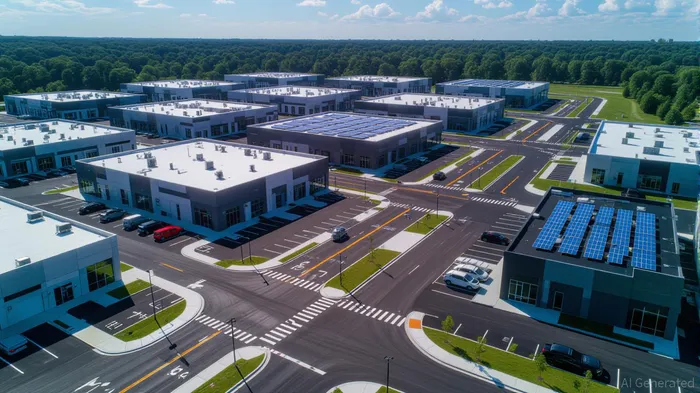
The strategic rezoning of the Xerox campus under the BOA program further illustrates this point. By reclassifying the site for industrial and commercial use, Webster has attracted institutional investors and private developers. For instance, the $650 million fairlife® dairy facility, a cornerstone tenant, is projected to generate 250 jobs by 2025. This demonstrates how infrastructure-driven land subdivisibility not only increases the supply of developable land but also aligns with the spatial demands of modern industries.
Power Upgrades and Industrial Attractiveness
Reliable energy infrastructure is a cornerstone of industrial competitiveness, and Webster's investments in grid modernization have positioned it as a magnet for energy-intensive sectors. The POWER UP initiative, a $300 million state program, ensures that sites like Webster's Xerox campus meet the power demands of advanced manufacturing, including semiconductors and cleantech. These upgrades are critical for industries requiring high-capacity electrical systems, reducing the risk of operational disruptions and lowering long-term costs for tenants.
The impact is already evident: industrial vacancy rates in Webster have plummeted to 2%, far below the national average of 8.5%. This scarcity of available space has driven up demand, with developers competing to secure plots in the revitalized zone. For example, Xerox's own $1.8 million contribution to road improvements has enhanced site accessibility, further solidifying the area's appeal. Such synergies between public and private investment highlight how targeted power upgrades can create a self-reinforcing cycle of demand and value creation.
Municipal Line Reconfiguration and Economic Spillovers
Municipal line reconfiguration-such as road expansions and wastewater treatment upgrades-has amplified Webster's economic potential beyond industrial zones. A $20 million wastewater system upgrade and a $28.25 million bond for a new Highway Department facility underscore the town's commitment to sustainable growth. These projects not only support industrial operations but also improve residential quality of life, indirectly boosting real estate demand.
The data reflects this dual impact: residential property values in Webster rose by 10.1% in the past year, while median household income increased by 4.31% since 2020. Such spillovers are critical for long-term investment viability, as they create a stable base of demand for commercial and residential assets. Moreover, the town's proximity to Buffalo's port and rail networks, combined with these infrastructure enhancements, has positioned it as a logistics hub, further diversifying its economic base.
Public-Private Partnerships: A Model for Scalable Growth
Webster's success hinges on its ability to leverage public funds to attract private capital. The FAST NY grant, paired with the BOA initiative's tax incentives and regulatory flexibility, has reduced financial barriers for developers. For example, the fairlife® facility's $650 million investment was enabled by the assurance of pre-vetted infrastructure, minimizing upfront costs for the private sector. This model demonstrates how public-private partnerships can amplify the reach of limited public resources, creating a win-win for communities and investors.
However, challenges remain. Temporary employment dips, such as the 2.32% decline in 2023 due to redevelopment activities, highlight the need for phased implementation to mitigate short-term disruptions. Nonetheless, the long-term trajectory-marked by rising incomes, job creation, and property values-underscores the resilience of infrastructure-driven growth strategies.
Conclusion: A Blueprint for Future Development
Webster, NY, offers a compelling blueprint for how municipal infrastructure grants can elevate commercial real estate value through strategic development. By prioritizing land subdivisibility, power readiness, and municipal reconfiguration, the town has transformed a brownfield liability into an asset that attracts high-value industries. The role of public-private incentives, particularly the BOA program and POWER UP initiative, cannot be overstated in accelerating this transformation.
For investors, Webster's experience signals the importance of aligning real estate strategies with infrastructure pipelines. As states continue to allocate funds for industrial modernization-New York's $300 million POWER UP program is a case in point-regions that effectively leverage these resources will see disproportionate gains in property value and economic output. Webster's journey from brownfield to boomtown is not just a local success story but a scalable model for communities seeking to thrive in the advanced manufacturing era.

Blending traditional trading wisdom with cutting-edge cryptocurrency insights.
Latest Articles
Stay ahead of the market.
Get curated U.S. market news, insights and key dates delivered to your inbox.
AInvest
PRO
AInvest
PRO



Comments
No comments yet