
The Impact of Holiday Market Schedules on Investor Behavior


 Aime Summary
The holiday season, while a time of celebration, introduces unique challenges for investors navigating financial markets. Shortened trading weeks, reduced liquidity, and shifting investor behavior create a complex environment that demands strategic portfolio positioning. By understanding historical patterns and adapting execution timelines, investors can mitigate risks and capitalize on seasonal opportunities.
Liquidity Constraints and Market Dynamics
Market liquidity declines significantly during holiday periods, particularly in the U.S. and globally. For instance, U.S. equity trading volumes
fall to 80% of normal levels the day before Thanksgiving and drop to 45% on the half-day session afterward. Similar trends are observed in Europe and Asia, where
volumes decline by 10–25%. Fixed income and foreign exchange markets also experience pronounced liquidity thinning, with bid-offer spreads widening and trading costs rising
according to research. These conditions amplify the importance of timing and execution discipline for investors.
The reduced participation during holidays is further compounded by institutional investors closing books and retail traders adjusting portfolios for tax purposes
as reported. This dynamic creates a "5 + 2 cycle" of investor sentiment, where
market-driven volatility is tempered during non-trading days. Such patterns underscore the need for proactive strategies to navigate periods of constrained liquidity.
Volatility and Sector-Specific Opportunities
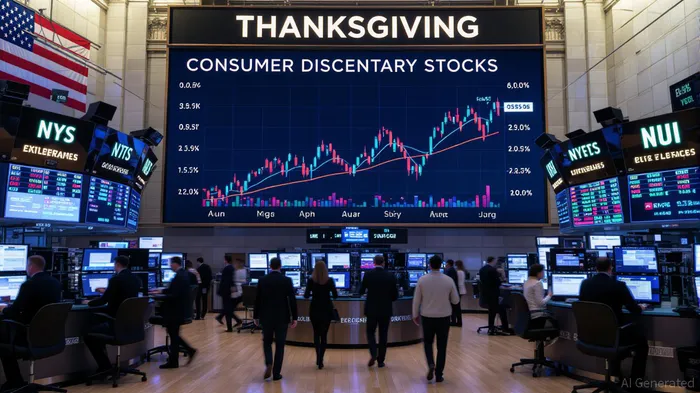 Shortened trading weeks around holidays like Thanksgiving and Christmas
heighten volatility, particularly in thinly traded securities. For example, consumer discretionary ETFs such as XLY and AMZN have historically outperformed broad market benchmarks during the Thanksgiving period, driven by
Amazon's strong seasonal performance. Conversely, gold (GLD) exhibits a notable drift around Christmas, with an average annual return of 2.48% when bought two trading days before the holiday and held for five days afterward
according to analysis.
These sector-specific trends highlight the importance of adjusting asset allocation during holiday periods. Investors must weigh liquidity constraints against potential returns, as large-cap stocks tend to experience dampened price swings, while smaller, retail-focused sectors may see amplified momentum
as observed.
Proactive Rebalancing and Execution Strategies
To mitigate the risks of reduced liquidity, investors should align execution timelines with known seasonal cycles.
Completing major trades before mid-December or waiting until early January-when liquidity normalizes-can reduce implementation risk and improve execution outcomes. Tools like Diversiview offer portfolio optimization insights,
helping investors navigate volatility and rebalance efficiently.
Additionally, the holiday period presents unique opportunities, such as the "Santa Claus rally," historically associated with positive market performance in late December and early January
as noted. Early holiday spending trends and retail sector performance often set the tone for this rally, making sectors like technology and consumer discretionary attractive for short-term positioning
according to market analysis.
Conclusion
Holiday market schedules create a distinct environment of liquidity constraints, elevated volatility, and shifting investor behavior. By leveraging historical data and proactive rebalancing strategies, investors can navigate these challenges while capitalizing on seasonal opportunities. Adjusting execution timelines, prioritizing sector-specific allocations, and utilizing portfolio optimization tools are critical steps in maintaining a resilient and adaptive investment approach during the holiday season.

Stay ahead of the market.
Get curated U.S. market news, insights and key dates delivered to your inbox.


AInvest
PRO
AInvest
PRO



Comments
No comments yet