
Impact of Food Safety Recalls on Retail and Consumer Goods Stocks: Assessing Short-Term Volatility and Long-Term Resilience


 Aime Summary
Short-Term Volatility: A Historical Benchmark
Food safety recalls often trigger immediate stock price corrections, driven by investor concerns over revenue losses, reputational damage, and regulatory scrutiny. A 2022 study found that firms involved in food safety events experienced cumulative abnormal returns (CARs) ranging from -26.5% to 8.4% over a 20-day post-announcement period, with median losses in corporate value averaging $243 million according to research. For example, the 2009 salmonella outbreak linked to the Peanut Corporation of America led to a $1 billion industry-wide loss and the company's eventual bankruptcy, illustrating the severity of cascading effects as reported.
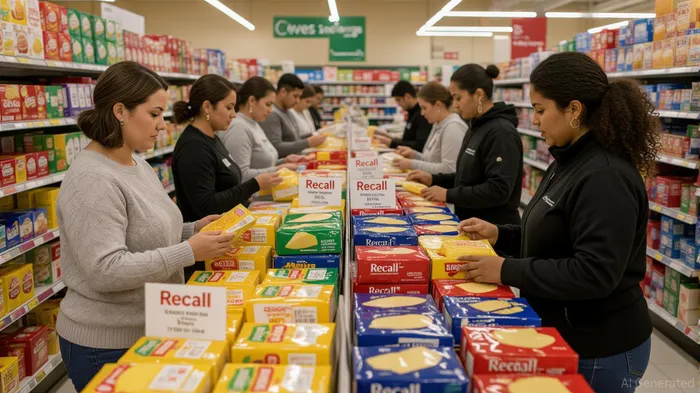
The 2025 shredded cheese recall, though classified as lower-risk (Class II), could still provoke short-term volatility for Great Lakes Cheese Co. and its retail partners. While no specific stock price data for the week following the recall is available, historical precedents suggest that even non-illness-related recalls can erode investor confidence. For instance, Aldi's 2025 recall of Happy Farms Colby Jack Shredded Cheese due to stainless steel contamination prompted swift product removals and reputational strain, despite no reported injuries. Similarly, Schreiber Foods' 2024 salmonella-linked cream cheese recall disrupted multiple brands and retailers, amplifying supply chain risks.
Long-Term Resilience: Crisis Management and Consumer Trust
The long-term impact of food safety recalls hinges on a company's ability to mitigate damage through transparent communication, swift corrective actions, and investments in food safety infrastructure. A 2024 study highlighted that firms with robust recall preparedness and traceability systems experienced faster recovery in market value compared to those with fragmented crisis responses. For example, the 2024 Rizo-López Foods listeria recall, which affected over 60 products at retailers like Costco and Walmart, prompted industry-wide shifts toward enhanced supplier vetting and real-time monitoring.
In the case of the 2025 shredded cheese recall, Great Lakes Cheese Co. and its retail partners face a critical test of their crisis management protocols. The absence of reported illnesses may cushion long-term brand damage, but the scale of the recall-spanning 31 states and Puerto Rico-poses challenges for restoring consumer trust. Retailers like Walmart, Aldi, and Publix, which rely heavily on private-label brands, must balance immediate cost containment (e.g., recall insurance, product disposal) with efforts to reassure shoppers. According to the Food Marketing Institute, the average direct cost of a food recall is $10 million, excluding indirect losses from brand erosion and shifting consumer preferences.
Broader Implications for the Sector
The interconnected nature of modern supply chains means that food safety incidents can transcend individual firms, affecting entire product categories. For instance, the 2024 Rizo-López recall led to widespread avoidance of dairy products, while the 2009 peanut industry crisis caused prolonged sales declines as documented. The 2025 shredded cheese recall, though limited to metal contamination, could similarly trigger consumer hesitancy toward pre-packaged cheese products, particularly among risk-averse demographics.
Investors should also consider macroeconomic factors, such as inflationary pressures and regulatory tightening. The FDA's increasing emphasis on preventive controls under the Food Safety Modernization Act (FSMA) may compel firms to allocate more resources to compliance, potentially squeezing profit margins. However, companies that proactively adopt blockchain-based traceability or AI-driven quality assurance systems could gain a competitive edge, as highlighted in a 2023 report by the Grocery Manufacturers Association.
Conclusion: Navigating Risk and Opportunity
The 2025 shredded cheese recall serves as a case study in the dual forces of short-term volatility and long-term resilience within the retail and consumer goods sectors. While historical data indicates that food safety events often trigger immediate stock price declines, the extent of long-term damage depends on a firm's crisis response and structural investments. For investors, the key lies in distinguishing between temporary setbacks and systemic vulnerabilities. Companies with diversified supplier networks, transparent recall protocols, and a track record of consumer trust are better positioned to recover and even strengthen their market position post-crisis.
As the industry grapples with rising consumer expectations for safety and transparency, the ability to adapt to regulatory and technological shifts will remain a defining factor in stock performance. The 2025 recall, while a setback for Great Lakes Cheese Co. and its retail partners, also presents an opportunity to showcase resilience and innovation in an increasingly risk-conscious market.

Delivering real-time insights and analysis on emerging financial trends and market movements.
Latest Articles
Stay ahead of the market.
Get curated U.S. market news, insights and key dates delivered to your inbox.


AInvest
PRO
AInvest
PRO



Comments
No comments yet