
The Impact of Fleet Groundings on Airline Valuations and Supplier Risk Exposure


 Aime Summary
The recent grounding of Airbus A320-family aircraft due to a critical software flaw linked to solar radiation has exposed systemic vulnerabilities in aviation supply chains and operational resilience. For American AirlinesAAL--, the incident-triggered by a JetBlueJBLU-- flight's uncommanded pitch-down event-resulted in the temporary grounding of 209 aircraft, ,
according to a report. This crisis underscores the cascading financial and operational risks for airlines and aerospace suppliers, while reshaping investment dynamics in the sector.
Operational Disruptions and Financial Impacts
The grounding highlighted the fragility of airline operations during peak travel seasons. American Airlines, for instance, faced a two-hour-per-aircraft software update process, leading to delays and cancellations
according to WFAA reporting. Globally,
as reported by SafeFly. For investors, such disruptions signal heightened exposure to unquantified costs, including passenger compensation, fuel inefficiencies, and reputational damage.
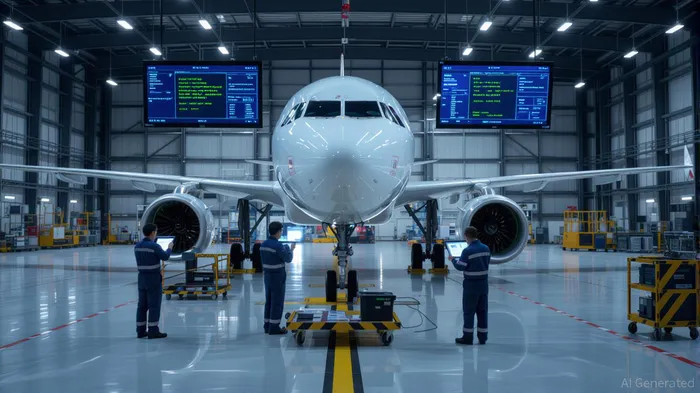 Airlines' capital allocation priorities are now shifting toward mitigating such risks.
According to IATA data, , driven by excess fuel costs, maintenance expenses, and inventory holding. This has accelerated investments in digital tools like AI-driven predictive maintenance and inventory optimization,
as noted in Deloitte's 2025 outlook.
Supplier Risk Exposure and Aerospace Industry Vulnerabilities
Aerospace suppliers face amplified risks as well. The A320 grounding required urgent hardware and software modifications,
including replacements for the Elevator Aileron Computer, a component critical to flight control systems. Suppliers supporting these fixes, such as those providing ELAC hardware, now contend with increased demand and operational pressures. Airbus itself
, underscoring the sector's interconnected financial exposure.
The crisis also exposed bottlenecks in engine supply chains.
due to shortages at CFM International and Pratt & Whitney, compounding inventory costs and delivery delays. Competitors are now
prioritizing alternative engine development to mitigate such risks.
Regulatory Responses and Capital Allocation Shifts
Regulatory bodies have responded swiftly to the crisis.
The FAA and EASA issued emergency directives mandating software updates, while Airbus launched an Alert Operators Transmission (AOT) to standardize fixes. These actions reflect a broader trend toward stricter safety protocols, which may increase compliance costs for manufacturers and airlines.
Capital allocation strategies are evolving to address these challenges.
Airlines are prioritizing sustainability-linked investments, such as (SAFs), to align with regulatory shifts and reduce carbon footprints. Meanwhile, aerospace firms are doubling down on digital transformation,
with supply chain disruptions in 2025.
Investment Implications and Strategic Risk Management
For investors, the A320 grounding underscores the need for diversified portfolios and rigorous risk assessment. Airline valuations, already pressured by operational disruptions, face further volatility if similar events recur. Delta Air LinesDAL-- (DAL.N), for example,
saw analyst price targets adjusted amid grounding-related uncertainties. Aerospace suppliers, meanwhile, must balance innovation with supply chain resilience to avoid reputational and financial setbacks.
The crisis also highlights the importance of regulatory foresight. As Airbus and regulators refine safety protocols, firms that proactively adopt AI/ML for predictive maintenance and inventory management-
as highlighted in Deloitte's 2025 outlook-may gain a competitive edge. Conversely, those reliant on legacy systems could face prolonged exposure to operational shocks.
Conclusion
The Airbus A320 grounding serves as a cautionary tale for the aviation industry. For airlines, the incident reinforces the need for agile supply chain strategies and capital reallocation toward digital resilience. For suppliers, it underscores the risks of over-reliance on single-component systems and the imperative to diversify production. Investors, in turn, must weigh these factors against regulatory trends and technological advancements to navigate the sector's evolving risk landscape. As the industry grapples with the aftermath, strategic risk management will remain a cornerstone of long-term value creation.

Stay ahead of the market.
Get curated U.S. market news, insights and key dates delivered to your inbox.
AInvest
PRO
AInvest
PRO



Comments
No comments yet