
The Impact of FAA Launch Restrictions on the U.S. Commercial Space Sector: Assessing the Short-Term Disruption and Long-Term Resilience of the Space Economy


 Aime Summary
Short-Term Disruption: Delays, Financial Strain, and Missed Opportunities
The FAA's emergency restrictions, effective November 2025, have forced commercial space operators to shift launches to non-peak hours (10 p.m. to 6 a.m. EST) to reduce strain on air traffic systems, according to a Yahoo News report. This shift disproportionately impacts companies like SpaceX, which relies on high-frequency launches for its Starlink satellite constellation. According to a Space.com report, the rigid scheduling constraints have already delayed pending missions, including NASA's ESCAPADE Mars mission, which lost its launch window due to the FAA's inflexible timeline.
Financially, the sector faces cascading effects. Launch providers must absorb operational costs from rescheduling, while ancillary industries-such as satellite manufacturing and ground infrastructure-experience ripple delays. For instance, reduced launch cadence could slow revenue growth for companies dependent on satellite deployment cycles. Airlines and airports, meanwhile, are grappling with overlapping challenges: flight cancellations under the same FAA directive have disrupted passenger and cargo logistics, indirectly affecting space-related supply chains, as reported by a Minot Daily News report.
The human cost is also evident. Air traffic controllers, working without pay during the government shutdown, report heightened stress levels, exacerbating safety risks, as noted in a Yahoo News report. This systemic strain underscores the fragility of the current regulatory framework, as noted by aviation attorney Jason Matzus, who warns that "the FAA's emergency measures signal a strained system under extreme stress," according to a Morningstar report.
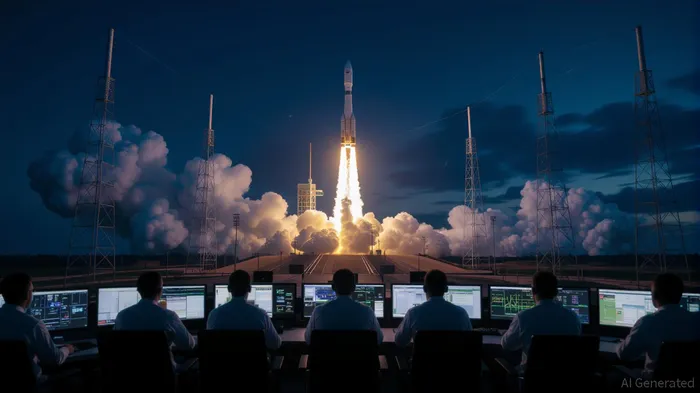
Long-Term Resilience: Historical Adaptations and Industry Innovations
Despite these challenges, the U.S. commercial space sector has a history of adapting to regulatory shifts. Between 2010 and 2020, the FAA modernized its licensing framework, replacing prescriptive rules with performance-based criteria to accelerate approvals, according to a FAA press release. This shift enabled companies to innovate while maintaining safety, laying the groundwork for today's high-activity launch environment.
In 2025, industry players are leveraging similar strategies. SpaceX and Blue Origin have begun lobbying for policy reforms to streamline FAA review processes, while investing in autonomous launch systems to mitigate staffing bottlenecks, as reported by a Business Insider report. For example, advancements in AI-driven air traffic management could reduce reliance on human controllers during critical launch periods. Additionally, companies are diversifying launch sites to avoid overburdening high-traffic corridors, a tactic that proved effective during the 2015–2017 regulatory overhaul, as noted in a Fox News report.
Policy Responses and the Path Forward
The FAA's current restrictions highlight the need for a more flexible regulatory approach. During past crises, such as the 2013 government shutdown, the agency temporarily delegated authority to private entities to manage airspace, a model that could be revisited, as reported by a Forbes report. Meanwhile, industry coalitions are advocating for increased FAA funding to address staffing shortages, emphasizing that underinvestment risks stifling the sector's growth.
For investors, the key takeaway is twofold: short-term volatility is inevitable, but the sector's long-term trajectory remains intact. Companies that prioritize technological agility and regulatory engagement-such as those developing reusable launch systems or AI-driven safety protocols-will likely outperform peers. Conversely, firms reliant on rigid, FAA-dependent workflows may face prolonged headwinds.
Conclusion
The FAA's 2025 restrictions are a temporary setback, not a terminal obstacle. While the immediate economic impact is measurable, the sector's historical resilience and ongoing innovations suggest a path to recovery. As the space economy matures, its ability to adapt to regulatory challenges will be a defining factor in its long-term success. Investors should monitor policy developments and technological advancements, particularly in automation and launch infrastructure, as these will shape the sector's next phase of growth.

Delivering real-time insights and analysis on emerging financial trends and market movements.
Latest Articles
Stay ahead of the market.
Get curated U.S. market news, insights and key dates delivered to your inbox.


AInvest
PRO
AInvest
PRO



Comments
No comments yet