
The Impact of ERCOT's RTC+B on Energy Storage and Grid Arbitrage Opportunities
 Aime Summary
A New Market Architecture for Storage
ERCOT's RTC+B replaces the outdated Operating Reserve Demand Curve (ORDC) with Ancillary Service Demand Curves (ASDCs), enabling granular pricing of specific ancillary services and incorporating battery capabilities into real-time dispatch. This design allows batteries to shift between energy and AS roles every five minutes, treating them as a single device with a state of charge (SoC) rather than separate generation and load entities according to research. The result is a 2.7% reduction in total system costs in test cases, such as the "swap the reg" scenario, where batteries dynamically adjusted regulation up services during peak demand as reported.
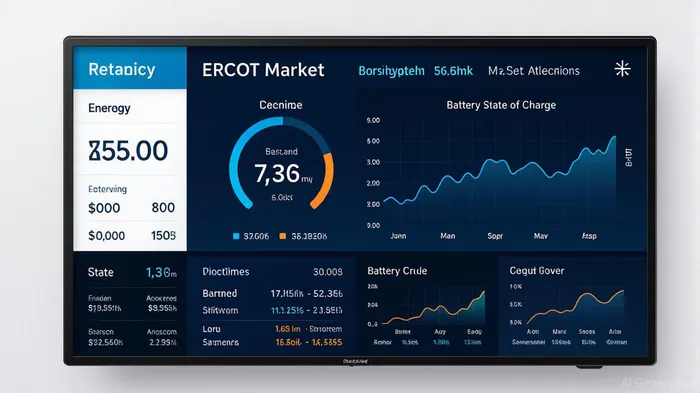
For energy storage operators, this flexibility translates into higher revenue potential. A 100MW battery previously constrained by day-ahead commitments to ancillary services can now fully utilize its capacity in real time, accessing both energy and AS markets. However, this comes with increased complexity: operators must now manage bids across five ancillary service products and adhere to stricter performance standards, including penalties for deviations from set points.
Arbitrage Opportunities in a Dynamic Market
RTC+B's real-time co-optimization creates novel arbitrage strategies. For instance, the "mid-day soak and shift" approach leverages surplus solar generation by storing energy during low locational marginal price hours and discharging during high LMP periods, reducing system costs by 5.5% in modeled scenarios. Similarly, the "solar cliff" case study demonstrates how batteries can preemptively respond to renewable generation shortfalls, avoiding price spikes in ancillary services.
Yet, these opportunities are not without risks. The increased efficiency of RTC+B may compress price volatility, reducing traditional arbitrage margins between day-ahead and real-time markets. For example, forward values for Battery Energy Storage Systems (BESS) in ERCOT hit record highs in Q3 2025, but annual revenues are projected to drop to $17 per kilowatt in 2025 from $149 in 2023 due to market saturation according to analysis. This underscores the need for advanced analytics and automation to optimize bids and SoC management, as manual systems struggle to capture nuanced value signals.
Derivatives and Hedging in the RTC+B Era
The integration of ASDCs and real-time co-optimization has also reshaped derivatives trading. Energy buyers and storage operators are increasingly using Congestion Revenue Rights (CRRs) to hedge locational price risk. A 10 MW on-peak CRR contract between Angleton BESS's node and the Houston Load Zone Hub, for instance, generated a $50.7k payment in Q2 2025, boosting all-in revenues by 31%. These instruments are critical for managing the dual exposure of batteries to both charging and discharging scenarios.
Futures and options contracts tailored to the RTC+B framework are also emerging. For example, the ability to submit up to ten bid pairs per interval for energy and five for ancillary services requires sophisticated forecasting tools to model price dynamics. While specific futures contracts for ESRs remain nascent, the shift to ASDC-based pricing-compensating generators for actual service delivery rather than readiness-signals a market where real-time performance data will drive derivative valuations according to industry experts.
Strategic Investment Considerations
For investors, the key to success lies in balancing innovation with risk mitigation. The projected $2.5–$6.4 billion annual savings from RTC+B suggests long-term value in grid resilience, but short-term profitability depends on strategic deployment. High-demand areas with robust transmission infrastructure, such as load centers near renewable hubs, offer optimal locations for BESS to capture peak pricing and grid stability premiums according to market analysis.
However, the transition to ASDCs and real-time co-optimization also raises questions about revenue sustainability. As ancillary service markets saturate, storage operators may face downward pressure on margins. To counter this, investors should prioritize assets with hybrid capabilities-combining energy arbitrage with ancillary services-and leverage advanced optimization platforms to navigate the 5-minute dispatch intervals according to industry reports.
Conclusion
ERCOT's RTC+B has redefined the Texas energy market, creating a landscape where agility and precision are paramount. For energy storage investors, the path forward lies in embracing the new market architecture: leveraging real-time co-optimization for arbitrage, adopting CRRs and other derivatives to hedge risks, and deploying advanced analytics to outperform peers. While challenges such as market saturation and reduced volatility persist, the long-term benefits of a more efficient, resilient grid position forward-thinking participants to thrive in this transformative era.

La combinación de la sabiduría tradicional en el comercio con las perspectivas más actuales sobre criptomonedas.
Latest Articles
Stay ahead of the market.
Get curated U.S. market news, insights and key dates delivered to your inbox.






Comments
No comments yet