
The Impact of ERCOT's RTC+B on Energy Storage and Clean Energy Markets


 Aime Summary
Grid Modernization and Battery Integration
At the heart of RTC+B is the recognition of batteries as dynamic hybrid assets capable of functioning as both generators and loads, depending on their state of charge (SoC) according to pv-magazine-usa. This modeling innovation allows batteries to respond to grid needs in real time, eliminating inefficiencies tied to fixed reserve markets and enabling more precise resource allocation. For institutional investors, this shift translates into a more flexible and value-maximizing environment for energy storage.
The program's co-optimization framework allows storage operators to submit detailed bids for energy and ancillary services simultaneously, a departure from previous day-ahead constraints that limited real-time flexibility. This granular approach not only improves grid resilience but also unlocks new revenue streams by enabling batteries to participate in multiple markets concurrently. According to Resurety, the RTC+B is projected to deliver annual wholesale market savings between $2.5 billion and $6.4 billion, a figure that underscores its potential to reduce system costs while enhancing returns for clean energy assets. 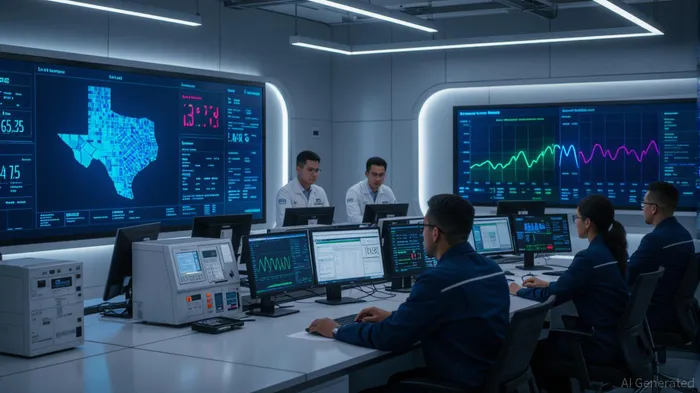
Pricing, Volatility, and Revenue Model Shifts
The removal of the ORDC adder-a mechanism that previously inflated prices during scarcity events-has significant implications for market participants. While this change is expected to lower overall costs, it also reduces revenue for generators not actively dispatched, necessitating a recalibration of investment strategies. For batteries, however, the ASDC system aligns compensation more closely with actual service delivery, incentivizing efficient operation.
The introduction of block products in the Day-Ahead Market further reshapes volatility patterns. As noted by Amperon, the RTC+B is likely to result in more frequent but smaller price swings due to the dynamic behavior of batteries and real-time grid adjustments. This shift could benefit investors with access to advanced analytics tools capable of optimizing bids and managing risk in a fast-paced environment.
While the RTC+B offers substantial upside, it also demands a reevaluation of risk management strategies. The program's requirement for up to ten bid pairs per interval for energy and five for ancillary services necessitates robust compliance frameworks to avoid operational errors. Additionally, the convergence of day-ahead and real-time prices, a projected outcome of the program, may reduce arbitrage opportunities but also stabilize long-term returns for well-optimized portfolios.
Institutional investors must also monitor ancillary service charges and ECRS (Energy Imbalance Service) cost behavior to adapt to evolving market conditions. As highlighted by Gulf Coast Power, staying informed about ERCOT's training programs and implementation timelines will be critical for aligning strategies with the December 2025 go-live.
Conclusion
ERCOT's RTC+B program is more than a technical upgrade-it is a catalyst for redefining the economics of energy storage and renewables. By enabling batteries to operate as dynamic assets and streamlining market design, the program reduces costs, enhances grid reliability, and creates a more predictable revenue environment for clean energy investors. For institutions willing to embrace advanced technologies and strategic flexibility, the RTC+B represents a transformative opportunity to scale their impact in Texas's evolving energy landscape.

Mezclando la sabiduría tradicional en el comercio con las perspectivas más actuales sobre las criptomonedas.
Latest Articles
Stay ahead of the market.
Get curated U.S. market news, insights and key dates delivered to your inbox.






Comments
No comments yet